
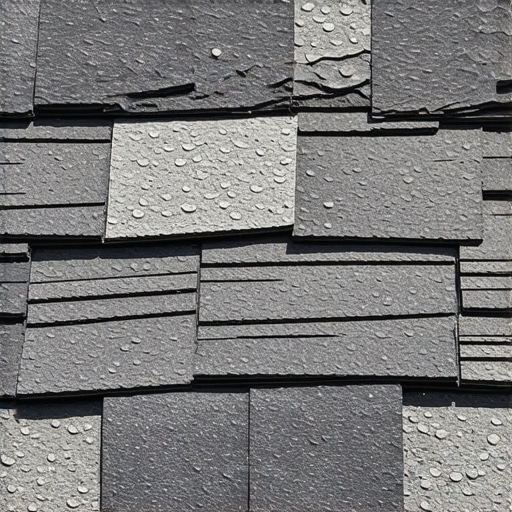
The Forensic Reality of the Desert Peak
Walking on that roof felt like walking on a sponge. I knew exactly what I would find underneath before I even pulled my flat bar from my belt. Up here in the Southwest, where the sun doesn’t just shine—it punishes—the ridge of your roof is the first line of defense and the first to surrender. Most local roofers will tell you that a shingle is a shingle, but they aren’t the ones crawling into a 140-degree attic to see the daylight peeking through a failed peak. After 25 years of investigating why systems fail, I can tell you that ridge shingle wear isn’t just a cosmetic issue; it is a structural countdown. When you look at the peak of your home, you are looking at the most stressed component of the building envelope. It handles the highest wind loads, the most direct UV radiation, and the greatest thermal expansion cycles. If your local roofing companies didn’t account for the specific physics of 2026 ridge shingle wear, you are living under a ticking clock.
“The most important single factor in the performance of a roof system is the quality of the installation.” – NRCA Manual
1. The ‘Smile’ Distortion: High-Heat Curling
In our desert climate, the most common sign of failure is what we call the ‘smile.’ This occurs when the edges of the ridge cap shingle begin to curl upward, losing their bond with the course below. This isn’t just bad luck; it’s a failure of the asphalt chemistry. As the sun beats down, the volatile oils that keep the shingle flexible begin to outgas. Once those oils are gone, the fiberglass mat becomes brittle. When the temperature drops 40 degrees at night—a classic Southwest thermal shock—the material tries to contract, but it has no give left. It pulls at the corners, creating an opening for wind-driven rain. If you see this curling, your ridge is no longer shedding water; it’s catching it. This is why many local roofers now use laser levels to ensure that the initial ridge vent and cap installation are perfectly aligned to minimize this mechanical stress.
2. Granule Migration and the ‘Bald Peak’
Granules aren’t just there for color; they are the sunscreen for your roof. On a ridge, these granules are under constant assault from gravity and wind. I’ve seen roofs where the ridge caps were completely ‘bald’—the gray fiberglass mat was exposed to the sky. When this happens, the UV rays destroy the asphalt binder in months, not years. You might notice piles of granules in your gutters, but the real forensic evidence is at the peak. If the color looks lighter at the very top than on the rest of the slopes, your ridge shingles are thinning out. This degradation is often accelerated by poor ventilation. If the attic isn’t breathing, the ridge is being ‘cooked’ from both sides. You should check the local roofers 4 ways to check 2026 airflow to see if your ventilation system is contributing to this premature wear.
3. The ‘Shiner’ and Capillary Treachery
A ‘shiner’ is a roofer’s term for a nail that was driven in the wrong spot, leaving the head exposed to the elements. On a ridge cap, this is a death sentence. Water is a patient predator. It uses capillary action to move sideways and upwards under the shingle. Once it finds an exposed nail head, it follows the shank down into the decking. Over time, that nail hole expands as the plywood rots. I’ve seen entire ridge boards turned to mulch because a ‘trunk slammer’ didn’t know how 2026 roofing companies secure 2026 ridge shingles using hidden fastening patterns. If you see metal glinting at the peak of your roof, you don’t have a minor repair; you have a direct conduit for moisture to bypass your entire defense system.
“Good design is obvious. Bad design is transparent until it fails.” – Old Trade Axiom
4. Longitudinal Cracking: The Thermal Snap
The fourth sign is the most dangerous because you often can’t see it from the ground. It’s a longitudinal crack running right down the center of the ridge cap, directly over the hinge point of the peak. This happens because ridge shingles are bent to fit the slope. In our environment, the constant expansion and contraction of the roof deck put immense pressure on that bend. If the roofer used standard shingles instead of dedicated ridge caps, the material eventually snaps. Once that crack forms, hydrostatic pressure pushes water through the gap every time it rains. It doesn’t take a hurricane to cause damage; a steady drizzle is enough to soak your insulation and lead to fascia board decay and mold growth. You might even notice signs of ridge cap lift, which is a precursor to the shingle being ripped off entirely during the next high-wind event.
The Surgery vs. The Band-Aid
When you spot these signs, you have two choices. You can call a ‘handyman’ who will slop some plastic cement over the cracks—the ‘Band-Aid’ approach—which will bake and crack again in six months. Or, you can perform the ‘surgery.’ This involves stripping the ridge, inspecting the ridge vent for clogs, and installing high-profile, polymer-modified ridge caps designed for high-UV environments. Many reputable roofing companies now handle high winds by using reinforced starter strips and specialized fasteners that weren’t standard five years ago. Ignoring these signs doesn’t just lead to a leak; it leads to the failure of your entire roof’s structural integrity. Water is patient, but your plywood isn’t. Take care of the peak, or the peak will eventually take care of your bank account.