
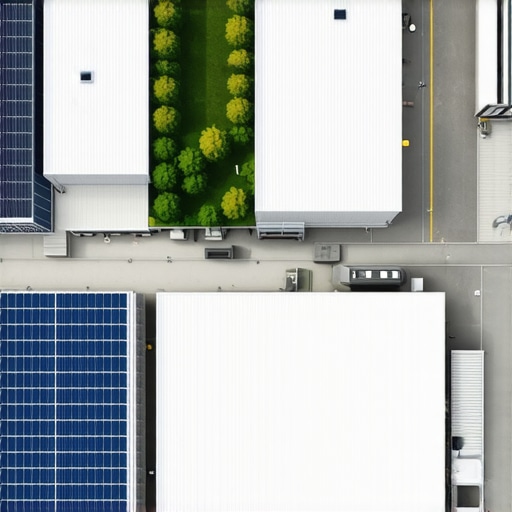
The Forensic Scene: Why Your ‘Green’ Warehouse Roof Is Already Failing
Walking on that roof felt like walking on a wet sponge. I knew exactly what I would find underneath before I even pulled my knife from its holster. In my 25 years of inspecting industrial decks, I have seen it a thousand times: a facility manager buys into the hype of a ‘sustainable’ roof without understanding the physics of the assembly. We peeled back a section of the 60-mil membrane and the smell hit us first—the sour, metallic stench of saturated polyiso insulation. The local roofers who installed this ‘eco-friendly’ system missed the most basic rule of thermodynamics in a cold climate: if you don’t seal the deck bypasses, your building’s warm, moist air will migrate upward, hit the cold underside of that membrane, and turn into what we call ‘attic rain.’ Within three years, a half-million-dollar investment was literally rotting from the inside out.
As we move into 2026, the push for eco-friendly warehousing isn’t just a marketing trend; it is a response to tighter energy codes and the escalating cost of material waste. But roofing for a warehouse is a different beast than residential work. You are dealing with massive squares of real estate where a single ‘shiner’—a misplaced fastener—can create a thermal bridge that drains your R-value faster than an open window. If you are looking at roofing companies to overhaul your facility, you need to look past the gloss of the brochure and into the mechanics of the system.
“A roof is only as good as its flashing and the skill of the applicator who installs it.” – Old Roofer’s Adage
1. Reflective TPO with Bio-Based Adhesives
Thermoplastic Polyolefin (TPO) has been the darling of the warehouse world for decades because it reflects UV rays and keeps the heat out. However, the ‘eco’ part of the equation is evolving. In 2026, the real shift is in how we stick the stuff down. Old-school solvent-based adhesives off-gas VOCs that would make a goat cough. We are now seeing why 2026 roofing companies prefer 2026 TPO seaming using robotic heat welders and bio-based glues. This eliminates the chemical stink and creates a monolithic bond. The physics here is simple: by reflecting the sun’s energy, you reduce the ‘Heat Island Effect’ of your warehouse. When the sun beats down on a black EPDM roof, the surface temperature can scream up to 170°F. A white TPO stays within 10°F of the ambient air, preventing the ‘Thermal Shock’ that causes seams to pull apart as the building expands and contracts at different rates.
2. High-Density Spray Foam (SPF) with Low-GWP Blowing Agents
If you want a roof that acts like a thermal thermos, spray foam is the heavy hitter. I have seen local roofers 4 benefits of 2026 spray foam roofs transform old leaky warehouses into airtight vaults. The magic is in the lack of fasteners. Traditional roofs require thousands of screws that penetrate the deck. Each screw is a tiny ‘thermal bridge’—a highway for cold to enter and heat to escape. SPF is a self-flashing, monolithic layer that expands into every crack and crevice. For 2026, the industry has moved to hydrofluoroolefin (HFO) blowing agents, which have a Global Warming Potential (GWP) of near zero. It’s not just about the environment; it’s about stopping that ‘Attic Bypass’ where your expensive conditioned air escapes through the roof-to-wall transition. When you eliminate those leaks, your HVAC units don’t have to work as hard, extending their lifespan by years.
3. Recycled Content Polymer Tiles for High-Slope Warehouses
Not every warehouse is a flat box. Some older industrial buildings have steep-slope gables that traditionally used asphalt shingles. The problem? Asphalt shingles are basically paper soaked in oil, and they end up in landfills by the ton. We are now seeing why 2026 roofing companies love 2026 recycled slate and polymer tiles made from post-consumer plastic and rubber. These materials are nearly indestructible. While a standard shingle might blow off in a 60 mph gust, these polymer systems are often rated for 130 mph+ winds. From a forensic perspective, they don’t ‘scab’ or lose granules like asphalt, meaning your gutters stay clear and your local roofers 5 signs of 2026 decking rot risks are significantly lowered because the water-shedding surface remains intact for 50 years instead of 15.
“The building envelope must be considered as a whole; any failure in the air barrier leads to a failure in the thermal barrier.” – International Building Code (IRC) Commentary
4. Solar-Ready Integrated Membranes
In 2026, a warehouse roof that isn’t producing power is just wasted space. But here is where the ‘trunk slammers’ kill your investment: they bolt solar racks through a perfectly good roof, creating thousands of potential leak points. The eco-friendly solution is ‘Integrated PV.’ These are thin-film solar laminates that bond directly to the TPO or PVC membrane. No penetrations. No racking. No heavy ballast. This preserves the structural integrity of your roofing and ensures you aren’t dealing with local roofers 4 ways to spot 2026 nail pop leaks caused by the vibration of solar mounts in high winds. If your contractor isn’t talking about integrated solutions, they are living in 2010. You need to ensure the system includes a cricket—a small tapered area that diverts water around the solar arrays—to prevent ponding water, which is the number one killer of industrial membranes.
5. Vegetative ‘Blue-Green’ Roof Systems
For warehouses in urban centers, storm water runoff taxes are becoming a massive overhead cost. A ‘Blue-Green’ roof uses a layer of vegetation to absorb rainwater, while an underlying ‘Blue’ reservoir stores excess water to be released slowly into the storm drains. This prevents the ‘Gully Washer’ effect that overwhelms city sewers. But a word of warning: these roofs are heavy. You cannot just throw dirt on a standard deck. You need roofing companies that understand structural loads and can verify the decking can handle the weight of saturated soil. When done right, the plants protect the membrane from UV degradation, potentially doubling the roof’s lifespan. If you ignore the drainage, however, you will eventually find local roofers 3 signs of 2026 underlayment rot beneath the soil, and that is a nightmare to excavate and fix.
The Reality Check: Don’t Get Sold a ‘Lifetime’ Lie
I am tired of hearing about ‘Lifetime Warranties.’ In the industrial world, a warranty is only a piece of paper if the installation is botched. Most ‘Eco-friendly’ failures I investigate aren’t because the material was bad; they are because the local roofers didn’t understand the chemistry. They used the wrong sealant on a valley or failed to properly flash a HVAC curb. If you want a sustainable warehouse, you have to stop looking for the lowest bid. Look for the guy who carries a moisture probe and a thermal camera. Look for the company that talks about 7 ways 2026 roofing companies reduce carbon impact through precision and waste reduction, not just ‘green’ labels. A roof that lasts 40 years is much more eco-friendly than a ‘green’ roof that you have to tear off and throw in a landfill after seven. Water is patient. It will wait for you to make a mistake, and in a warehouse, that mistake could cost you your entire inventory. Fix it right, fix it once, and make sure your 2026 project isn’t my next forensic autopsy.