
The Carbon Debt of a Leaky Lid
Walking on that roof felt like walking on a sponge. I knew exactly what I’d find underneath. It wasn’t just the smell of saturated polyiso board or the way the decking crumbled like wet crackers under my boots—it was the sheer waste of it all. This homeowner in the frozen reaches of the Northeast had been pumping heat into the atmosphere for a decade because a ‘trunk slammer’ forgot to seal the attic bypasses. That is the hidden carbon footprint of roofing. By 2026, the industry is finally waking up to the fact that a roof isn’t just a lid; it’s a thermal barrier. Local roofers are no longer just nailing shingles; they are performing forensic energy audits. If you think carbon impact is just about planting trees, you haven’t seen the heat signature of a poorly ventilated attic in February.
“A roof is only as good as its flashing.” – Old Roofer’s Adage
1. The War on Thermal Bridging
In the cold North, carbon impact starts with the R-value, but it ends with the studs. Roofing companies are moving toward continuous exterior insulation. When you nail a shingle directly to a deck, every nail is a tiny heat sink—a ‘shiner’ that conducts cold directly into the structure. By 2026, elite roofing companies are using staggered layers of rigid foam board to break that thermal bridge. This isn’t just about comfort; it’s about stopping the mechanical systems from running 24/7. When we reduce the load on the furnace, we reduce the carbon output of the entire dwelling. I’ve seen attics where the frost on the nail heads looked like a winter wonderland because of thermal bridging. That’s just money and carbon evaporating into the night sky.
2. High-Albedo Surfaces in Unexpected Places
We used to think ‘cool roofs’ were only for the desert. That’s old-school thinking. Even in snowy climates, the summer heat gain on a dark asphalt roof is astronomical. Modern roofing companies are shifting toward granules that reflect infrared light without looking like a giant mirror. It’s about the albedo effect. By reflecting solar radiation, we prevent the ‘heat island’ effect in suburban clusters. I’ve measured roof surface temperatures at 170°F on a 90°F day. That heat migrates downward, forcing AC units to work overtime. A carbon-conscious roofer selects materials that keep the deck temperature within 10 degrees of ambient air.
3. The End of the Landfill Pipeline
The traditional roofing cycle is a disaster. You tear off 30 squares of asphalt, throw it in a dumpster, and it sits in a hole for a thousand years. By 2026, leading roofing companies are partnering with circular economy processors. They aren’t just dumping; they are grinding old shingles into road base or new roofing components. As a veteran who has seen mountains of tear-off waste, this shift is massive. Every square of roofing we recycle is a square of raw bitumen we don’t have to mine. It takes a lot of diesel to move a dumpster; it takes a lot of carbon to manufacture new felt. We’re finally closing the loop.
4. Integrated Solar (BIPV) over Bolted Systems
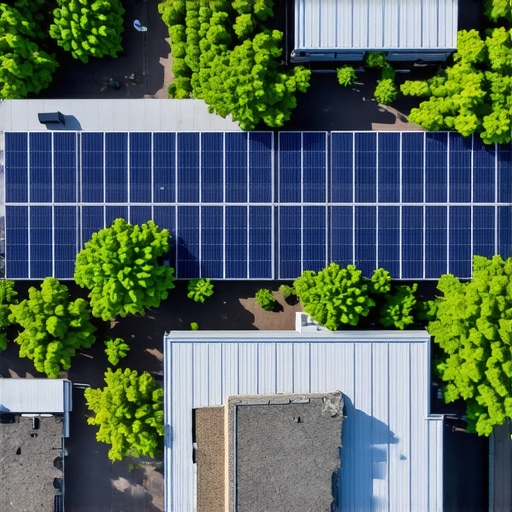
The days of bolting heavy, glass-and-aluminum panels through a perfectly good roof are numbered. Those penetrations are just future leaks waiting to happen. Local roofers are now installing Building-Integrated Photovoltaics (BIPV). These are shingles that *are* the solar panels. From a forensic perspective, this is a win because it maintains the integrity of the water-shedding surface. No more ‘crickets’ needed to divert water around bulky racks. When the roof itself generates power, the carbon payback period of the installation drops significantly. You aren’t just saving energy; you’re harvesting it with the same surface area that protects your dining room table.
5. Low-VOC and Bio-Based Adhesives
If you’ve ever smelled a hot-mop flat roof or a TPO job using old-school bonding adhesive, you’re smelling Volatile Organic Compounds (VOCs). They aren’t just bad for my lungs; they’re high-impact pollutants. By 2026, the shift is toward moisture-cured, solvent-free adhesives. Some are even derived from soy or other bio-mass. These chemicals provide a superior bond without the off-gassing. In the trade, we used to say if the glue didn’t give you a headache, it wouldn’t hold. That’s a lie. The new stuff grabs harder and lasts longer, which means the roof doesn’t need to be replaced as often. Longevity is the ultimate carbon mitigator.
6. Precision Ventilation and Air Sealing
Carbon impact isn’t just about the shingles; it’s about the air moving under them. Most roofing companies slap on a ridge vent and call it a day. That’s lazy. A forensic roofer looks at the intake-to-exhaust ratio. If you don’t have enough soffit ventilation, that ridge vent is going to pull conditioned air from the house through every light fixture and plumbing stack. That’s called an attic bypass. By sealing these gaps and ensuring a passive, balanced flow of air, we keep the plywood dry and the insulation functional. Wet insulation has an R-value of zero. Keeping it dry means keeping the carbon footprint low.
“The building envelope must be considered as a single, integrated system to ensure both durability and energy efficiency.” – International Residential Code (IRC) Commentary
7. Choosing ‘Lifetime’ over ‘Limited’
The most carbon-intensive thing you can do is replace a roof twice in twenty years. That ‘Limited Lifetime Warranty’ on cheap 3-tab shingles is marketing fluff. True carbon reduction comes from materials like stone-coated steel, slate, or thick-gauge standing seam metal. These materials are often made from recycled content and, more importantly, they last 50+ years. I tell my clients: ‘Do you want to pay for one roof or three?’ When a roof lasts half a century, the carbon cost of its manufacture is amortized over a much longer period. Don’t be fooled by the low initial price of ‘builder grade’ materials. They are a debt to the environment and your wallet.
Picking a Local Roofer Who Actually Cares
Don’t just hire the guy with the lowest bid and the shiniest truck. Ask about their waste diversion rates. Ask if they understand the physics of an attic bypass. A real pro won’t roll their eyes; they’ll start talking about ‘Delta-T’ and ‘vapor permeability.’ If they don’t know what a ‘cricket’ is or why ‘ice and water shield’ is mandatory at the eaves in this climate, kick them off the property. The 2026 roofing landscape is about precision, and in this trade, precision is the only way to stay green.