
The Autopsy of a ‘Maintenance-Free’ Failure
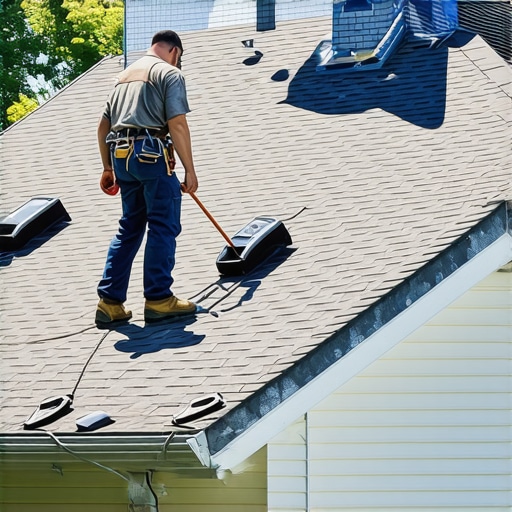
Walking on that roof felt like walking on a sponge. I knew exactly what I’d find underneath before I even pulled my bar. The homeowner in the suburban Northeast had been told his gutter guards were ‘set it and forget it.’ But as I knelt by the eave, the smell hit me—the damp, cloying scent of fermented oak leaves and anaerobic bacteria. This wasn’t just a clog; it was a biological dam. The water hadn’t been going into the downspouts for years. Instead, it was using capillary action to ‘wick’ backward, crawling up under the drip edge and soaking the rafter tails until they had the structural integrity of a wet biscuit. This is what happens when people trust marketing over physics. When you ignore the basic mechanics of how water behaves on a pitched surface, you aren’t protecting your home; you’re just hiding the rot.
“Gutters and downspouts shall be installed to discharge away from the foundation and shall be maintained to prevent overflow.” — International Residential Code (IRC)
In the trade, we see it all the time. A guy spends $5,000 on a fancy guard system but ignores the fact that his gutter pitch failure was the real problem from day one. If the trough doesn’t slope toward the outlet, a guard just acts as a lid for a stagnant swamp. Here is the forensic reality of keeping your foundation dry and your roof deck intact in 2026.
1. The Physics of Surface Tension vs. The ‘Bio-Film’
Most 2026 gutter guards rely on the Coanda effect—the tendency of a fluid to stay attached to a convex surface. In theory, water follows the curve of the guard into the gutter, while leaves drop off the edge. In reality, trees produce more than just leaves; they produce pollen, sap, and microscopic grit. Over a single season, this creates a ‘bio-film’ on the surface of your guards. This film breaks the surface tension. Instead of the water ‘hugging’ the metal, it ‘skips’ over the top like a stone across a pond. This overshoot pours directly onto your foundation, leading to fascia wear that can rot out the wood behind your gutters in less than two years. When selecting a guard, look for stainless steel micro-mesh that breaks this film rather than solid hoods that rely on ‘perfect’ surface conditions.
2. Beware the ‘Shiner’ and Structural Integrity
I’ve seen ‘pro’ installers drive screws through the guard, through the gutter, and straight into the fascia without hitting a single rafter tail. We call that a ‘shiner’ when it misses the mark, and in a cold climate like ours, it’s a recipe for disaster. When snow piles up on that guard, the weight is immense. If the guard isn’t integrated into the structural ‘bones’ of the roof, the whole system will pull away. You’ll start seeing eave damage where the heavy ice-laden gutter starts to sag. In 2026, the best installers are using internal brackets that tie the gutter and guard together as a single unit, ensuring that the 400-pound ice load of a Northeast winter doesn’t rip your trim boards off. This is why many integrated snow guards are now being paired with gutter systems to distribute that weight before it ever hits the trough.
3. The Thermal Bridging Trap
In cold zones, the biggest enemy isn’t leaves; it’s ice. A gutter guard acts as a shelf for snow. Heat leaking from your attic (often due to poor insulation) melts the bottom layer of snow, which then hits the cold gutter guard and freezes instantly. This creates a bridge of ice that climbs right back up the roof. I’ve performed autopsies on roofs where the ice dam was three inches thick, all because the gutter guard prevented the salt or heat tape from reaching the actual downspout. If you are installing guards in a northern climate, you must address air sealing. Many high-end roofing companies now use air seal tech to ensure the attic stays cold, preventing the melt-freeze cycle that turns gutter guards into ice-dam factories.
“A roof is only as good as its ability to shed water away from the structure, and any obstacle to that shedding is a potential point of failure.” — Old Roofer’s Adage
4. Material Compatibility and Galvanic Corrosion
You can’t just slap any metal guard on any gutter. If you put an aluminum guard on a copper gutter, or use zinc-coated screws in a high-grade aluminum system, you are inviting galvanic corrosion. The metals will literally eat each other through an electrochemical reaction. I once saw a ‘lifetime’ guard system crumble into dust because the installer used the wrong fasteners. The guard became a sacrificial anode. Always ensure your local roofers are using compatible alloys. In 2026, we are seeing more stainless steel mesh in aluminum frames, which provides the best balance of longevity and chemical stability. Don’t let a ‘trunk slammer’ ruin a $100-per-square shingle job by using 5-cent screws that will rust out in three seasons. Check your valleys and crickets; if the water is concentrated in one spot, that’s where the corrosion will start first.