
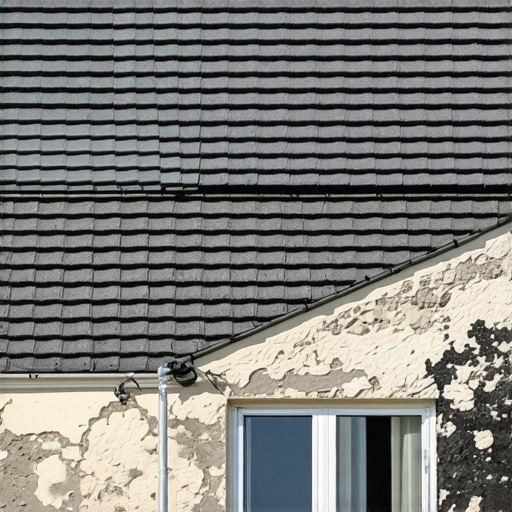
The Soft Walk: A Forensic Look at Why Your Four-Year-Old Roof is Failing
Walking on that roof felt like walking on a sponge. I knew exactly what I’d find underneath before I even pulled my flat bar out of my belt. This wasn’t an old roof. It was a 2022 install, barely four years into its ‘lifetime’ warranty, yet the structural integrity was already shot. In my 25 years as a forensic investigator for roofing failures, I’ve seen it a thousand times: local roofers who understand how to nail a shingle but have zero clue how physics works in a high-humidity environment. We aren’t just talking about a leak; we are talking about a systemic failure of the secondary water barrier. When the underlayment rots, the house starts to breathe poison.
In the humid Southeast, where the air feels like a wet blanket and the sun cooks a roof deck to 160°F by noon, the underlayment is the only thing standing between your drywall and total structural collapse. Many roofing companies still rely on cheap #15 felt or bottom-shelf synthetics that lack the vapor permeability required for modern, airtight homes. When moisture gets trapped between the shingle and the deck—a process called vapor drive—it has nowhere to go but into the wood fibers. This isn’t just ‘wet wood’; it is a biological breakdown of the lignin that holds your house together.
“Underlayment must be integrated with the flashings to provide a continuous drainage plane to shed water off the roof system.” – National Roofing Contractors Association (NRCA) Manual
Sign 1: The ‘Ghost Waving’ and Buckling Shingles
The first sign of underlayment rot isn’t a drip in your living room; it’s a silhouette. When the underlayment begins to decompose or absorb excess moisture, it expands at a different rate than the plywood deck beneath it. This creates a physical ripple. If you stand at the curb during the ‘golden hour’—when the sun is low on the horizon—and see horizontal waves running across your roof, you aren’t looking at bad shingles. You are looking at buckling shingles caused by a failing underlayment that has lost its dimensional stability. As the underlayment swells, it pushes the shingles upward, breaking the thermal seal and leaving the roof vulnerable to the next high-wind event.
This is often exacerbated by local roofers who use too few fasteners or, worse, ‘shiners’—nails that missed the rafter and are just hanging out in the attic space, acting as cold-point conductors for condensation. When those shiners rust, they eat through the underlayment, creating a direct path for capillary action to pull water uphill into the substrate. I’ve seen squares of roofing where the underlayment had essentially turned into a wet pulp, holding water against the deck like a sodden rag.
Sign 2: The Rust-Stained Drip Edge and Fascia Gaps
If you want to find the truth, look at the edges. Underlayment rot often starts at the most vulnerable point: the eaves and valleys. When the underlayment is no longer shedding water but absorbing it, the moisture migrates toward the perimeter via gravity. Look for dark, tea-colored staining on your fascia boards or a crusty, white efflorescence on the underside of your drip edge. This is the ‘juice’ of a rotting roof. It’s the tannin leaching out of the plywood because the underlayment has failed to keep it dry.
When this happens, the wood begins to swell and push away from the rafter tails. You’ll start to see fascia gaps where the trim boards are literally being forced off the house by the expanding rot. Many roofing companies will try to sell you a gutter cleaning or a quick caulk-and-walk, but they are ignoring the cancer inside the system. You can’t fix a rotted heart with a Band-Aid. If the underlayment is compromised at the eave, there is a high probability you are already dealing with extensive decking rot that requires a full-scale surgical replacement.
Sign 3: The ‘Sponge Effect’ and Hidden Underlayment Tears
The most dangerous sign is the one you can’t see from the ground: the loss of fastener pull-through resistance. When I walk a roof and feel that sickening ‘give’ under my boot—what we call the sponge effect—it means the underlayment has reached its saturation point and the plywood has lost its structural ‘memory.’ In the forensics business, we call this the Point of No Return. The underlayment has likely suffered from underlayment tears around the nail heads. Once those holes widen, the roof is no longer a shield; it’s a sieve.
“The roof shall be covered with approved roof coverings secured to the building or structure in accordance with the provisions of this code.” – International Residential Code (IRC) R905.1
The physics of this failure is rooted in hydrostatic pressure. Water gets driven under the shingle laps by wind, and if the underlayment is rotted or torn, that water is forced through the nail holes by the weight of the water above it. It’s a slow-motion disaster. In many cases, the moisture doesn’t even show up as a ceiling stain initially because the attic insulation is acting like a giant diaper, soaking up the evidence until the weight of the wet fiberglass causes the ceiling to collapse. This is why hiring roofing companies that use high-performance, breathable synthetic underlayments is the only way to ensure the longevity of the structure.
The Fix: Don’t Let a ‘Trunk Slammer’ Near Your Deck
If you suspect underlayment rot, the worst thing you can do is wait for the next hurricane season. By the time the water is on your dining room table, the price of the repair has tripled because you’re no longer just replacing shingles; you’re replacing the skeleton of the roof. When vetting local roofers, ask them about their underlayment’s Perm Rating. If they look at you like you have two heads, show them the door. You want a product that allows vapor to escape from the attic while preventing liquid water from entering from the top. That is the only way to survive the climate shifts we are seeing in 2026. A real pro will also know how to fix valley leaks by using a double-layered approach with a dedicated ice and water shield, even if the local code doesn’t strictly require it. In the world of roofing, the code is the minimum, and ‘minimum’ is just another word for ‘almost failing.’ Protect your investment, or be prepared to pay for the same roof twice.