
The Brutal Truth About Flat Roofs in the Desert
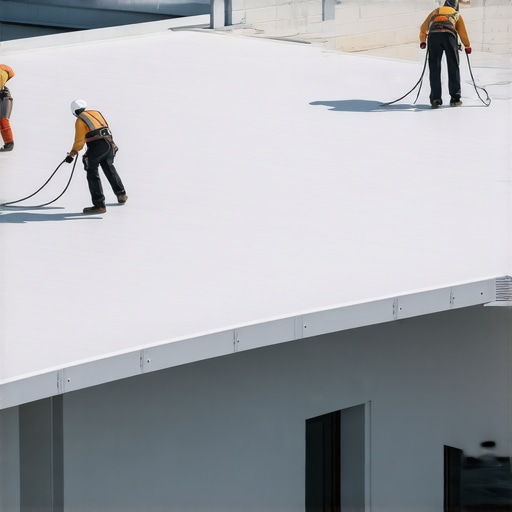
If you have spent any time standing on a commercial roof in the middle of a July afternoon in Phoenix or Las Vegas, you know the heat isn’t just an inconvenience; it is a predatory force. It eats roofing materials for breakfast. By 2:00 PM, the roof deck is a 160°F griddle, and your standard asphalt-based products are literally cooking, off-gassing their essential oils until they become as brittle as a soda cracker. This is why the industry has shifted. Local roofers are no longer just laying down ‘rubber roofs’; they are engineering thermal barriers. The move toward advanced TPO (Thermoplastic Polyolefin) seaming isn’t just a trend; it’s a survival tactic. When we talk about 2026 roofing companies and their methods, we are talking about a fundamental change in how we fuse the envelope of a building together.
The Wisdom of the Old Guard
My old foreman used to say, ‘Water is patient. It will wait for you to make a mistake.’ He had seen it all—the early EPDM failures where the glue turned to powder, and the old-school tar-and-gravel messes that leaked every time a bird landed on them. He taught me that the roof isn’t the white sheet you see from the ground; it’s the microscopic bond at the edge of every roll. If that bond isn’t perfect, you don’t have a roof; you have a very expensive pool liner with holes in it. In the Southwest, the enemy isn’t just water; it’s thermal expansion. A 100-foot run of TPO can grow and shrink significantly as the temperature swings 50 degrees from midnight to noon. If your seams aren’t monolithic, the roof will literally tear itself apart at the scuppers.
“A roof is only as good as its flashing and its seams. In the flat roofing world, if it isn’t fused, it’s failing.” – Old Roofer’s Adage
The Physics of the Weld: Mechanism Zooming
Why are 2026 roofing companies obsessed with seaming? Let’s zoom in on the molecular level. Standard TPO is a sandwich: a top weathering layer, a polyester scrim reinforcement, and a bottom cover. In the old days, we used adhesives—essentially high-grade glue. But glue is a third-party mediator. It sits between two layers and tries to hold them together while the sun beats down on it. Eventually, the chemicals in the glue break down, and the seam ‘fish-mouths’ or simply peels back. In 2026, we don’t glue; we weld. Using a robotic heat welder, we hit the TPO with a blast of air between 800°F and 1,100°F. At this exact temperature, the thermoplastic polymers liquefy. As the robot’s weighted wheels roll over the molten plastic, the two sheets don’t just stick; they fuse into a single, continuous membrane. If you try to pull a proper weld apart, the membrane will tear before the seam does. This is the ‘monolithic’ goal. However, if the local roofers don’t prep flat roofs correctly, even the best welder will fail. Dust, moisture, or even a fingerprint can create a ‘cold weld’—a seam that looks perfect but has zero structural integrity.
The 2026 Innovation: Hybrid and Bio-Glue Seams
The latest shift involves hybrid seams. While heat welding is the gold standard for long runs, the industry has realized that human error at the edges—the corners, the pipes, and the scupper gaps—is where the failures happen. To combat this, companies are now utilizing bio-glue seams and advanced sealants that act as a secondary failsafe. These aren’t your father’s adhesives. They are chemically engineered to bond with the TPO on a molecular level without the need for high heat in tight spaces where a welder won’t fit. This ‘belt and suspenders’ approach is why 2026 roofing companies are seeing fewer warranty claims. They are also using lidar gear to map the roof surface before the first roll is even kicked out. This ensures that the ‘cricket’ (the small peak designed to divert water to the drains) is positioned perfectly so water doesn’t pond over a seam. Ponding water is a magnifying glass for UV rays; it will cook a seam from the top down.
“Thermal bridges and moisture infiltration at the seam are the primary drivers of flat-roof degradation.” – NRCA Technical Manual Reference
The Trap: Warranties and Shiners
Beware the ‘Lifetime Warranty’ pitch. In the roofing trade, a warranty is often just a piece of paper that local roofers use to get the contract. The reality is that most warranties only cover material defects, not workmanship. If a ‘trunk slammer’ misses a nail and leaves a ‘shiner’—a nail head poking through the insulation board under the TPO—that sharp edge will eventually vibrate through the membrane as the building shifts. No manufacturer covers a shiner. That is why the forensic investigation of a roof deck is so vital. You have to look for ‘square’ count and fastener patterns. If the contractor is skimping on the number of fasteners per square to save ten cents, the wind uplift will eventually cause the membrane to flutter. That fluttering creates mechanical stress on the seams, leading to ‘fleece-back’ separation. You want a contractor who treats the roof like a laboratory, not a construction site.
The Final Verdict: Why the Upgrade Matters
If you are looking for roofing companies, you need to ask about their seaming protocol. Do they use automated welders? Do they perform ‘pull tests’ every morning to calibrate for ambient humidity and temperature? Do they understand the capillary action of water moving sideways under a loose lap? If the answer is ‘we just glue it down,’ walk away. The cost of a failed TPO seam isn’t just the repair; it’s the rotten plywood, the mold in the plenum, and the ruined inventory below. In 2026, we have the tech to make a roof last 30 years, but it still takes a veteran’s eye to make sure the machine is doing its job right. Don’t let a cheap quote turn into a forensic nightmare on your dining table.