
The Anatomy of a Dying Attic: Why Your Roof is Choking
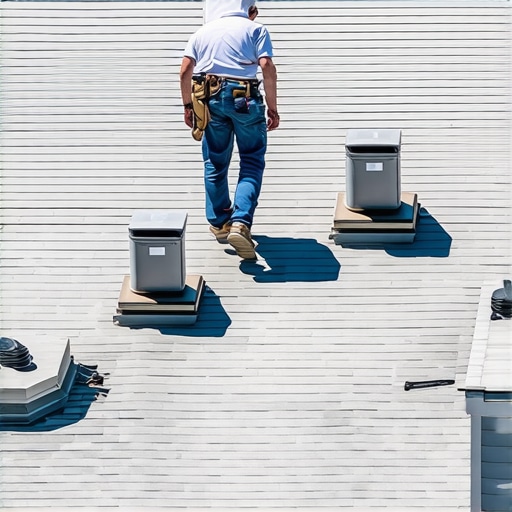
Walking on that roof felt like walking on a sponge. I knew exactly what I’d find underneath. It was a late October morning in a neighborhood where every second house had those tell-tale icicles hanging like daggers in the winter. As I pulled up a single shingle near the ridge, the stench of stagnant, humid air hit me—a mix of wet sawdust and ancient mildew. The plywood wasn’t just wet; it was delaminating, the glue failing as the wood fibers swelled and buckled. This wasn’t a shingle failure. This was a physics failure. The local roofers who did the last tear-off five years ago focused on the ‘pretty’ side of the job but ignored the lungs of the house. They installed three squares of high-end architectural shingles but left the intake vents choked with fiberglass batts. This is the reality of forensic roofing: water doesn’t always come from the sky; sometimes, it’s manufactured right inside your attic through poor airflow.
The Physics of the Stack Effect
To understand airflow, you have to understand the ‘Stack Effect.’ In a cold climate, your house acts like a chimney. Warm air from your living room escapes through ‘attic bypasses’—tiny gaps around light fixtures, plumbing stacks, and top plates. This air is loaded with moisture from your showers and cooking. When that warm, wet air hits the underside of a cold roof deck, it undergoes a phase change. It turns into frost. This is exactly how local roofers identify attic condensation before it turns into a full-blown mold colony. If the airflow isn’t moving that moisture out through the ridge before it can condense, you are essentially living inside a slow-motion car crash.
“The roof shall be ventilated with an unobstructed overlay of air from the eave to the ridge to prevent the accumulation of moisture and heat.” – International Residential Code (IRC) R806.1
1. The Lidar-Enhanced Thermal Audit
In 2026, we don’t just guess where the heat is escaping. We use high-fidelity sensors to map the thermal signature of the roof deck. When I see a ‘hot spot’ near a valley or a chimney, it’s a red flag. It means the insulation has failed or the airflow is being blocked by a poorly constructed cricket or a mass of debris. Many roofing companies now use 2026 lidar gear to create a digital twin of your roof, identifying precisely where the snow will melt first. This isn’t just about heat; it’s about the delta-T—the temperature difference between the attic air and the outside air. If your attic is more than 10 degrees warmer than the thermometer on your porch, your airflow is failing. You’re inviting ice dams to sit on your eave and back up water under your ice and water shield.
2. Mapping the Intake-to-Exhaust Ratio
Airflow is a zero-sum game. You cannot exhaust air that you haven’t brought in. I see this mistake constantly: a contractor installs a massive power vent but keeps the old, painted-over soffit vents from 1974. This creates a vacuum. The power vent starts pulling air from the easiest source—which is usually your conditioned living space through those attic bypasses—rather than from the eaves. This is why roofing companies now use air seal tech to plug those leaks before they even look at the vents. You need a balanced system. If you have 150 square inches of exhaust at the ridge, you better have 150 square inches of intake at the soffit. Anything less, and the air just stagnates in the corners, leading to decking rot that will cost you ten times more than a few extra vents would have.
3. The Baffle Integrity Check
Go into your attic with a flashlight. Look into the tight corners where the roof meets the floor. Can you see daylight? If not, you’ve got a blockage. Often, lazy insulation crews blow cellulose right over the soffit vents, effectively strangling the roof. We look for ‘shiners’—nails that missed the rafter—which act as thermal bridges. In a poorly ventilated attic, these nails will be covered in white frost. When the sun hits the shingles, that frost melts, dripping onto your insulation and destroying its R-value. This is a primary driver of local roofers tracking attic heat loss. If the baffles aren’t clear, the air can’t ‘wash’ the underside of the plywood. You need that constant stream of cold air to keep the deck at ambient temperature.
“A roof is only as good as its flashing—and its ability to breathe.” – Old Roofer’s Adage
4. Identifying Vent Blockage and Smart Sensors
Modern roofing has moved beyond static plastic vents. We are now seeing the rise of sensors that monitor humidity levels in real-time. If the humidity spikes above 60% in the dead of winter, the system alerts the homeowner. This is the most proactive way to solve 2026 vent blockage issues before the plywood turns to oatmeal. If your current roofer isn’t talking about the benefits of 2026 smart vents, they are living in the past. These systems use capillary-break technology to ensure that even wind-driven rain can’t enter the exhaust port while still allowing maximum CFM (cubic feet per minute) of air to exit. It’s the difference between a Band-Aid and actual surgery.
The Cost of Silence
I’ve spent 25 years watching homeowners pay for the same roof twice because they ignored the ‘invisible’ part of the job. You can buy the most expensive shingle on the market, but if you don’t have the airflow to keep it cool and dry, that ‘Lifetime Warranty’ is worth exactly the paper it’s printed on. Most manufacturers have a ‘ventilation clause’—if your attic doesn’t meet the 1/150 rule, they won’t pay a dime when your shingles start blistering and losing granules prematurely. Don’t let a ‘trunk slammer’ convince you that ‘more is always better.’ Too much exhaust without intake will pull moisture in; too much intake without exhaust will cause pressure imbalances. You need a forensic approach. You need to ensure the air is moving, the wood is dry, and the stack effect is working for you, not against you. Check your airflow now, or prepare to check your bank account for a full replacement in five years.