
The sun in the Southwest isn’t just a weather pattern; it is a slow-motion demolition crew. By the time I’m called out to a job site in places like Phoenix or Las Vegas, the damage is usually done. I remember one forensic scene in particular—a ten-year-old shingle roof in Scottsdale that felt like walking on a bag of sun-baked potato chips. Every step I took resulted in a sickening crunch as the brittle shingles disintegrated under my boots. The homeowner thought they had another decade left, but the UV radiation had already cooked the volatiles out of the asphalt, leaving behind nothing but a dry, graying husk that could no longer shed water. This is why 2026 roofing companies have moved beyond basic asphalt and are now leaning heavily into 2026 UV shields to keep decks from turning into ovens.
The Physics of Solar Destruction
To understand why local roofers are changing their tactics, you have to look at what’s happening at a molecular level. UV photons don’t just sit on the roof; they bombard the hydrocarbon chains that hold your shingles together. In a standard asphalt shingle, the bitumen acts as the glue. When that glue is exposed to 160°F surface temperatures, it undergoes a process called photo-oxidation. The binder becomes brittle, the granules lose their grip, and you end up with a ‘bald’ roof. Once those granules are gone, the fiberglass mat is exposed, and at that point, you’re one monsoon away from a catastrophe. 2026 UV shields are designed to stop this cycle by creating a sacrificial layer that reflects up to 85% of solar radiation. We aren’t just talking about white paint here; we are talking about ceramic-infused coatings and 2026 smart shingles that utilize phase-change materials to manage thermal loads.
“Roof systems are subjected to the most severe environment of any building component, with solar radiation being the primary catalyst for material degradation.” — National Roofing Contractors Association (NRCA)
The Application Process: More Than Just a Spray-On
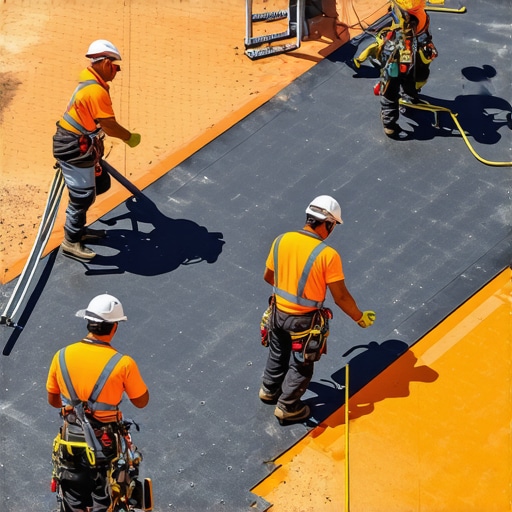
When you see roofing companies applying these shields, it looks simple, but the prep work is where the amateurs fail. If you apply a UV shield over a dirty substrate, you’re just making a expensive sandwich of dust and failure. Professional crews start with a high-pressure pneumatic cleaning of the existing surface, ensuring every square of the roof is free of loose granules and oxidized oils. Then comes the primer. In the desert heat, the primer has to have high elasticity because the roof is going to grow and shrink every single day. This is the phenomenon of thermal shock—a roof can be 160°F at 4:00 PM and drop to 70°F by midnight. If that UV shield doesn’t have the ‘give’ to move with the deck, it will delaminate faster than a cheap sticker on a hot car. This is why many contractors are now using 2026 bio-sealants to ensure the edges and penetrations stay watertight during these massive temperature swings.
The Material Truth: Asphalt vs. The Shield
Most homeowners are sold on ‘Lifetime Warranties,’ but I’ve spent 25 years watching those warranties vanish into the fine print. A ‘lifetime’ in the roofing industry often refers to the expected life of the product in a laboratory, not a roof in Texas. If you want actual longevity, you have to look at the chemistry. 2026 UV shields often involve a liquid-applied membrane that cures into a rubberized skin. This skin is monolithic, meaning there are no seams for the wind to catch. While traditional shingles are laid in courses, overlapping each other and creating thousands of potential entry points for water, a UV-shielded system is essentially one giant, reflective piece of armor. For those with tile roofs, 2026 tech has brought us 2026 clay tile coatings that provide similar UV resistance without changing the aesthetic of the home. This is vital because the underlayment beneath those tiles is often what fails first; it dries out and cracks like an old leather belt left in the sun.
“The exterior envelope shall be designed and constructed to protect the structure from the effects of solar radiation and moisture.” — International Building Code (IRC)
The Trap of the ‘Trunk Slammer’ Contractor
I see it every year: a ‘roofer’ shows up with a bucket of silver paint and calls it a UV shield. They charge five grand, spray it over your old shingles, and disappear. Two years later, the coating is peeling off in sheets, and your attic is still a sauna. Real 2026 UV shield application requires a Square by Square inspection of the deck. We look for ‘shiners’—those nails that missed the joists and are now acting as heat sinks, conducting thermal energy directly into your attic. If your contractor isn’t talking about attic heat loss and ventilation balance, they aren’t installing a shield; they’re just painting a problem. A true UV shield works in tandem with the ventilation system. By reducing the surface temperature of the roof, you reduce the load on your HVAC system. It’s the difference between wearing a black wool sweater in the sun and standing under a high-tech umbrella.
The Forensic Reality: Why 2026 Tech Matters
In my experience, the most common failure point in any UV-heavy environment is the valley. These areas collect debris which holds heat and moisture, accelerating the breakdown of the material. When roofing companies apply 2026 shields, they pay extra attention to these transition zones. They use reinforced fabric mats embedded within the UV coating to provide extra tensile strength. This prevents the ‘alligatoring’ effect—those tiny cracks that look like reptile skin—which is a hallmark of sun-damaged bitumen. Furthermore, the use of 2026 LiDAR quotes allows crews to measure the exact pitch and orientation of every facet of your roof. Why does that matter? Because the south-facing slope needs a thicker application of the UV shield than the north-facing slope. It’s forensic-level precision that simply didn’t exist a decade ago. If you’re looking at a replacement or a major repair, don’t just ask about the price per square; ask about the solar reflectance index (SRI) and the elongation properties of the shield they’re using. Because in the desert, a roof that can’t handle the sun isn’t a roof at all—it’s just an expensive timer counting down to your next leak.