
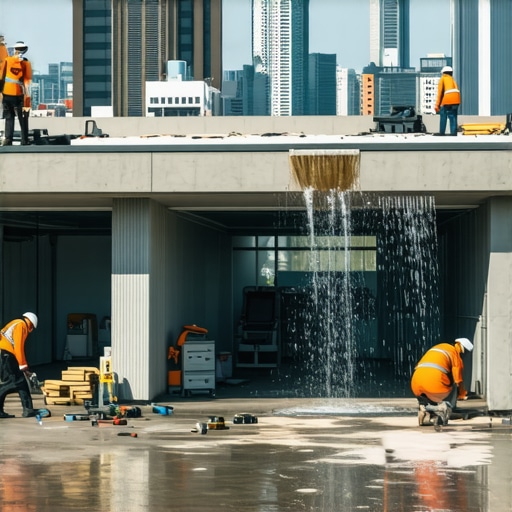
The Anatomy of a Midnight Drip: Why Your Flat Roof is Failing
The sound isn’t a splash; it’s a rhythmic, heavy thud against the ceiling tile at 2 AM. By the time you see that yellowing ring on the drywall, the crime has been committed months, maybe years, ago. My old foreman, a man who had knees like crushed gravel and a permanent squint from forty years of sun-glare, used to tell me, ‘Water doesn’t just fall; it searches. It’s patient. It will wait for you to make a mistake, and then it will live inside your deck until it rots the soul out of the building.’ He wasn’t being poetic. He was talking about the inevitable physics of flat roofing in our brutal northern climate, where thermal bridging and ice dams turn a minor oversight into a fifty-thousand-dollar tear-off.
Walking a flat roof in 2026 feels different. The materials have changed, but the incompetence of many local roofers has remained remarkably consistent. I recently stepped onto a commercial deck in a cold-zone metro where the TPO membrane looked pristine from the ladder. But as I walked toward the scuppers, the surface felt like a sponge. Every step resulted in a ‘pumping’ sensation—the unmistakable sound of water trapped between the membrane and the polyiso insulation boards. This wasn’t a product failure. It was a forensic masterclass in how roofing companies cut corners to win bids in an era of rising material costs.
Tactic 1: The ‘Liquid Gold’ Silicone Mask
In 2026, we are seeing a massive surge in companies selling silicone restoration coatings as a ‘permanent fix’ for active leaks. Here is the reality: silicone is a fantastic product for UV protection, but applying it over a wet substrate is the ultimate industry sin. Many roofing companies will power-wash a roof on Monday and ‘seal’ it on Tuesday. They are effectively gift-wrapping a puddle. The moisture stays trapped. When the sun hits that roof, the water turns to vapor, expands, and creates ‘alligatoring’ or massive blisters in the new coating. You don’t need a coating; you need a moisture scan. If a contractor doesn’t pull an infrared camera out of their truck to check for saturated insulation before quoting a coating, they aren’t a roofer—they’re a painter with a high-margin product.
“A roof is only as good as its flashing, and a flat roof is only as good as its drainage logic.” – Old Roofer’s Adage
Tactic 2: The Omission of the Cant Strip and Proper Termination
Physics doesn’t care about your budget. When you transition from a flat deck to a vertical parapet wall, you create a 90-degree angle. In cold climates, the building moves. It breathes. Without a cant strip—that angled bit of wood or fiberboard that creates a 45-degree transition—the roofing membrane is forced to make a sharp turn. Over time, ‘bridging’ occurs. The membrane pulls away from the wall, creating a void. Eventually, a technician or even a heavy bird steps on that void, and the membrane snaps like a frozen cracker. I see roofing companies in 2026 skipping these ‘details’ to save a few bucks per square. They rely on heavy beads of caulk at the termination bar, but caulk is a maintenance item, not a structural waterproof seal. When that ‘shiner’ (a missed nail) or a gap in the sealant opens up, capillary action sucks the water upward, behind the membrane, and straight into your plywood.
Tactic 3: The ‘Ghost Seam’ and Heat-Welding Shortcuts
Thermoplastic Polyolefin (TPO) is the king of the 2026 market, but it requires a surgeon’s touch with a hot-air welder. A ‘ghost seam’ happens when the roofer moves too fast or the welder’s temperature is offset by the wind chill. To the naked eye, the seam looks closed. But the molecular bond never happened. When the first deep freeze hits, the material contracts, and the seam ‘zips’ open. Local roofers who are used to shingle work often fail to realize that flat roofing is chemistry, not just carpentry. They ignore the thermal bridging caused by improper fastener patterns, which allows heat to escape the building, melt snow on the roof, and create an ice dam at the cold edge of the parapet.
The Forensic Truth About Your Insulation
When I perform an autopsy on a failed flat system, the ‘oatmeal’ effect is what I dread most. In northern zones, the absence of a proper vapor barrier leads to condensation forming on the underside of the membrane. The water isn’t coming from the rain; it’s coming from the humid air inside your building. If your roofing company doesn’t talk to you about R-value and air sealing, they are setting you up for a catastrophic failure. Capillary action can pull water three feet uphill under the right pressure conditions. That tiny leak in the corner? It might be feeding a mold colony twenty feet away in the center of the room.
“The building envelope must be continuous. Any break in the thermal or moisture barrier is an invitation for structural decay.” – Principles of Modern Architecture
The Surgery vs. The Band-Aid
You have two choices when the drips start. You can pay for ‘The Band-Aid’—more caulk, more coating, more excuses. Or you can opt for ‘The Surgery.’ This involves a localized tear-off to inspect the substrate. If the plywood is black or the insulation is heavy enough to wring out like a towel, no amount of ‘top-side’ repair will help. You have to remove the rot. A real roofer will check your scuppers and crickets (those small peaks built to divert water) to ensure the ponding water isn’t staying on your roof for more than 48 hours. If you have standing water three days after a rain, you don’t have a roof; you have a swamp. And swamps always win. Don’t let a ‘trunk slammer’ convince you that a bucket of tar is a 20-year solution. Demand a forensic approach, or prepare to pay for the same leak twice.