
Walking on that school roof felt like walking on a massive, water-logged sponge. I knew exactly what I’d find underneath before the shovel even hit the gravel. When we pulled the first square of three-ply BUR, the smell of fermented wood hit me—a sour, swampy stench that tells you the deck has been gone for a decade. This wasn’t just a leak; it was a systemic failure caused by 500 kids exhaling moisture in a gym below and a roofing system that had no idea how to handle vapor drive. Local roofers had been patching it for years, but they were just chasing ghosts. If you’re managing a school facility in 2026, you aren’t just looking for a lid; you’re looking for a thermal defense system that doesn’t rot your tax dollars from the inside out.
“The primary purpose of a roof is to keep water out of the building, but its secondary purpose is to keep the building’s climate in.” – National Roofing Contractors Association (NRCA) Guidelines
Schools are notorious for thermal bridging. Imagine thousands of metal fasteners acting like little heat-sucking straws, pulling warmth out of the classrooms and sending it straight into the snowpack above. This creates the classic ice dam cycle. Water melts, runs to the cold eave, freezes, and eventually backs up under the shingles or membrane through capillary action. It doesn’t just drip; it gets sucked upward by the physics of surface tension.
The Recycled Rubber Revolution
Most roofing companies are finally waking up to the durability of recycled rubber shingles. These aren’t the flimsy mats of the nineties. We’re talking about compression-molded polymers that can take a two-inch hailstone without flinching. For a school board, this is the ‘buy once, cry once’ solution. When we install these, we’re looking at material that often diverts thousands of tires from landfills. But more importantly for the North, they provide a natural dampening effect for acoustics. No more ‘pinking’ sounds during a rainstorm while kids are trying to take state exams. If you’re seeing why 2026 roofing companies now use recycled rubber, it’s because the lifecycle cost outperforms asphalt by a factor of three.
White PVC and the Reflective Myth in the North
Here is where the ‘Material Truth’ hits the low-bid contractors. Many architects specify white TPO or PVC for ‘eco-friendliness’ because it reflects UV rays. In a cold climate, that’s often a mistake. A white roof in a northern winter stays cold, which means the dew point stays inside your insulation layer. You end up with ‘internal rain’—condensation forming on the underside of the deck because the roof couldn’t warm up enough to dry out the assembly. If you go with high-performance membranes, you must use why 2026 roofing companies now use air seal tech to prevent that moisture migration. We’ve seen local roofers 3 signs of 2026 attic heat loss manifest as literal icicles hanging from the steel joists inside a school’s plenum.
The Living Roof: Stormwater vs. Structural Load
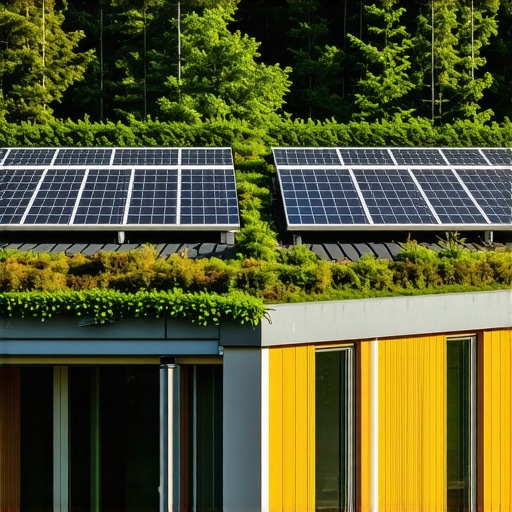
Green roofs are the ultimate eco-flex, but they are a forensic nightmare if done poorly. A school roof with two feet of saturated soil is a massive structural liability. However, for 2026, we’re seeing ‘tray systems’ that allow for localized drainage. These systems mitigate the ‘Urban Heat Island’ effect and act as a massive filter for stormwater runoff.
“A roof is only as good as its flashing.” – Old Roofer’s Adage
If the flashing at the parapet wall isn’t integrated with a secondary water barrier, that expensive green roof will just hide a rotting deck for five years until the principal’s desk is under a waterfall. If you’re considering this, check out 5 eco-friendly roofing solutions for 2026 green roofs to understand the maintenance tail.
Standing Seam Metal with Integrated Solar
Metal is the only permanent solution in my book. A standing seam roof doesn’t have exposed fasteners—those ‘shiners’ that eventually back out and create leak points. Instead, the panels are held by clips that allow the metal to breathe. Thermal expansion is a beast; a 100-foot run of steel can grow an inch or more between a February morning and a July afternoon. If your roofing company doesn’t account for that, the roof will literally tear itself apart. In 2026, we’re clipping solar film directly to the ribs, meaning no penetrations. You get a 50-year roof that pays for the school’s electricity. It’s a no-brainer for long-term planning.
The Bio-Based Insulation and Vapor Barrier Defense
The real eco-friendly hero isn’t the part you see; it’s the R-value in the ‘sandwich.’ We are moving away from petroleum-heavy polyiso to bio-based foams and recycled cellulose buffers. But here’s the trap: if you don’t have a smart vapor retarder, you’re toast. You need a membrane that closes up in the winter to keep indoor humidity out of the roof, but opens up in the summer to let any trapped moisture escape. We call it ‘the lung.’ Without it, you’re just building a giant petri dish over the students’ heads. Many 7 ways 2026 roofing companies reduce carbon impact involve these hidden material swaps. If you ignore the air sealing, you’ll eventually deal with rotten fascia boards and saturated insulation, which costs double to fix. Don’t let a ‘trunk slammer’ tell you that a double layer of felt is enough. Demand a cricket at every chimney and a valley liner that can actually handle a 100-year storm event. The climate isn’t getting any gentler, and ‘low bid’ is just another word for ‘lawsuit’ in five years.