
The Forensic Reality of the 140-Degree Attic
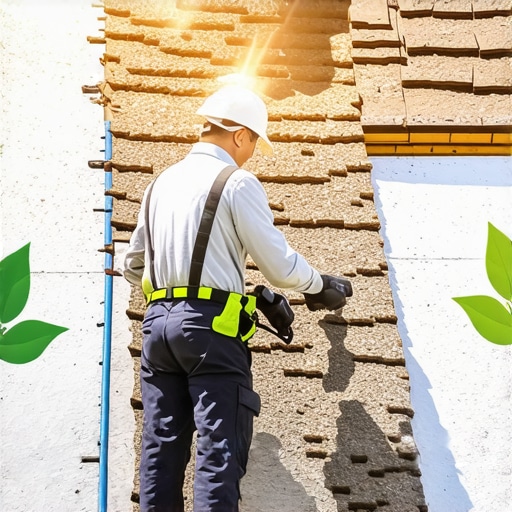
Walking on that roof felt like walking on a sponge. I knew exactly what I’d find underneath. It wasn’t just a leak from above; it was a slow-motion suicide from below. When I finally peeled back the shingles and the rotted plywood decking, the stench of stagnant humidity hit me like a physical wall. This wasn’t a failure of the asphalt or the underlayment. It was a failure of physics. The old fiberglass batts in the joists were black with mold, looking like filters from a heavy smoker’s lungs. They hadn’t stopped the heat; they’d just provided a cozy home for moisture to condense against the cold underside of the roof deck. This is why the conversation about 2026 insulation standards isn’t just about ‘saving the planet’—it’s about saving your home from its own breath.
The Physics of Failure: Why Traditional Insulation is Quitting
For decades, local roofers have relied on a ventilated attic system. You know the drill: soffit vents at the bottom, ridge vents at the top, and a thick layer of pink fiberglass on the floor. In theory, air flows through and keeps the deck dry. In reality, it rarely works as advertised. In cold climates like Minneapolis or Boston, warm air leaks through ‘attic bypasses’—tiny gaps around light fixtures or plumbing stacks. This warm, wet air hits the cold roof deck, turns into frost, and then melts, creating what most homeowners mistake for a roof leak. By the time 2026 building codes are fully adopted, the old way of doing things won’t just be inefficient; it will be illegal in many jurisdictions due to new R-value requirements that fiberglass simply can’t meet without being three feet thick.
“A roof is only as good as its flashing, but a house is only as healthy as its thermal envelope.” – Forensic Building Axiom
The Bio-Foam Shift: More Than Just Marketing
Roofing companies are increasingly pivoting to bio-foam, specifically soy-based or vegetable-derived spray polyurethane foam (SPF). Unlike the petroleum-heavy foams of the early 2000s, these 2026-compliant materials use renewable polyols. But let’s look past the ‘green’ label. As a forensic investigator, I care about the seal. Bio-foam is applied as a liquid that expands into every crevice, creating an airtight barrier. This stops convection—the actual movement of air—which accounts for up to 40% of a home’s heat loss. When you spray this stuff directly to the underside of the roof deck, you’re creating an ‘unvented attic.’ You’re moving the thermal boundary from the floor of the attic to the roofline. No more wind-washing of insulation, no more shiners (those missed nails that act as tiny heat sinks and drip condensation), and no more ice dams caused by escaped heat melting the snow on your eaves.
Mechanism Zooming: Capillary Action and the Dew Point
Let’s talk about the Dew Point. In a standard roof, the dew point—the temperature where air can no longer hold its water vapor—often occurs right against your plywood decking. With bio-foam, the insulation is so dense and the air seal so tight that the dew point is pushed outside the building envelope. You’re essentially turning your attic into a conditioned space. This prevents the ‘oatmeal deck’ syndrome where the wood fibers lose their structural integrity because they’ve been damp for six months of the year. Bio-foam acts as a secondary water barrier. If a shingle blows off in a storm, the foam itself can often stop the water from reaching your drywall. It’s not a substitute for a good drip edge or proper valleys, but it’s a hell of a safety net.
[IMAGE_PLACEHOLDER]
The Material Truth: Bio-Foam vs. The Alternatives
When you look at the 2026 market, you’ll see three main contenders: Bio-Foam, Mineral Wool, and Rigid Board. Let’s be brutal. Mineral wool is great for fire resistance, but it’s heavy and doesn’t stop air. Rigid board is a nightmare to install on an existing roof without creating thermal bridging at every joint. Bio-foam is the only material that addresses the ‘complexity of the geometry.’ Attics are messy. They have rafters, braces, wires, and pipes. A spray-applied bio-foam flows around these obstacles and seals them. If you’re hiring roofing companies that are still pushing ‘blow-in’ cellulose for a high-performance 2026 build, they’re living in the past. They’re selling you a square of coverage when they should be selling you a performance metric.
“The attic space is contained within the thermal envelope when unvented attic assemblies are used.” – International Residential Code (IRC) R806.5
The Trap: Why ‘Lifetime Warranties’ Are Often Smoke
I’ve seen plenty of ‘lifetime’ roofs fail in five years. Why? Because the warranty covers the material, not the chemistry of the install. Bio-foam requires a skilled technician who understands exothermic reactions. If they spray it too thick in one pass, the foam can char or even catch fire from its own heat. If they mix the A and B sides at the wrong temperature, it won’t adhere to the decking, and you’ll end up with a gap where moisture will hide. Don’t be fooled by a local roofer who just bought a spray rig last week. You need a forensic-level installer who checks the moisture content of the wood before they pull the trigger. If they spray over wet wood, you’re just sealing in the rot.
Climate Logic: Northern vs. Southern Applications
In the North, we use bio-foam to stop the Stack Effect—the tendency of warm air to rise and suck cold air in through the basement. In the South, the enemy is Radiant Heat. A roof in Texas can reach 160°F. Traditional insulation just soaks that heat up and slowly releases it into the house all night. Bio-foam, especially when paired with a radiant barrier or high-reflectivity shingles, stops that heat at the gate. It reduces the load on your AC unit, which is vital as energy prices continue to climb toward 2026 projections. No matter where you are, the goal is the same: stop the exchange of energy that shouldn’t be happening.
The Cost of Waiting: Why 2026 is the Deadline
Why am I talking about 2026? Because the transition to low-GWP (Global Warming Potential) blowing agents is becoming mandatory. The older, cheaper foams are being phased out. If you’re planning a roof replacement now, you need to decide if you want to install yesterday’s technology or tomorrow’s. Sticking with old-school insulation means your home will be less comfortable, harder to sell, and more expensive to keep. Roofing companies that embrace bio-foam are the ones who will still be in business when the codes finally catch up to the reality of building science. Don’t let a ‘trunk slammer’ convince you that fiberglass is ‘just as good.’ Your roof deck—and your wallet—knows the difference.
This post really highlights the importance of advanced insulation techniques like bio-foam, especially considering the sustained moisture issues I’ve seen in traditional systems. As someone who’s dealt firsthand with mold and condensation problems, I find the idea of sealing the attic to be a game-changer. I appreciate the detailed explanation about how the dew point shifts outside the envelope with dense foam; it makes a lot of sense from a building science perspective. My question is: how easy is it to retrofit existing homes with bio-foam, and what kind of long-term maintenance would be required? Also, do you think this is a cost-effective solution for homeowners, or does the initial investment outweigh the benefits over time? I’d love to hear from others who’ve explored or implemented this approach, especially in colder climates where moisture issues are more prominent.
This post really sheds light on the critical importance of proper insulation and sealing, especially when you consider how traditional methods are becoming obsolete with new codes coming in. The idea that dense bio-foam can effectively turn attics into conditioned spaces is impressive, and it seems like a smart long-term investment for homeowners concerned about moisture, energy efficiency, and durability. Personally, I have some experience with retrofitting older homes in colder climates, and while spray foam insulation can be a game changer, it does require careful application and skilled installers to prevent issues like improper adhesion or moisture sealing failures.
I’m curious about the practical side of retrofit projects—does anyone have insights on how easily bio-foam can be applied in existing residential structures, especially in tight or hard-to-access spaces? Additionally, what long-term maintenance or checks are advisable once this system is in place? It seems like a highly effective solution, but the cost and complexity may be considerations for average homeowners. Overall, embracing this technology in new builds makes sense—less moisture issues, better energy efficiency, and compliance with upcoming standards. Would love to hear others’ experiences or advice on retrofitting older homes with bio-foam.