
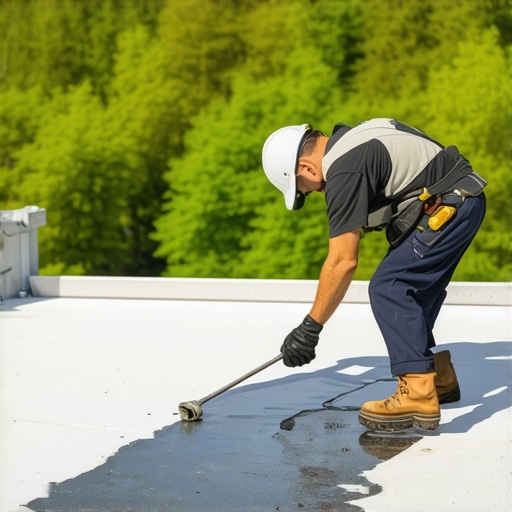
The Chemistry of Failure on the Roof Deck
I’ve spent three decades watching roofs die. Most of the time, they don’t die because of a sudden, violent storm; they die because of chemistry and the slow, agonizing departure of petroleum-based oils. By the time a homeowner sees a brown spot on the ceiling, the battle was lost five years ago. As we approach 2026, the industry is hitting a wall. The old way of doing things—smearing petroleum-based ‘mastic’ over every problem—is failing faster than ever because the quality of modern asphalt shingles has plummeted. That is why the most experienced roofing companies are pivoting to bio-sealants.
My old foreman used to say, ‘Water is patient. It will wait for you to make a mistake.’ I remember him showing me a leak in a century-old Victorian in Boston. The water wasn’t coming from where the hole was; it was traveling six feet sideways along a rafter because of a single rusted nail head—a ‘shiner’—that was wicking moisture through capillary action. He taught me that roofing isn’t about shingles; it’s about managing the physics of liquid. Today, that management is becoming biological.
“A roof is only as good as its flashing.” – Old Roofer’s Adage
The Molecular Decay of Asphalt
To understand why local roofers are obsessed with bio-sealants for 2026, you have to look at a shingle under a microscope. An asphalt shingle is essentially a fiberglass mat soaked in bitumen and covered in ceramic granules. The bitumen is what keeps the roof waterproof, but it’s packed with volatile organic compounds (VOCs). From the second that shingle hits the roof in a climate like the Northeast, the sun begins to cook those oils out. This process, known as oxidation, makes the shingle brittle. When the temperature drops to 10 degrees and the roof expands and contracts, the brittle asphalt cracks. These micro-fissures are the entry points for the enemy.
Standard petroleum sealants are ‘dumb.’ They sit on top of the shingle like a Band-Aid. But bio-sealants, often derived from soy or vegetable polyols, work through molecular penetration. They don’t just sit on the surface; they are engineered to soak back into the asphalt matrix, replacing the lost oils and restoring the shingle’s ability to flex. This isn’t just a repair; it’s a chemical reboot of the roof’s lifespan.
Why 2026 is the Tipping Point
The shift toward these materials isn’t just about performance; it’s about the tightening grip of environmental regulations and the rising cost of crude oil derivatives. By 2026, many of the high-VOC primers we used to rely on will be phased out. Smart roofing companies are getting ahead of the curve. They realize that a bio-sealant offers a ‘secondary water resistance’ layer that traditional felt or synthetic underlayment can’t match. When we talk about a ‘Square’ of roofing—100 square feet—the amount of bio-sealant needed to reinforce the valleys and penetration points is minimal compared to the cost of a full tear-off when the asphalt fails prematurely.
The Physics of Capillary Action in Cold Climates
In regions plagued by ice dams, the physics are brutal. When snow melts on the upper part of the roof and freezes at the eave, it creates a dam. Standing water then gets pushed *upward* under the shingles. This is where the ‘Mechanism Zooming’ becomes vital. Water moves through capillary action—the same way a paper towel drinks up a spill. If your local roofers are still using standard plastic cement, that cement will eventually shrink and pull away from the shingle, creating a tiny gap. That gap is a highway for water. Bio-sealants maintain a ‘wet’ bond. They stay tacky and flexible even when the thermometer hits sub-zero, ensuring that the bond between the shingle and the flashing remains airtight.
“The roof shall be covered with approved roof coverings secured to the building or structure in accordance with the provisions of this code.” – International Residential Code (IRC), Section R903.1
The ‘Lifetime Warranty’ Illusion
Don’t let a salesman tell you a ‘Lifetime Warranty’ means you’ll never pay for a roof again. Most of those warranties are prorated and cover only manufacturing defects, not ‘wear and tear’ caused by the sun baking your shingles into potato chips. If you don’t maintain the flexibility of the asphalt, the warranty is effectively useless. This is why forensic roofing experts focus on the ‘Cricket’—that small peak behind a chimney—and the valleys. These are the high-stress areas where thermal expansion is most violent. Applying a bio-polyol sealant to these junctions in 2026 will be the standard for extending a roof’s life by another decade.
The Fix: Surgery vs. Band-Aids
When I inspect a roof that’s ‘leaking,’ I’m looking for the path of least resistance. Often, the ‘repair’ offered by trunk-slammers is a tube of caulk and a prayer. That’s a Band-Aid. ‘Surgery’ involves removing the damaged courses, inspecting the plywood for delamination—if it feels like walking on a sponge, it’s gone—and then integrating a bio-sealant system that bonds the new materials to the old at a chemical level. This prevents the ‘thermal shock’ that occurs when new, flexible shingles are nailed directly against old, brittle ones.
How to Vet Your Local Roofers
If you’re looking for roofing companies to handle a 2026 repair, ask them about their sealant chemistry. If they say ‘we just use the black stuff in the tube,’ keep looking. You want a team that understands the difference between a mechanical bond and a chemical bond. Ask if they use stainless nails in salt-air environments or how they handle ‘thermal bridging’ in the attic. A contractor who doesn’t talk about ventilation and chemistry isn’t a roofer; they’re a shingle-nailer. Your roof is a system, and in 2026, that system is going green—not just for the planet, but for the sake of your plywood. Stop waiting for the leak to tell you there’s a problem. By the time the water hits your floor, the roof has been dead for years.
This article really sheds light on the hidden decay happening beneath our roofs, which often goes unnoticed until it’s too late. The move toward bio-sealants makes a lot of sense, especially considering how traditional petroleum-based options are becoming less effective and more environmentally questionable. I’ve seen some local roofing companies starting to adopt these newer materials, but I wonder how widespread their use actually is, and if the costs are comparable or if they’re still considered a premium service. From my perspective, the key will be educating homeowners about the importance of investing in these preventive measures early, especially in climates prone to freezing and thawing cycles. Have any of you had experience with bio-sealants in real-world applications? Do they really extend the lifespan as promised, or are there still issues we should be aware of? I’d love to hear some firsthand stories or recommendations for brands and installers that are leading the way in this shift.
This article offers an insightful perspective on how traditional roofing materials are simply not designed to keep up with the harsh realities of modern climates and environmental influences. The shift towards bio-sealants is quite promising, especially considering how their molecular integration can potentially restore the flexibility of aging shingles and improve overall durability. In my experience, many homeowners underestimate the importance of addressing micro-fissures early, which Bio-sealants seem well-equipped to handle by penetrating and reinforcing the asphalt at a molecular level. Have any of you tried using bio-sealants in colder regions, where ice dams and freeze-thaw cycles are prevalent? It seems like maintaining a flexible, ‘wet’ bond would be a game-changer in preventing leaks caused by capillary action, even in sub-zero temperatures. It will be interesting to see how these innovations develop as more contractors adopt environmentally friendly materials in the coming years.
Reading this post really highlights how crucial it is to rethink our approach to roofing in the face of environmental and material deterioration. I’ve personally seen older roofs with micro-fissures that, if caught early with a molecularly penetrating bio-sealant, could extend their lifespan significantly. I’m curious, though—do any of you have experience with bio-sealants being effective in very humid or coastal climates where salt and moisture might influence the chemical bonding? Also, considering the push toward environmentally friendly materials, do these sealants pose any long-term risks or benefits for the surrounding ecosystem? It’s fascinating how the chemistry of water, materials, and now biology converges in roofing technology. What strategies have worked best in your experience for convincing homeowners or clients to invest in preventive measures like bio-sealants before visible damage occurs? I believe early intervention not only saves money but also reduces waste and environmental impact in the long run. Would love to hear some insights or success stories regarding proactive roof maintenance.