
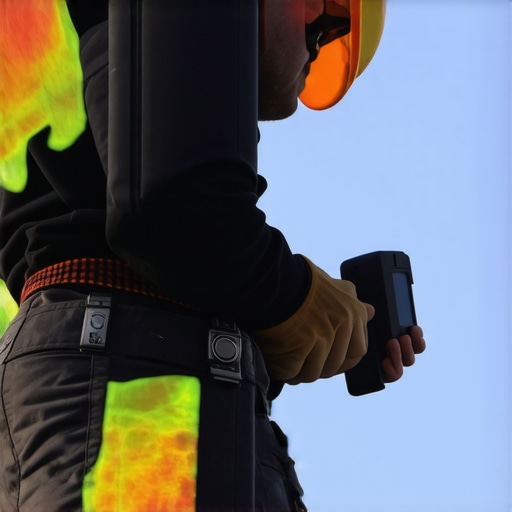
Walking on that roof felt like walking on a sponge. I knew exactly what I’d find underneath. To the untrained eye of the homeowner, the shingles looked intact—maybe a bit of granule loss, but nothing that screamed ‘catastrophe.’ But the soles of my boots don’t lie. Every step had a sickening give, the kind of subtle bounce that tells a forensic roofer the decking has lost its structural integrity. This wasn’t a leak you could see from the living room yet. This was a slow-motion disaster fueled by thermal bridging and poor air sealing, the kind of mess that local roofers often overlook because they’re too busy counting squares and slapping on new felt. In 2026, if your roofing companies aren’t pulling out an infrared camera, they aren’t inspecting; they’re guessing.
The Ghost in the Attic: Physics of the Thermal Bridge
The average homeowner thinks a roof fails from the top down. They wait for a storm, a fallen branch, or a missing shingle. But the reality I see every day is that roofs fail from the bottom up. We’re talking about the mechanism of internal condensation. In our freezing northern winters, your attic becomes a battleground. Warm, moist air from your shower or kitchen migrates upward—a process called an attic bypass. When that warm air hits the cold underside of your roof deck, it reaches the dew point. It turns back into liquid water, right against your plywood. This is where thermal mapping becomes the only tool that matters. It detects the ‘ghosting’ of heat loss. When I look through a FLIR lens, I’m not just looking for wet spots; I’m looking for where your R-value has failed. A ‘shiner’—that’s a nail that missed the rafter and sits exposed in the attic—acts as a tiny frozen spear. It gets cold from the outside, and in the morning, it starts to ‘sweat’ inside your attic. Multiply that by a thousand missed nails, and you have a rainstorm inside your house that no amount of new shingles will fix.
“The primary purpose of a roof system is to provide weather protection. To achieve this, a roof must be designed to withstand the elements of the specific climate.” – National Roofing Contractors Association (NRCA)
Blueprint of a Forensic Autopsy: The Dining Room Leak
I recently got called to a house where water was dripping onto a mahogany dining table. The homeowner had already paid three different roofing companies to ‘patch’ the valley. They’d smeared buckets of mastic over the shingles, creating a hideous black scar, yet the water kept coming. I didn’t look at the valley first. I went to the attic. Using thermal mapping, I saw a massive heat signature coming from a recessed light fixture directly below the leak. The physics were simple: hydrostatic pressure. The ice damming caused by the heat leak was backing water up under the shingles. The water wasn’t coming through the valley; it was being pushed sideways by capillary action. Capillary action is the enemy. Water can travel uphill between layers of underlayment if the surface tension is right. Those ‘cheap’ guys just added more ‘sticky stuff,’ which actually trapped the moisture against the wood, accelerating the rot. The plywood had turned into a delaminated wafer, barely holding the weight of the shingles. We didn’t just need a patch; we needed ‘the surgery’—a full tear-off, Ice & Water Shield installation that actually meets the 2026 energy codes, and a properly sized cricket to divert water away from the chimney. If you ignore the flashing, you’ll eventually deal with rotten fascia boards, which costs double to fix.
The Myth of the Lifetime Warranty
Don’t get me started on the ‘Lifetime Warranty’ stickers. Most of those are marketing fluff. They cover the material, sure, but they don’t cover the ‘trunk slammer’ who used the wrong nail pattern or forgot the starter strip. In a high-wind event, if those shingles aren’t locked down because the roofer didn’t understand uplift ratings, that warranty is as useless as a screen door on a submarine. Thermal mapping in 2026 allows us to verify the install. We can see if the insulation is packed too tight against the soffit vents, choking the roof’s ability to breathe. A roof is a living system. It needs an intake and an exhaust. If the ventilation math is off, the shingles will bake from the inside out, reaching 160°F and blistering before their tenth birthday. You’ll see ‘alligatoring’ of the asphalt, a clear sign that your local roofers didn’t understand thermal expansion.
“Where the attic is used for any purpose, the ventilation shall be provided.” – International Residential Code (IRC)
The Fix: Why Data Overcomes Guesswork
The difference between a 20-year roof and a 50-year roof isn’t the shingle brand; it’s the thermal envelope. When we do an inspection today, we look for thermal bridging at the top plate of the wall. If we see a cold spot, we know the insulation has settled. That cold spot will attract moisture, the moisture will lead to mold, and the mold will eat your rafters. We aren’t just looking for holes; we’re looking for the potential for holes. This is why 2026 roofing inspections are more like a medical diagnostic than a construction quote. We look at the R-value, the vapor barrier, and the static pressure of the attic air. If you’re hiring someone based on a one-page estimate scrawled on a napkin, you’re buying a headache. You need a forensic report that shows you exactly where the heat is escaping and where the moisture is hiding. That’s how you protect your investment and keep your dining room table dry.