
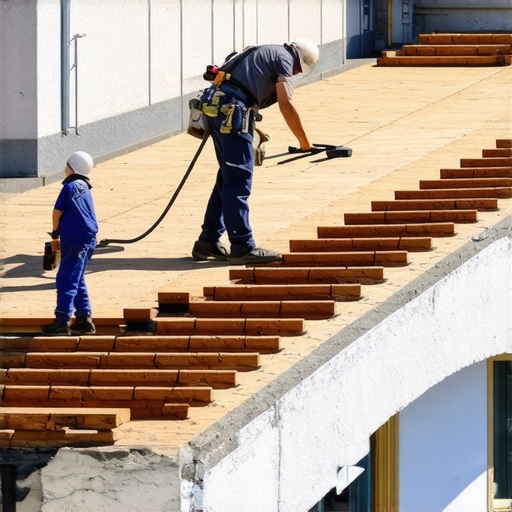
The Scent of Rotten OSB and the Return of the Felt Deck
I can still smell it. That distinct, cloying odor of damp, black-molded OSB that hits your nostrils the second you rip up a square of shingles. It’s the smell of a failed system and a homeowner’s bank account draining into the gutter. My old foreman, a man who had more tar under his fingernails than blood in his veins, used to lean over a soggy valley and grunt, ‘Water is patient. It will wait for you to make a mistake, and if it can’t find a hole, it’ll create one.’ He was right. After twenty-five years of performing forensic autopsies on failed residential roofs, I’ve seen every shortcut in the book. But the most interesting trend hitting the industry in 2026 isn’t a high-tech robotic shingle—it’s the return to multi-layered felt underlayment by top-tier roofing companies.
The Material Truth: Why Synthetics Failed the Breathability Test
For a decade, the industry ran head-first into synthetic underlayments. They were light, they didn’t tear, and you could leave them exposed to the sun for months. But we forgot about physics. In the variable climates of the Northeast and Midwest, where the attic temp hits 140°F in July and drops to sub-zero in January, we created a plastic bag around our houses. These ‘local roofers’ were installing air-tight synthetics over damp plywood, effectively pressure-cooking the roof deck from the inside out. By 2026, the data has finally caught up. We are seeing premature deck rot on roofs that are only eight years old because the moisture trapped in the attic had nowhere to go.
“Underlayment must serve as a secondary water shedding layer while allowing for the outward migration of moisture vapor from the building interior.” – National Roofing Contractors Association (NRCA) Manual
This is where multi-layered felt comes back into the picture. Modern asphalt-saturated felt, when layered correctly, acts like a smart membrane. It’s hygroscopic. When it gets wet from a leak, the fibers swell and block the water. But when the attic is humid, it allows a microscopic amount of vapor to pass through, preventing the ‘oatmeal deck’ syndrome. Experienced roofing companies are now doubling up 15-pound or 30-pound felt to create a thick, bituminous buffer that synthetics simply can’t match in terms of thermal mass and vapor management.
Mechanism Zooming: The Capillary Bridge and the Shiner
Let’s look at a single square—that’s 100 square feet of roofing—and talk about the ‘shiner.’ A shiner is a nail that missed the rafter and sits exposed in the attic space. In winter, that nail becomes a frost-covered spear. When the sun hits the roof, the frost melts, and water drips onto the deck. If you have a single layer of thin synthetic, that water sits. If you have a multi-layered felt system, the felt actually absorbs and redistributes that minor moisture, allowing it to evaporate later rather than rotting the wood. This is the difference between a roof that lasts fifteen years and one that hits the thirty-year mark.
The Physics of the Lap Joint
When local roofers install multi-layered felt, they aren’t just slapping paper down. They are managing hydrostatic pressure. In a heavy wind-driven rain, water can actually be forced uphill under the shingles. This is capillary action. A thick, multi-layer felt system creates a jagged, fibrous surface that breaks the surface tension of the water. It’s like trying to slide water through a thick wool blanket versus a smooth plastic sheet. The blanket wins every time by slowing the fluid down until it can drain into the valley or the gutter.
The Warranty Trap: Don’t Buy the Marketing Hype
If a salesman tells you the underlayment has a ‘Lifetime Warranty,’ walk away. Those warranties are designed by lawyers to be unredeemable. They cover ‘manufacturer defects’ but never ‘labor’ or ‘consequential damage.’ If the underlayment fails and ruins your ceiling, the manufacturer might send you a check for fifty bucks—the cost of the roll—and tell you to have a nice day. True roofing companies don’t rely on the warranty on the wrapper; they rely on the physics of the installation. They know that a heavy-duty felt system, even if it costs more in labor to haul those 50-pound rolls up a ladder, is the only way to ensure they aren’t back in five years doing a warranty repair on their own dime.
“The roof shall be covered with materials that are compatible with each other and the environment in which they are installed.” – International Residential Code (IRC), Section R903.1
The Forensic Fix: What to Ask Your Local Roofers
When you’re interviewing roofing companies, stop asking about the brand of shingle and start asking about the underlayment schedule. If they say ‘we use whatever is on the truck,’ kick them off your property. You want to hear about ‘offset laps,’ ’36-inch coverage,’ and ‘corrosion-resistant caps.’ Avoid the ‘trunk slammers’ who use staples to hold down the felt. Staples are just tiny holes waiting to become leaks. You want plastic caps that create a gasket seal around the fastener. This prevents a ‘shiner’ from becoming a localized flood point. In the world of forensic roofing, the details aren’t just ‘crucial’—they are the only thing standing between you and a collapsed soffit.
Protecting the Valley and the Cricket
The valley is where most roofs die. It’s the high-traffic highway for water. A pro will use a ‘California cut’ or a woven valley, but underneath it, there should be a heavy layer of ice and water shield topped with a double layer of felt. The same goes for the cricket—that small peak behind your chimney. These are the stress points where thermal expansion and contraction are at their peak. A multi-layered felt system provides the ‘give’ and ‘take’ necessary to handle the roof moving as it heats up in the sun and cools at night without tearing the primary water barrier.
Conclusion: The Cost of a ‘Cheap’ Roof
Building a roof is easy. Building a system that manages heat, moisture, and wind for three decades is an art form. The shift back to multi-layered felt in 2026 isn’t a regression; it’s an admission that the old ways often respected the laws of physics better than the new, cheap alternatives. When you hire local roofers, you aren’t paying for shingles—you’re paying for their understanding of how water moves. If they don’t understand the benefit of a thick, bituminous felt layer, they aren’t roofers; they’re just glorified shingle-stackers. Don’t let your home become another forensic case study in my file cabinet.