
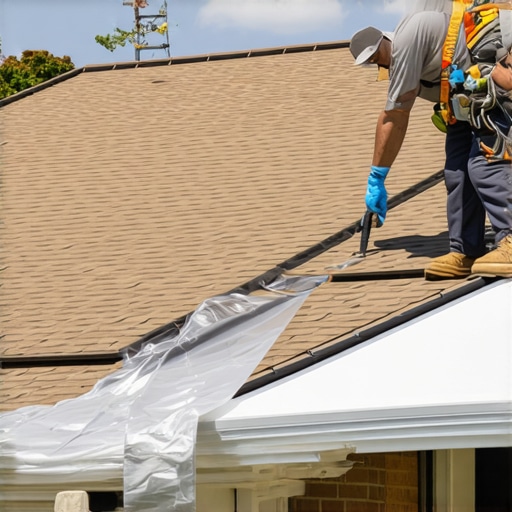
The Forensic Scene: When the Deck Becomes a Sponge
I stepped onto a roof last November that felt like walking on a wet marshmallow. The shingles were barely five years old—top-of-the-line architectural laminates—but the structural integrity was gone. The homeowner was convinced a storm had ripped a hole somewhere, but after pulling up a single square of material, the truth was uglier. The plywood underneath wasn’t just damp; it was delaminated mush. I didn’t need a moisture meter to tell me what was happening. I could smell it: that sour, earthy stench of wood-destroying fungi having a feast. This wasn’t a failure of the shingles; it was a failure of the envelope. As roofing companies look toward the standards of 2026, we are finally realizing that what happens under the deck is just as vital as the asphalt on top.
The Physics of the Invisible Leak
Most local roofers will tell you that roofing is about shedding water. They’re only half right. In 2026, the real battle is against vapor drive. Imagine the air in your home during a cold winter. It’s warm, humid, and under higher pressure than the freezing air outside. That moisture doesn’t just sit there; it migrates. It pushes through your ceiling, crawls past your insulation, and hits the underside of your roof deck. If you don’t have a sophisticated vapor barrier system, that moisture hits the cold wood, reaches its dew point, and turns back into liquid water. This is capillary action in reverse—moisture moving from the inside out. When you see a shiner—a nail that missed the rafter and sticks out into the attic—it acts as a tiny lightning rod for frost. In the morning, that frost melts and drips, creating a phantom leak that no amount of caulking on the outside will ever fix.
“Underlayment is the primary secondary water-shedding layer. In modern high-performance assemblies, managing vapor diffusion is non-negotiable for structural longevity.” – National Roofing Contractors Association (NRCA) Manual
Why 2026 is the Year of the Vapor Barrier
The roofing industry is changing because houses are getting tighter. We’ve spent decades sealing up air leaks to save on energy bills, but we’ve effectively turned our homes into plastic bags. Without a smart vapor barrier, the roof deck becomes the only place for that trapped humidity to escape. By 2026, building codes are catching up to the forensic evidence we’ve seen in the field. We are moving away from simple #15 felt—which is essentially just paper soaked in oil—and toward integrated synthetic barriers that can breathe in one direction while blocking liquid in the other. If your contractor is still quoting you the same ‘felt and shingle’ package they used in 1998, they aren’t just old-school; they are dangerous to your home’s health.
The Mechanics of Failure: Thermal Bridging and Condensation
Let’s talk about the mechanism zooming that actually destroys a house. When roofing companies ignore the vapor profile, they ignore thermal bridging. Every fastener, every rafter, and every vent is a point of temperature transfer. In a poorly managed system, the temperature differential between the attic air and the roof deck creates a micro-climate. I’ve seen 140°F attics in the summer where the humidity is so high the nails are literally sweating. This constant cycle of wetting and drying causes the wood fibers to expand and contract until the lignin—the glue that holds wood together—breaks down. Once that happens, the ‘teeth’ of your roofing nails lose their grip. You end up with shingles that flap in a light breeze because the wood they are nailed into has the structural integrity of a digestive biscuit.
“Where the climate requires a vapor retarder, it shall be installed on the warm-in-winter side of the insulation.” – International Residential Code (IRC) R702.7
The ‘Trunk Slammer’ Trap: Warranties vs. Reality
You’ll hear a lot of local roofers brag about ‘Lifetime Warranties.’ Here is the cynical truth: those warranties almost never cover ‘incidental damage’ caused by poor ventilation or lack of vapor control. If your roof deck rots from the inside out because the installer didn’t understand vapor drive, the shingle manufacturer will laugh you off the phone. They’ll point to the fine print that requires a ‘dry and stable substrate.’ By 2026, the best roofing pros are focusing on the entire assembly. We are looking at the cricket behind the chimney, the valley transitions, and most importantly, the perm rating of the underlayment. We aren’t just trying to keep the rain out; we are trying to keep the house’s own breath from killing the structure.
The Solution: Surgery Over Band-Aids
Fixing a vapor issue isn’t as simple as slapping on more vents. Sometimes, too much ventilation can actually pull more moist air into the attic from the living space if the ceiling isn’t air-sealed. The 2026 approach involves a holistic look at the roof. This means using self-adhered membranes in critical zones and high-perm synthetic underlayments everywhere else. It means ensuring that the soffit intake is perfectly balanced with the ridge output. If you’re hiring a crew and they don’t ask you about your attic insulation or your bathroom fans, you’re not getting a 2026 roof; you’re getting a 1990s liability. Don’t wait until you’re walking on marshmallows to realize the difference between a cheap roof and a forensic-grade installation.