
The Forensic Scene: Walking on a Sponge
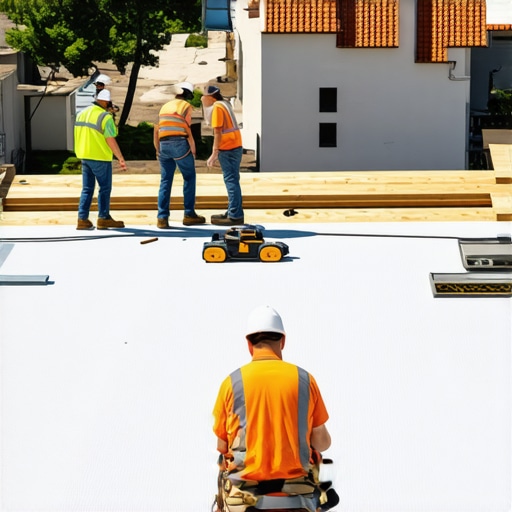
I stepped onto a commercial roof in the Pacific Northwest last November, and my heart sank before I even reached the HVAC unit. Walking on that roof felt like walking on a sponge. I knew exactly what I would find underneath. Local roofers had installed standard asphaltic walk pads five years prior, thinking they were doing the owner a favor. Instead, those pads had trapped moisture against the membrane, creating a micro-climate of rot. When we peeled them back, the insulation was so saturated you could wring it out like a dishcloth. This is why, in 2026, the elite roofing companies are abandoning old-school protection in favor of heavy-duty PVC mats. As a veteran who has spent 25 years investigating why systems fail, I can tell you: the physics don’t lie. Water is a patient predator, and traditional walk pads are often the bait.
The Physics of Failure: Why Traditional Protection Stinks
For decades, the industry relied on ‘sacrificial’ layers of modified bitumen or rubber to protect high-traffic areas. The theory was simple: let the boots chew up the pad instead of the roof. But the theory ignored capillary action. In damp, moss-prone climates, water creeps under the edges of these unsealed pads and stays there. It can’t evaporate. This creates a constant hydrostatic pressure against the roof membrane. Eventually, that moisture finds a pinhole or a weak lap seam, and suddenly you’re paying for a full-scale tear-off of a ‘protected’ area.
“A roof is only as good as its flashing and its ability to shed water from every square inch of the deck.” – Old Roofer’s Adage
2026 roofing companies have realized that PVC walkway mats solve this through molecular integration. Unlike a glued-down rubber mat that eventually peels at the corners, a PVC mat is heat-welded directly to the main membrane. We aren’t using glue that gets brittle in the cold or melts in the sun; we are using a 1000-degree heat gun to fuse the materials into a single, monolithic sheet. When you weld a mat, there is no ‘underneath’ for the water to hide. It becomes part of the roof’s skin.
Mechanism Zooming: The 2026 PVC Advantage
Why are 2026 PVC mats different? It comes down to the reinforcement and the slip-coefficient. We are seeing mats now with a 60-mil or 80-mil thickness that incorporate a polyester scrim. This isn’t just a sheet of plastic; it’s a structural component. When an HVAC tech drops a heavy wrench or drags a condenser unit across the roof, the mat doesn’t just resist the puncture—it distributes the impact force across the scrim. This prevents the ‘shiner’ effect where a hidden fastener or a burr in the metal deck punctures the membrane from the inside out. Furthermore, these 2026 mats feature a deep-embossed tread. In a region where a light drizzle turns a TPO or PVC roof into a skating rink, that grip is the difference between a successful service call and a massive liability claim for roofing companies.
Thermal Expansion and Plasticizer Migration
One of the biggest ‘silent killers’ in roofing is plasticizer migration. In the old days, if you put the wrong type of mat on a roof, the chemicals in the mat would actually ‘leach’ into the main roof membrane, making it brittle as a potato chip. By 2026, the chemistry has evolved. These mats are engineered to be chemically inert relative to the primary system. They also handle thermal expansion better. A roof in the sun can reach 150°F, then drop to 50°F during a sudden rain shower. That ‘thermal shock’ makes materials expand and contract at different rates. Because modern PVC mats are heat-welded and share similar expansion coefficients with the base sheet, they don’t buckle or create ‘dams’ that hold back water.
“The designer shall provide for rooftop traffic by providing designated walkways… which must not impede drainage.” – NRCA Manual for Membrane Roofing, 5th Edition
That last part is vital: not impeding drainage. Many local roofers forget that a walkway can act like a dam if it’s placed perpendicular to the slope. If you don’t leave a 1-inch gap between mat sections, you’re essentially building a tiny pond on your roof. The 2026 approach uses ‘cricket’ logic even in the walkway layout, ensuring that the ‘valley’ created by the mat’s edge doesn’t become a silt trap.
The Cost of the ‘Cheap’ Alternative
I often hear building owners complain that PVC mats cost more per square than a bucket of mastic and some leftover shingles. They’re right. It is more expensive upfront. But as a forensic investigator, I’ve seen the ‘cheap’ way result in six-figure interior damage claims. When you hire roofing companies that insist on high-spec walkway systems, you aren’t just buying plastic; you’re buying an insurance policy against technician-induced leaks. If you see a contractor trying to ‘protect’ your new roof with scraps of EPDM or un-welded pads, kick them off the ladder. They are setting you up for a sponge-walk in five years.
How to Vet Your Local Roofers
When interviewing local roofers for your next project, ask them specifically about their walkway attachment method. If they say ‘glue’ or ‘heavy-duty adhesive,’ they are living in 2016. In 2026, the only answer is ‘automated heat-welding with a perimeter seal.’ You want to see that they are thinking about the mil-thickness and the slip-resistance rating. Roofing is no longer just about keeping the rain out; it’s about managing the environment on top of the building. With the rise of rooftop solar and complex VRF systems, the roof is now a high-traffic floor. Treat it like one.