
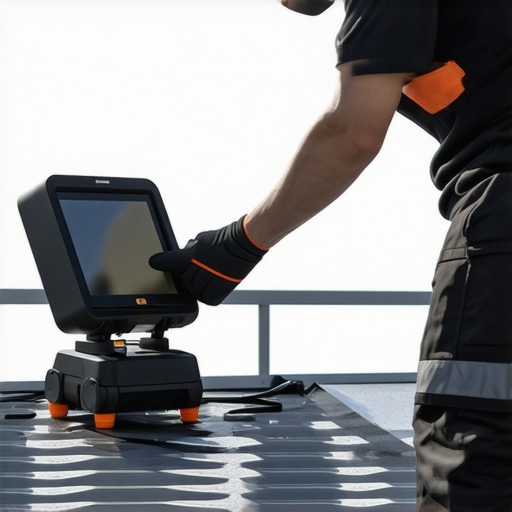
The Ghost in the Attic: Why Your Roofer is Now Carrying a Laser
I remember a job back in the high desert of Nevada about a decade ago. Walking on that roof felt like walking on a tray of burnt crackers. Every step resulted in a sickening crunch that told me exactly what I’d find underneath. The homeowner thought they just needed a few shingles replaced after a windstorm, but the sun had already won. The UV radiation had baked the volatiles out of the asphalt years prior, leaving behind a brittle skeleton. In those days, I had to rely on my boots and a keen ear to diagnose a failure. But by 2026, the game has changed. When you call out local roofers today, the best ones aren’t just bringing a ladder; they’re bringing LiDAR and infrared smart scanners. And if your contractor is still just ‘eyeballing it,’ you’re likely about to pay for a mistake that won’t show up for another three summers.
The Physics of the Desert Bake: Why Traditional Inspection Fails
In the Southwest, the enemy isn’t the rain—it’s the relentless thermal expansion and contraction. We call it thermal shock. During a 115°F July day, your roof surface can easily hit 170°F. Then, a sudden monsoon downpour drops the temperature by fifty degrees in ten minutes. The material screams as it shrinks. This is where roofing companies used to fail their customers. A human eye can see a missing shingle, but it can’t see the microscopic delamination occurring between the mat and the granules. Smart scanners use thermal imaging to detect heat signatures that indicate trapped moisture or thinning insulation. If the scanner shows a hot spot over a specific square, it means your R-value has plummeted because the decking underneath is starting to char from the inside out. This isn’t just ‘wear and tear’; it’s a slow-motion structural suicide.
“A roof is only as good as its flashing.” – Old Roofer’s Adage
Take the cricket behind a large chimney, for example. In the old days, a roofer would slap some mastic on it and call it a day. A smart scanner in 2026 identifies the exact point of capillary action—where water is being sucked uphill behind the metal because of a slight pitch deviation that the naked eye can’t detect. These scanners create a 3D point cloud of the entire structure. They don’t just measure length; they measure the ‘bow’ in your rafters. When a roofing professional sees a 2-inch sag in the ridge line on a scan, they know you’ve got a structural load issue before they even set foot in your crawlspace.
The ‘Shiner’ and the Scanner: Exposing Human Error
We’ve all seen it: the ‘trunk slammer’ contractor who moves too fast. They leave behind ‘shiners’—nails that missed the rafter and are now just sticking through the plywood into the attic. In the winter, these nails act as heat sinks, attracting frost that eventually melts and rots your deck. A modern smart scanner with moisture-depth penetration can find these hidden leaks before they ever produce a brown circle on your ceiling. It’s forensic roofing at its finest. By the time you see a drip, the plywood has likely already turned to the consistency of wet cardboard. The scanner sees the moisture bridge weeks or months in advance. This is why 2026 roofing companies are pivoting to tech; it’s not about looking fancy, it’s about avoiding the $50,000 lawsuit when a roof fails three years into a ‘lifetime’ warranty.
Material Truth: Asphalt vs. Modern Alternatives
Let’s talk about the ‘Lifetime Warranty’ trap. Most homeowners think that means the roof will last forever. It doesn’t. It means the manufacturer will give you a pro-rated check for the cost of the shingles—not the labor—if the product fails. Smart scanners are now being used to prove warranty claims. When a scanner shows that a specific batch of shingles has lost 40% of its granules in just 24 months, you have the data to fight the manufacturer. In the desert, we’re seeing a massive shift toward concrete tile and standing seam metal. Why? Because the scanners prove that asphalt simply can’t handle the UV load in high-altitude desert zones. The scanners don’t lie, and they don’t have a sales quota to hit.
“The most expensive roof is the one you have to pay for twice.” – Architectural Axiom
How to Vet Your Local Roofers in the Tech Age
If you’re looking for local roofers, don’t just ask for references. Ask for a sample of their diagnostic report. If that report doesn’t include a thermal map or a 3D structural scan, you’re hiring a dinosaur. You want the guy who can show you the ‘why’ behind the ‘how.’ You want the forensic evidence of why that valley is failing or why your soffit vents aren’t actually pulling air. The smell of a hot attic should be a warning, but a smart scanner’s data is the proof. Don’t let a contractor talk you into a ‘simple overlay.’ A scanner will show that the weight of a second layer of shingles will cause those old 2×4 rafters to deflect past the point of no return. It’s 2026—stop guessing and start scanning. Your wallet will thank you when the next 60mph dust storm hits and your roof stays exactly where it belongs.