
The Era of the ‘Blind Build’ is Dead
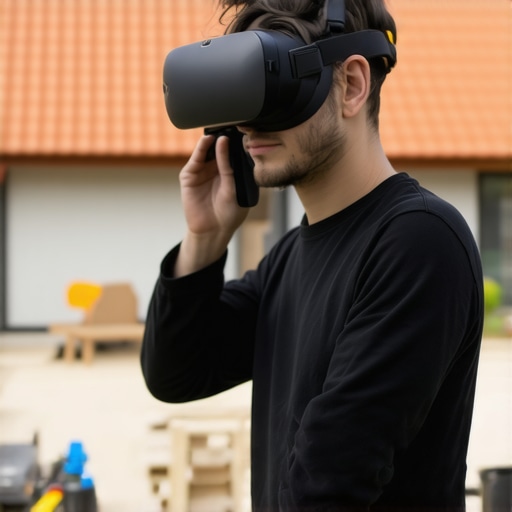
I’ve spent a quarter-century hauling my carcass up 12/12 pitches, smelling the distinct, sickly-sweet rot of water-logged OSB and feeling the crunch of sun-baked granules under my boots. For decades, roofing companies operated on a ‘trust me’ basis. We’d show you a sample board, point at a blurry drone photo, and hope you didn’t ask too many questions about the flashing. But the industry has shifted. In 2026, the best roofing companies have traded the grainy Polaroid for high-fidelity VR walkthroughs, and it’s not because we want to look high-tech—it’s because water is a relentless, microscopic invader that doesn’t care about your marketing budget.
My old foreman used to say, ‘Water is patient. It will wait for you to make a mistake.’ He was right. Back then, a mistake was a shiner—a nail that missed the rafter and sat there like a cold-conducting spear, dripping condensation into your attic insulation every winter. Today, we use VR to show you those shiners before the first bundle is even cracked open. We’re doing forensic autopsies on roofs that haven’t even been built yet.
The Tropical Physics of Failure: Why VR Matters in the Southeast
In high-humidity, storm-prone zones like Florida or the Gulf Coast, your roof isn’t just a lid; it’s a pressurized seal. When a tropical depression sits over your house, it doesn’t just rain; the wind creates a pressure differential. This is where hydrostatic pressure and capillary action come into play. Water can actually travel upward against gravity under a shingle if the lap isn’t perfect. In a VR walkthrough, we zoom into the valley—the intersection where two roof planes meet. We show you how the secondary water resistance layer integrates with the metal flashing. We aren’t just looking at the top layer; we’re looking at the anatomy. You can see the cricket—that small peaked structure we build behind a chimney to divert water—and understand why a standard ‘goop and hope’ caulking job will fail within three summers of 140°F heat and salt air.
“A roof is only as good as its flashing, and its ability to shed water away from the structure’s most vulnerable penetrations.” – National Roofing Contractors Association (NRCA) Guidelines
The Material Truth: Virtual Reality vs. The ‘Lifetime’ Myth
Let’s talk about the ‘Lifetime Warranty’ trap. In the trade, we know those warranties are often written by lawyers to protect manufacturers, not homeowners. By 2026, local roofers are using VR to demonstrate the actual aging process of materials. We can simulate ten years of UV degradation on a standard 3-tab shingle versus a thick architectural laminate or a standing-seam metal roof. You see the thermal expansion in real-time. In the Southeast, the sun is a giant blowtorch. It bakes the oils out of the asphalt, causing shingles to curl and lose their ‘seal-down’ strip. When that happens, the next 40mph gust turns your roof into a deck of cards. VR lets us show you the difference between a 4-nail pattern and the high-wind 6-nail pattern that code actually requires for 130mph uplift ratings.
Why Local Roofers Are Ditching the Ladder for the Lens
I remember a job in a coastal town where the homeowner was convinced their leak was a ‘simple shingle issue.’ We put them in a VR headset and showed them the 3D scan of their attic. We showed them the thermal bridging where warm, moist air from the bathroom was venting directly into the attic space, hitting the cold underside of the roof deck, and raining back down as condensation. It wasn’t a roof leak; it was a ventilation failure. VR takes the guesswork out of the equation. It allows us to show you the starter strip—the most ignored part of a roof that actually prevents wind from peeling the edges back. If your roofer isn’t showing you the starter strip in a digital twin of your home, they’re probably cutting corners you can’t see from the ground.
“The roof shall be covered with approved roof coverings secured to the building or structure in accordance with the provisions of this code.” – International Residential Code (IRC), Section R903
The Band-Aid vs. The Surgery
Most roofing companies will offer you a patch. They’ll slap some mastic on a pipe boot and call it a day. But forensic roofing isn’t about the patch; it’s about the system. In 2026, VR walkthroughs allow us to show you the ‘surgery.’ We can peel back virtual layers to show you why the drip edge needs to be installed over the underlayment at the rakes but under it at the eaves. It sounds like trade jargon until you see the water rot in 4K resolution on a virtual model of your own fascia boards. This technology forces honesty. You can’t hide a missed square of underlayment or a poorly cut valley when the client has walked through the digital build. It’s about protecting your deductible and ensuring that when the next hurricane rolls through, your roof stays on the house and the water stays on the outside.