
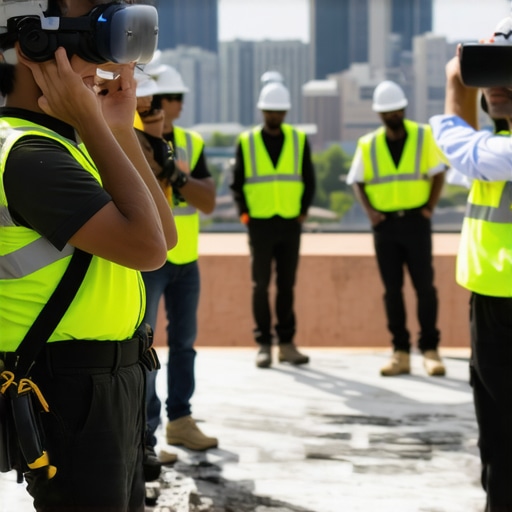
The Death of the ‘Trust Me’ Estimate
For twenty-five years, I’ve been the guy climbing the ladder to tell homeowners their roof is a disaster. I’ve seen it all: shingles held down by prayers, valleys that weren’t flashed but merely gooped with three tubes of cheap caulk, and ‘shiners’—those missed nails that rust out and drip like a slow faucet into your attic insulation. But by 2026, the industry shifted. Local roofers aren’t just handing you a paper chicken-scratch estimate anymore. They are handing you a headset. Walking on a roof in Miami last July felt like walking on a damp sponge; the granules were still there, but the structural integrity had been hollowed out by years of trapped humidity and poor ventilation. I knew exactly what I’d find underneath—black mold and delaminated plywood—but explaining that to a homeowner who can’t see the ‘sponge’ is a different battle. That’s where the VR walkthrough changed the game. It stops being my word against the insurance adjuster’s and starts being a forensic reality.
The Physics of Failure and Virtual Reconstructions
In the Southeast, our enemy isn’t just rain; it’s wind-driven water that behaves like a pressurized hose during a tropical depression. When roofing companies utilize VR in 2026, they aren’t just showing you a 3D model of a pretty new roof. They are using LIDAR-scanned data to show the Mechanism of Failure. Imagine zooming into your own eaves to see the capillary action—where water literally climbs upward against gravity because the drip edge was installed with a gap. You can see the thermal signature of the moisture trapped in your polyiso board before it ever rots the ceiling. This isn’t just tech for the sake of tech; it’s about the physics of the building envelope. Water is patient. It will wait for a tiny void in the secondary water resistance layer to find its way to your master bedroom. VR allows us to simulate a 130-mph wind event on your specific structure to see where the ‘uplift’ is most likely to rip a square of shingles right off the deck.
“A roof is only as good as its flashing.” – Old Roofer’s Adage
The transition to virtual diagnostics means local roofers can show you the ‘dead valley’—that spot where two roof planes meet and water just sits and stews because the previous crew didn’t build a proper cricket to divert the flow. In a VR environment, we can demonstrate why your current drainage is failing. We can strip away the virtual shingles to show the ‘shiners’—nails that missed the rafter and are currently acting as heat conductors, pulling warm, humid attic air up to condense into frost or water droplets. It’s the difference between a band-aid repair and actual surgery.
Material Truths in a Virtual Space
Choosing between asphalt, metal, or tile in 2026 involves more than just picking a color from a brochure. The ‘Material Truth’ blueprint requires us to look at how these materials survive the brutal UV radiation and salt air of the coast. A ‘Lifetime Warranty’ is often just marketing fluff if the contractor didn’t account for galvanic corrosion on the fasteners. In a VR walkthrough, we can show you the microscopic difference between stainless steel nails and standard galvanized ones after five years of salt exposure. If you’re using roofing companies that don’t model the thermal expansion of a metal roof, you’re asking for trouble. Metal expands and contracts; if the clips aren’t seated right, that roof will ‘chatter’ and eventually back out its own screws.
“The roof shall be covered with approved roof coverings secured to the roof deck in accordance with the manufacturer’s installation instructions.” – International Residential Code (IRC)
This code isn’t a suggestion, yet ‘trunk slammers’ ignore it every day. VR tech in 2026 proves compliance. It creates a digital twin of your home that documents every layer, from the ice and water shield to the ridge vent, ensuring the ventilation calculations actually move the required CFM of air to prevent your attic from becoming a 140-degree oven that bakes your shingles from the inside out.
The Storm Chaser Defense
We’ve all seen them: the ‘storm chasers’ who knock on your door after a hail hit, promising a ‘free roof’ by eating your deductible. It’s a scam that has plagued roofing for decades. However, 2026 VR technology provides a defense. A legitimate roofing company will use high-resolution drone imagery to create a VR map of ‘functional damage’—actual fractures in the matting—versus ‘cosmetic bruises’ that don’t affect the lifespan of the roof. When you deal with an adjuster, having a VR walkthrough of the damage provides a forensic record that is hard to argue with. You aren’t just looking at a grainy photo; you are standing on the virtual roof, looking at the granule loss and the ‘scuppers’ that are clogged with debris. This level of transparency makes it impossible for ‘trunk slammers’ to compete because they can’t hide their lack of expertise behind a quick sales pitch. You can see the ‘shiners,’ you can see the lack of a starter strip, and you can see why your roof failed. This is the new standard of roofing—forensic, transparent, and built on physics rather than just a hammer and a prayer.