
The Ghost in the Attic: Why VR Design is the Only Way to Stop the Rot
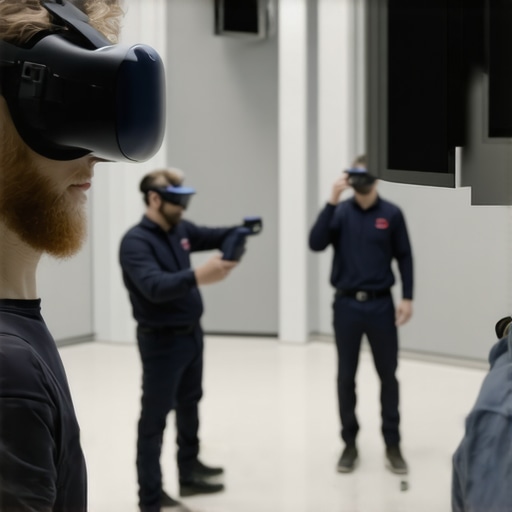
My old foreman used to say, ‘Water is patient. It will wait for you to make a mistake.’ He’d say it while pointing a calloused finger at a soggy, black-molded soffit on a coastal home where the humidity felt like a wet blanket. Back then, we found mistakes with a pry bar and a flashlight. Today, the industry has shifted. If you’re looking at roofing companies in 2026, the best local roofers aren’t just showing up with a ladder and a quote on a napkin. They’re using VR design. And no, it isn’t some flashy gimmick to distract you from a high price tag. It is a forensic tool used to prevent the exact type of structural rot that turns a home into a money pit.
When we talk about roofing in a salt-air, high-wind environment like the Southeast, we are fighting a constant war against hydrostatic pressure and wind-driven rain. Water doesn’t just fall down; it moves sideways, up, and around corners through capillary action. Imagine a drop of rain hitting a shingle during a tropical depression. If the starter strip isn’t offset correctly, that water gets sucked under the butt joints. From there, it sits on the underlayment, slowly eating away at the fasteners. This is where most roofing jobs fail, and it is exactly what VR design is meant to catch before the first square of shingles ever leaves the warehouse.
“Proper design of flashing and termination details is more critical to long-term performance than the primary roof covering itself.” – National Roofing Contractors Association (NRCA)
The Physics of the ‘Shiner’ and the VR Solution
In the trade, we talk about ‘shiners’—those nails that miss the rafter and poke through the roof deck into the attic space. In a high-humidity zone, a shiner is a lightning rod for trouble. During the night, warm, moist air from the house hits that cold metal nail. Condensation forms. One drop at a time, it drips onto the insulation, killing your R-value and rotting the plywood from the inside out. When local roofers use 2026 VR design, they are mapping the attic bypasses and rafters with millimeter precision. They can see exactly where the penetrations—pipes, vents, and chimneys—will interact with the structural bones of the house. It allows them to plan the layout so that every nail hits meat, not air.
The Material Truth: Asphalt vs. Reality
Most roofing companies will try to sell you on a ‘Lifetime Warranty.’ Let me tell you a secret: those warranties are often written by lawyers to protect the manufacturer, not your living room. They cover ‘manufacturing defects,’ but 95% of roof failures are installation errors. If your roofer doesn’t build a proper cricket behind your chimney, that chimney will leak. A cricket is a small peaked structure designed to divert water away from the chimney’s backside. In a 2D sketch, a roofer might guess the pitch. In a VR environment, we can simulate a five-inch-per-hour downpour and see exactly how that water will behave. We can see if the water is going to pool in a dead valley or if it’s going to flow clear to the gutter system. This is the difference between a roof that lasts thirty years and one that fails in five.
Thermal Shock and the Expansion Trap
In our climate, we deal with massive temperature swings. A roof deck can hit 160°F in the afternoon and drop to 70°F after a rainstorm. This causes thermal expansion and contraction. Cheap materials can’t handle that stress; they get brittle and crack. By using VR, we can visualize the secondary water resistance layer. We aren’t just talking about felt paper here. We are talking about high-temp, peel-and-stick membranes that seal around every nail. The VR model shows us exactly where the high-stress points are—the valleys, the hips, and the ridges—where the most movement occurs. If you aren’t using stainless nails in this salt air, you’re asking for galvanic corrosion. The VR design phase allows us to specify every single component down to the alloy of the fastener.
“A roof is only as good as its flashing.” – Old Roofer’s Adage
The Cost of the ‘Trunk Slammer’ vs. Precision Engineering
You’ll always find local roofers who can do it cheaper. They’re the guys who skip the drip edge or reuse your old flashing to save a few bucks. We call them ‘trunk slammers.’ They’re gone before the first leak starts. By the time you notice the brown stain on your ceiling, their phone number is disconnected. The move toward VR design in 2026 is a signal of professionalism. It shows a company is invested in the forensic reality of your home’s envelope. They are looking for the ‘thermal bridging’ where heat escapes and causes localized pressure changes that can actually suck water under a shingle during a windstorm. They are looking at the uplift ratings to make sure your roof stays attached when the next hurricane rolls through. You aren’t paying for a 3D movie; you’re paying for a mathematical guarantee that the water stays outside.