
The Invisible Enemy Lurking Under Your Shingles
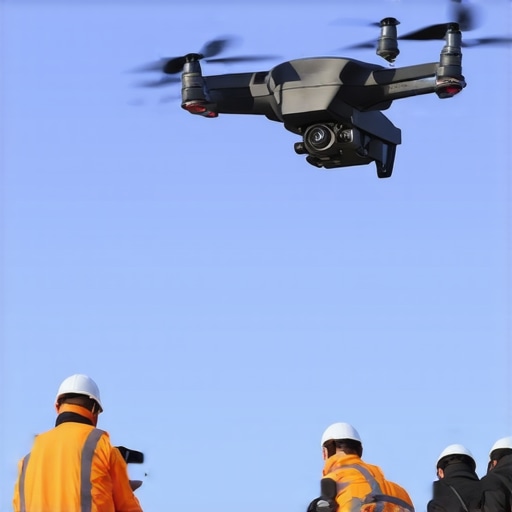
The first sign of a roof failure isn’t usually the drip-drip-drip on your mahogany dining table. By the time that happens, the war is already lost. As a forensic roofer with twenty-five years of pulling up rotted deck boards, I can tell you that the real disaster happens in the dark, silent spaces between your insulation and your roof deck. Walking on a roof I inspected last November felt like walking on a sponge; I didn’t need to see a leak to know exactly what I’d find underneath. The homeowners thought their roof was fine because they couldn’t see any missing shingles, but the thermal drone I launched told a different story. It showed a massive, glowing purple blob of thermal mass where there should have been a consistent, cool blue. That ‘blob’ was forty gallons of water trapped in the fiberboard, slowly eating the rafters from the inside out.
In 2026, the elite roofing companies have stopped relying on just their eyes and a pair of Cougar Paws. We’ve moved into the era of radiometric thermography. Why? Because water has a higher thermal capacity than almost any building material. During the day, that trapped moisture soaks up the sun’s heat like a battery. When the sun goes down and the shingles cool off, that wet insulation stays hot. A high-resolution thermal drone captures that Delta-T—the temperature difference—and highlights the exact boundaries of the rot. If your local roofers are still just ‘eyeballing it,’ they are leaving your biggest investment to chance.
“A roof is only as good as its flashing, and its performance is dictated by the thermal envelope it protects.” – Old Roofer’s Adage
The Physics of the ‘Attic Bypass’ and Thermal Bridging
In colder northern climates, we deal with a phenomenon called an ‘attic bypass.’ This isn’t just a fancy term; it’s a failure of the thermal envelope. Warm, moist air from your shower or kitchen sneaks past a poorly sealed light fixture or a gap in the vapor barrier. This air hits the underside of the cold roof deck and undergoes phase change—it turns back into liquid water. This is where the 2026 thermal drones become a game-changer. They don’t just find leaks from rain; they find the moisture generated by your own family that’s rotting your roof from the bottom up. When we see a ‘shiner’—that’s a nail that missed the rafter and sticks out in the attic—it acts as a cold finger, attracting frost in the winter that thaws and drips into your insulation. Thermal imaging picks up these cold spots (thermal bridging) with terrifying accuracy.
Mechanism zooming is essential here. Consider the capillary action under a standard architectural shingle. If a roofer didn’t install a starter strip correctly, or if they skimped on the ice and water shield in the valleys, water doesn’t just run off. It gets sucked upward. Surface tension pulls that water into the nail holes. Once it hits the plywood, the wood fibers swell and lose their structural integrity. A drone equipped with a 640×512 radiometric sensor can see the heat signature of that damp wood even through the shingles. This is the difference between a ‘repair’ that involves a tube of caulk and a ‘solution’ that involves replacing the saturated substrate before it collapses.
The Forensic Autopsy: Why Traditional Inspections Fail
Most local roofers will walk your roof, kick a few shingles, and give you a quote. That’s not an inspection; that’s a sales pitch. A forensic autopsy of a roof system requires understanding how heat moves. According to the International Residential Code (IRC), ventilation is mandatory to prevent heat buildup and moisture accumulation.
“The net free ventilating area shall be not less than 1/150 of the area of the space ventilated.” – IRC Section R806.1
If those vents are clogged or improperly placed, the roof ‘cooks.’ The shingles become brittle, the oils evaporate, and the granules slough off like dead skin. Thermal drones identify these ‘hot zones’ where ventilation has failed, allowing us to redesign the airflow before we even lay the first square of new material.
Think about the cost. A standard roof replacement might cost you fifteen to twenty thousand dollars. But if you have undetected moisture that has rotted your 2×4 trusses or caused mold growth in the attic, that price doubles. The drone allows us to perform ‘surgery’ rather than an ‘amputation.’ We find the exact three sheets of plywood that are compromised, rather than tearing off the whole side of a house unnecessarily. It’s about precision. We look for the ‘cricket’—that small peaked structure behind a chimney designed to divert water—and we use the drone to see if the flashing around it has failed. Even a pinhole leak around a chimney will show up as a radiant heat signature on a cool morning.
How to Spot a Real Professional in 2026
If you’re looking for roofing companies, you need to ask about their tech stack. If they aren’t using thermal imaging, they are working in the dark ages. You want a pro who understands the ‘why’ behind the ‘what.’ They should be able to explain how the dew point in your attic is affecting the lifespan of your shingles. They should be looking for ‘shiners’ and checking the R-value of your insulation as part of a holistic roof system. A roof isn’t just a lid; it’s a complex ventilation and thermal management system. When a local roofer shows up with a drone, they aren’t just trying to look cool; they are trying to save you from a catastrophic failure that could be years in the making. Don’t wait for the ceiling to sag. Get the forensic data and fix the physics of the problem, not just the symptoms.