
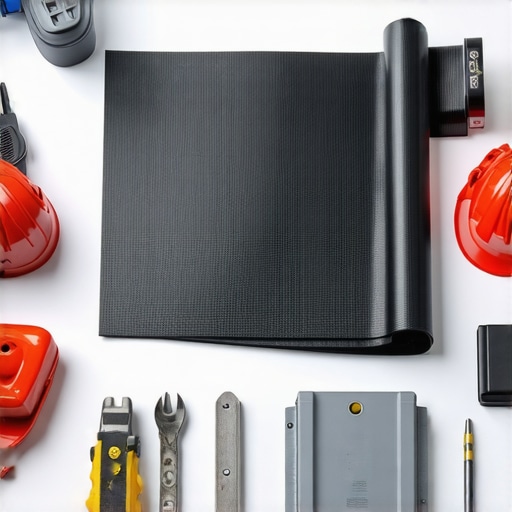
The Evolution of the Underlayment: Moving Beyond Tar Paper
I’ve spent three decades staring at the underside of roof decks, and if there is one thing I have learned, it is that most roofing companies are stuck in 1985. For years, we relied on #15 or #30 felt—essentially paper soaked in oil. It smelled like a gas station on a hot day and tore if you looked at it wrong. But by 2026, the industry has finally woken up. The introduction of 2026 Smart Mats isn’t just a fancy upgrade; it’s a necessary response to the shifting physics of modern home construction. My old foreman used to say, ‘Water is patient. It will wait for you to make a mistake.’ And he was right. Traditional felt was that mistake. It would wrinkle when wet, creating tiny ridges that held moisture against the shingles, leading to premature rot that you couldn’t see until your foot went through the decking during a inspection.
The Physics of Failure: Why Traditional Methods Are Dying
When we talk about roofing in 2026, we have to talk about the ‘attic pressure cooker’ effect. In cold climates like those faced by local roofers in the north, homes are built so tight now that moisture has nowhere to go. It migrates upward through the ceiling into the attic. In the old days, that vapor would just pass through a drafty roof. Now, it hits the cold underside of the plywood. If you are using old-school felt, that moisture gets trapped. This is where the 2026 Smart Mats come into play. They aren’t just a barrier; they are a breathable membrane designed with molecular vapor transmission capabilities.
“Underlayment shall be applied in accordance with the manufacturer’s installation instructions to ensure a continuous water-resistive barrier.” – International Residential Code (IRC) Chapter 9
This isn’t just about keeping rain out; it’s about letting the house breathe while maintaining a hydrostatic seal against the elements.
Mechanism Zooming: How a Smart Mat Actually Works
Let’s look at the microscopic level. A 2026 Smart Mat uses a multi-layered cross-weave of polyolefins. Imagine a surface that acts like a one-way valve. When liquid water—say, wind-driven rain pushed up under a shingle during a localized microburst—hits the mat, the surface tension prevents it from penetrating. The water stays in its liquid state and is channeled down toward the cricket or the valley. However, when water vapor from the attic tries to escape, the pore size of the mat is just large enough to let those individual molecules pass through. This prevents the plywood from turning into what I call ‘roofing oatmeal.’ I’ve seen squares of shingles stripped off roofs where the wood underneath was so soggy you could squeeze water out of it like a sponge. That happened because the installer used a cheap ‘trunk-slammer’ underlayment that acted like a plastic wrap, suffocating the deck.
The ‘Shiner’ Problem and Self-Healing Tech
Every roofer has dealt with a shiner. That’s a nail that missed the rafter and is sticking through the plywood into the attic space. In the winter, that cold nail head acts as a condensation point. It grows a frost ball, and when that melts, it looks like a roof leak. 2026 Smart Mats have integrated a self-healing rubberized polymer layer. When a nail passes through, the material cinches around the shank of the fastener. It’s like a gasket for every single one of the thousands of nails in a square. Without this, you’re just punching holes in your waterproof layer and hoping for the best.
“A roof is only as good as its flashing and the integrity of its secondary water barrier.” – Old Roofer’s Adage
Local roofers who care about their reputation have moved to these mats because they eliminate the ‘phantom leak’ callbacks that haunt smaller roofing companies after a hard freeze-thaw cycle.
The Warranty Trap: Marketing vs. Reality
Don’t get me started on ‘Lifetime Warranties.’ Most of them aren’t worth the glossy paper they are printed on because they only cover the material, not the labor to fix the rot caused by poor ventilation. When roofing companies pitch you on a 50-year shingle but want to use cheap felt underneath, they are setting you up for a failure in year twelve. The 2026 Smart Mats are designed to match the lifespan of high-end synthetic or heavy-weight architectural shingles. They don’t degrade under UV radiation during the construction phase. I’ve seen cheap underlayment left exposed for three days in the sun that became as brittle as a potato chip. A Smart Mat stays flexible, meaning as your house settles and the roof expands and contracts—a process known as thermal shock—the mat doesn’t crack. It moves with the building.
Choosing Between Local Roofers and Large Frachises
When you are looking at quotes, don’t just look at the bottom line. Look at the ‘deck prep’ section. A quality local roofer will specify the brand of underlayment. If they just say ‘synthetic underlayment,’ they are likely buying the cheapest roll at the supply house. You want to see ‘Smart Mat’ or an equivalent high-perm rated membrane. Ask them how they handle the valleys. Are they double-lapping the mat? Are they using a starter strip that is compatible with the mat’s surface tension? If they look at you like you’re speaking Greek, find another crew. The cost difference per square is negligible compared to the cost of replacing rotten fascia boards and moldy insulation three years down the line because of an ‘attic bypass’ leak. In 2026, we have the tech to make a roof last half a century; we just need the grit to install it correctly.
This post really hits home for me. Having worked on roofing projects for over 15 years, I’ve seen firsthand how traditional felt underlayment becomes a problem over time, especially in colder climates where moisture gets trapped. The technology behind the 2026 Smart Mats, particularly their molecular vapor transmission capability, could be a game changer for longevity and durability. I appreciate the detailed explanation of how it acts like a one-way valve, preventing water ingress while allowing vapor to escape. I’ve had clients complain about persistent attic condensation or what looks like leaks, only to realize it was moisture buildup around nails or inadequate underlayment. My question is, how do these mats perform in extreme cold conditions over multiple seasons? Would love to hear experiences from other roofers who have adopted this tech. It seems like a significant step forward in reducing callbacks and overall costs, making it a smart investment for both pros and homeowners alike.
I found this post particularly enlightening because it underscores how crucial the right underlayment can be for a roof’s lifespan, especially in colder climates. I’ve seen firsthand how traditional felt deteriorates quickly when exposed to moisture and UV rays, which often leads to costly repairs or early replacements. The concept of the Smart Mat functioning as a one-way valve and its self-healing properties really sounds like a significant upgrade. I’ve been curious about how these membranes hold up over multiple seasons, particularly in areas with heavy snowfall and rapid temperature fluctuations. Does anyone have long-term experience with Smart Mats in these conditions? Also, I wonder how the installation process differs from traditional methods. For those already using them, what has been your biggest challenge or learning curve? It’s exciting to see the industry moving toward more durable, breathable materials that align with modern construction standards, especially since they can help prevent the dreaded attic moisture buildup and rot.