
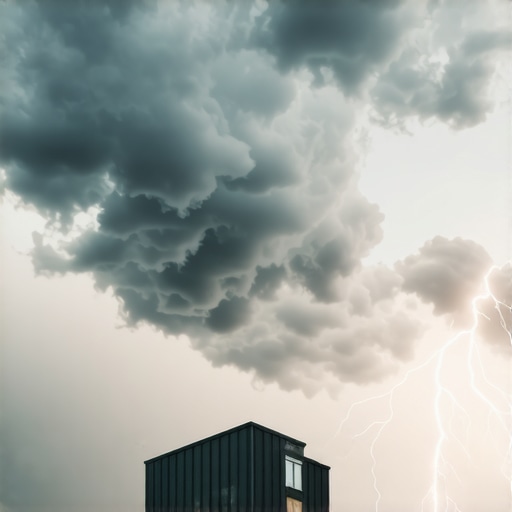
The Anatomy of a Failed Roof
Walking on that roof felt like walking on a sponge. I knew exactly what I’d find underneath before I even pulled my first pry bar. It was a humid Tuesday in a coastal neighborhood, and the homeowner was baffled. They had a ’30-year’ shingle installed only six years ago, yet the master bedroom ceiling was a map of brown water stains. When we peeled back the first square, the plywood didn’t just look wet; it was delaminating, turning into a fibrous mush that smelled like a swamp. The culprit wasn’t a hole in the roof. It was a combination of cheap staples—not nails—and a complete lack of secondary water resistance in a high-wind zone. The wind had lifted the tabs just enough to create a vacuum, sucking wind-driven rain uphill. Water doesn’t just fall; in a storm, it hunts for a way in.
The Physics of Storm-Proofing: Beyond the Shingle
When people talk about storm-proofing, they usually focus on the top layer. That’s a mistake. A roof is a pressurized system. During a high-wind event, your home acts like a wing. Wind rushing over the peak creates negative pressure, literally trying to suck the roof deck off the rafters. If your local roofers didn’t use a ring-shank nail or missed the ‘sweet spot’ on the nailing strip—creating what we call a shiner—that shingle is gone at 70 mph. Once one shingle flies, the internal pressure of the house pushes against the underside of the remaining materials, and the whole system unzips. We call this progressive failure. To prevent this, we look at materials that handle both impact from debris and the sheer force of uplift.
“Roofing assemblies shall be designed and installed to resist the wind loads as determined in accordance with Section 1609 of the International Building Code.” — International Residential Code (IRC)
1. The Heavyweight: Class 4 Impact-Resistant Asphalt
In 2026, the standard 3-tab shingle is effectively obsolete for anyone living near a storm track. We now look at Class 4 shingles, which are tested by dropping 2-inch steel balls from 20 feet. But the real secret isn’t just the impact rating; it’s the SBS (Styrene-Butadiene-Styrene) modified bitumen. This is rubberized asphalt. Standard shingles get brittle in the sun, especially in the Southeast. When a hailstone hits a brittle shingle, it fractures the fiberglass mat. An SBS shingle, however, has ‘memory.’ It flexes and absorbs the energy. More importantly, the adhesive strips on these materials are engineered for 130 mph+ speeds. If you are hiring roofing companies, ask specifically about the pull-through resistance of the matting. If the nail head can pop through the shingle during a gust, the material is useless.
2. The Fortress: Standing Seam Metal
If you want a roof that will outlive you, standing seam is the play. Notice I didn’t say ‘corrugated metal.’ We don’t want exposed fasteners. Every screw put through the face of a metal roof is a potential leak point ten years down the line when the rubber washer dry-rots. Standing seam uses a concealed clip system. The clips allow the metal to expand and contract as the temperature swings from 140°F in the sun to 70°F during a rain squall. Without this movement, the metal would ‘oil can’ or buckle, eventually backing out the fasteners. In hurricane-prone areas, standing seam is the gold standard because it’s nearly impossible for wind to get under the laps. It’s also a non-combustible material, which is a massive bonus if you’re dealing with the secondary threat of storm-related fires or lightning.
3. The Modern Classic: Synthetic Composite Slate
I’ve spent years dragging real slate up a ladder, and while it’s beautiful, it’s heavy and brittle. One large branch during a storm and you have a cracked tile that’s a nightmare to replace. Enter synthetic composites. These are made from recycled polymers and resins. They are molded to look like authentic slate or cedar shakes but carry a Class 4 impact rating and Class A fire rating. The advantage here is the weight-to-strength ratio. You get the aesthetic of a high-end home without needing to reinforce your trusses. From a forensic perspective, these are fascinating because they don’t hold moisture. They don’t swell, they don’t rot, and they don’t support algae growth, which is the silent killer of roofs in humid climates.
4. The Stone-Coated Steel Alternative
This is the middle ground for homeowners who want the look of tile but the durability of metal. It’s a structural grade steel core coated with stone granules. Why do we care about the granules? UV protection. The sun breaks down the adhesives that hold your roof together. By embedding stone into the steel, you create a shield against radiation. These panels interlock at the edges, creating a unified structural skin over the house. In a high-wind event, interlocking systems perform better than overlapping systems because they don’t rely solely on gravity and a thin strip of sealant to stay down. If you’re looking at local roofers for this install, make sure they understand the cricket installation around chimneys, as these systems require precise flashing to avoid water damming.
5. Concrete Tile with Enhanced Underlayment
Concrete tiles are common in the Southwest and Florida for a reason: they are heavy. Gravity is your friend when it comes to wind. However, the tile is just the ‘rain screen.’ The real roof is the underlayment. For 2026, the move is toward self-adhering, high-temp membranes. We no longer trust felt paper. Felt tears, it absorbs water, and it wrinkles. A ‘peel-and-stick’ underlayment bonds directly to the plywood deck. If the tiles are blown off or cracked by a flying limb, the house remains watertight. This is what we call ‘Secondary Water Resistance.’ It’s the difference between a $1,000 repair and a $50,000 interior gut job.
“The primary cause of roof leaks is not the failure of the roofing material itself, but the failure of the flashing and the integration of the roof with other building components.” — National Roofing Contractors Association (NRCA)
The Trap: Why Your Warranty is Probably Useless
I see it every day. A homeowner points to a ‘Lifetime Warranty’ logo on a brochure while water drips into their bucket. Here is the trade truth: most warranties only cover material defects, not ‘acts of God’ (storms) or, more importantly, poor installation. If a roofer misses the nail line by an inch, the manufacturer will deny your claim. If they reuse the old rusted flashing to save fifty bucks, your warranty is voided. You aren’t buying a product; you are buying an installation. The best material in the world will fail if the roofing companies you hire don’t understand the physics of a valley or the importance of a drip edge. A drip edge isn’t just a piece of metal; it’s a capillary break that prevents water from wicking back into your fascia and soffits.
The Verdict: How to Choose
Choosing the right material depends on your specific micro-climate. If you’re in a hail belt, go SBS Asphalt or Synthetic Slate. If you’re on the coast, Standing Seam Metal is your only real long-term defense. But before you sign a contract, look at the details. Demand a ridge vent system that actually moves air—stagnant air in an attic cooks shingles from the inside out. Ensure they are using stainless steel fasteners if you’re within five miles of salt water. And for heaven’s sake, don’t hire the guy who gives you a price over the phone without climbing up to check the deck. You need an investigator, not a salesman. A storm doesn’t care about your curb appeal; it only cares about the one nail your contractor forgot to drive in.