
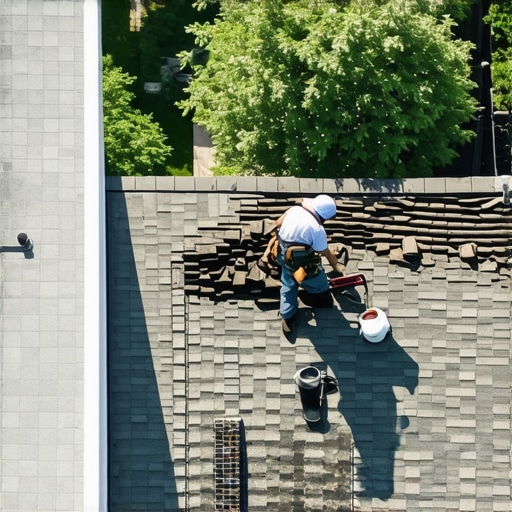
The Forensic Autopsy of a Storm-Battered Deck
Walking on that roof felt like walking on a sodden sponge. It was 2026, right after a line of convective supercells had ripped through the valley, and every ‘truck-and-ladder’ outfit within three states was already sticking flyers in mailboxes. I didn’t need to see the water spots on the vaulted ceiling to know the story. I could feel it through the soles of my boots. When you’ve spent twenty-five years chasing leaks, you stop looking for the hole and start looking for the physics of the failure. Most local roofers will tell you that a storm ‘hit’ your house. I’m here to tell you how it actually broke it.
We are entering an era where roofing companies are no longer just installers; they have to be forensic investigators. The materials we used ten years ago aren’t holding up to the rapid pressure drops and high-velocity shear winds we’re seeing now. If you think a quick visual check from the driveway is an inspection, you’re already behind. Here is the reality of what an actual veteran looks for when the clouds clear.
“Roof coverings shall be fastened to the appropriate deck in accordance with the manufacturer’s instructions.” – International Residential Code (IRC) R905.1
1. The Micro-Fracture: Beyond the ‘Bruise’
Most roofing companies look for missing granules. That’s amateur hour. In 2026, we’re looking at the structural integrity of the bitumen-saturated mat. When a hailstone—even a small one—hits an asphalt shingle at terminal velocity, it creates a compression wave. This isn’t just a cosmetic ‘bruise.’ It’s a mechanical fracture of the fiberglass substrate. Inside the 140°F heat of a summer attic, that fracture expands. By the time the first frost hits, capillary action sucks moisture into that fracture. The water freezes, expands, and tears the shingle from the inside out. We use high-resolution thermal imaging now to find these ‘cold spots’ where moisture is already huddling in the mat before the leak even starts. If your contractor isn’t talking about mat-fracture, they’re just looking for an insurance payout, not a solution.
[image_placeholder_1]
2. High-Velocity Uplift and the ‘Hidden Shiner’
Wind doesn’t just blow shingles off; it creates a vacuum. This is the Bernoulli principle in action over your ridge cap. Local roofers who know their salt check the starter strip first. If the wind got under that first course, it didn’t just lift the shingle; it broke the sealant bond three courses up. We look for ‘shiners’—nails that were driven slightly crooked or missed the nailing zone. When the roof vibrates during a wind event, these shiners act like tiny hammers, backing out of the plywood. Once a nail backs out even an eighth of an inch, the shingle is no longer shedding water; it’s funneling it directly into the shank hole. I’ve seen squares of roofing that looked perfect from the ground but were held on by nothing but habit because the wind had sheared the sealants clean.
3. The ‘Transition Zone’ and Galvanic Corrosion
Water is patient. It will wait for you to make a mistake. The most critical thing we check is the flashing in the valleys and around the chimney—what I call the ‘Transition Zone.’ In 2026, we’re seeing more failures due to mismatched metals. If a ‘trunk slammer’ used galvanized nails on a copper flashing or aluminum drip edge, you’ve got a battery on your roof. Electrolysis eats the softer metal, creating pinholes that no caulk can save. We look for ‘crickets’—those small peaked diversions behind chimneys. If the cricket wasn’t framed right, the storm creates a swirling eddy of debris and water that sits against the masonry. That water doesn’t just leak; it wicks. It climbs up the building paper through osmosis and rots your headers before you ever see a drip.
“A roof is only as good as its flashing; the shingle is just the suit of armor, but the flashing is the joints in the mail.” – Old Roofer’s Adage
4. The Attic Bypass and Pressure Equalization
The fourth thing often ignored by standard roofing companies is the attic itself. A storm doesn’t just happen outside. When high winds hit a house, they create a pressure differential. If your soffit vents are clogged with twenty years of blown-in insulation, the wind creates a negative pressure that can actually suck rain sideways through your ridge vent. I’ve performed ‘autopsies’ on roofs where the shingles were fine, but the attic was a mold factory because the storm forced water in through the ventilation system. We check for ‘attic bypasses’—holes for plumbing or wiring that allow warm, moist house air to hit the cold underside of the roof deck. That’s where the real ‘storm damage’ hides, turning your plywood into oatmeal while you’re busy looking at the shingles.
The Trap of the ‘Free Roof’
Don’t fall for the knock on the door. The ‘free roof’ scam is the bane of my existence. These guys sign you over to an assignment of benefits and then put on the cheapest ‘square’ of shingles they can find, using four nails instead of six and skipping the ice and water shield. They’re gone before the first snow. When you’re hiring, you want someone who talks about ‘uplift ratings’ and ‘secondary water resistance.’ You want a pro who knows that roofing is about managing the physics of air and water, not just nailing down pieces of oil-soaked paper.