
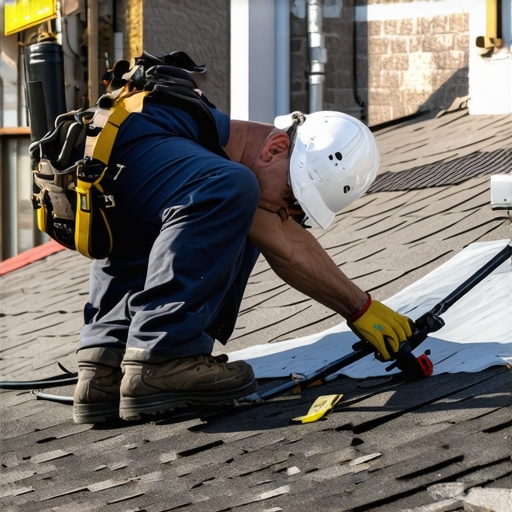
The Anatomy of a Valley Failure
You hear it before you see it. That rhythmic tink-tink-tink of water hitting the drywall in your kitchen ceiling during a November downpour in the Pacific Northwest. By the time the brown ring forms on the plaster, the war has already been lost. As a forensic roofer, I’ve spent two decades climbing ladders to tell homeowners that their ‘new’ roof is failing because a contractor didn’t understand the physics of a valley. My old foreman used to say, ‘Water is patient. It will wait for you to make a mistake.’ In the moss-heavy, rain-soaked climate of the coast, that mistake is almost always the valley flashing.
The Physics of Failure: Why Valleys Leak
A roof valley is the freeway of your roofing system. It’s where two slopes meet, concentrating the highest volume of water. If the flashing is loose or the seams aren’t tight, you aren’t just looking at a drip; you’re looking at a pressurized entry point. When wind-driven rain hits a loose metal seam, it doesn’t just run down; it undergoes capillary action. This is the mechanism where liquid is pulled into narrow spaces—like the gap between a piece of W-metal and a shingle—regardless of gravity. Once that water is sucked under the flashing, it hunts for a shiner (a missed nail) or a gap in the underlayment to begin the slow process of turning your roof deck into mulch.
“A roof is only as good as its flashing.” – Old Roofer’s Adage
When roofing companies cut corners, they often rely on caulk rather than mechanical integrity. But in a region where the humidity stays high and the sun occasionally bakes the shingles, the constant expansion and contraction of metal against wood will spit out a bead of sealant in a single season. If you ignore the signs of a loose seam, you’ll eventually deal with hidden plywood decay that can compromise the entire structure of your home.
1. The Mechanical Hemming Reset
The first fix isn’t about adding more nails; it’s about the geometry of the metal. Professional local roofers know that a ‘flat’ piece of valley metal is a recipe for disaster. The most effective fix for a loose seam is to ensure the metal has a ‘hem’—a fold on the edge that hooks into a cleat. This allows the metal to move during thermal expansion without buckling or pulling away from the shingles. If your flashing is flapping in the wind, it likely wasn’t cleated down. We go back in, pull the perimeter nails that were causing the stress, and install hidden clips. This keeps the valley tight to the deck while letting the metal ‘breathe’ as temperatures shift from 40°F mornings to 80°F afternoons.
2. Interleaving with High-Performance Underlayment
If the seam is loose, the secondary defense—the underlayment—is your only hope. In forensic tear-offs, I often find that the ‘pro’ just threw down a single layer of felt. For a permanent fix, we use a technique called interleaving. We pull back the shingles near the valley and install a self-adhering ice and water shield directly to the wood, then lap it with breathable felts. This creates a multi-layered waterproof sandwich. Even if the metal seam gaps slightly during a storm, the water is channeled safely down the synthetic barrier rather than soaking into the rafters.
3. Addressing the ‘Shiner’ Conduit
One of the biggest culprits of valley leaks is the ‘shiner.’ This is a nail driven too close to the center of the valley metal. When the metal expands in the heat, it pulls against that nail, eventually widening the hole or popping the head off entirely. This creates a direct straw for water to enter the attic. Our fix involves removing these rogue fasteners and replacing them with gasketed screws or, better yet, moving the fastening points to the outer three inches of the metal flange where they are protected by the shingle overlap. Properly managing these fasteners is one of the best ways to stop attic leaks forever.
“Flashings shall be installed in a manner that prevents moisture from entering the wall and roof through joints in copings, through moisture-permeable materials and at intersections of built-up roofing.” – International Residential Code (IRC) R903.2
4. Sealant Geometry and Polyurethane Bonding
If you see a roofer with a tube of cheap silicone in a valley, fire them. Silicone doesn’t bond well to the stone granules of a shingle or the galvanized coating of the metal. For a real fix, we use high-grade polyurethane or tri-polymer sealants. The trick isn’t just the material; it’s the geometry. We don’t just ‘schmear’ it on top. We apply a ‘blind’ bead underneath the shingle where it meets the metal. This creates a gasket that stays flexible. In areas prone to organic growth, this also prevents moss from getting a foothold under the shingle edge, which is a major concern for stopping algae and reappearing stains that hold moisture against the seam.
5. Structural Reinforcement for Valley Sag
Sometimes the flashing is loose because the roof deck itself is failing. If the rafters beneath the valley are undersized or have suffered previous water damage, they will ‘dip,’ causing the metal flashing to bridge across a void. No amount of nails will keep that seam tight. In these cases, we have to perform ‘surgery.’ This involves bracing the valley from the inside of the attic. If you notice your valley looking like a dry creek bed with a dip in the middle, you should check if your attic rafters are sagging. Fixing the structural deflection is the only way to ensure the flashing stays seated and the seams remain water-tight for the next 20 years.
The Cost of the Quick Fix
In the roofing industry, the ‘cheap’ fix is the most expensive one you’ll ever buy. I’ve seen homeowners pay $300 for a ‘caulk job’ only to spend $15,000 six months later on a full tear-off and mold remediation. When you are looking at roofing companies, ask them how they handle the valley transition. If they don’t mention hemming, cleating, or ice and water shield, they aren’t fixing the problem; they’re just hiding it until the next storm. Don’t wait until the ‘oatmeal plywood’ phase. Get a forensic inspection and make sure your valleys are built to handle the volume, not just the view.