
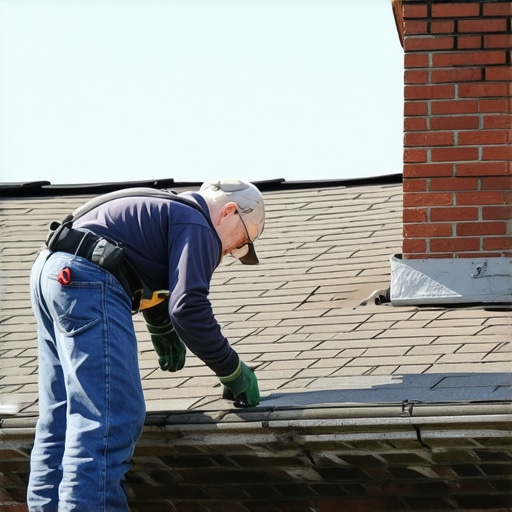
The Forensic Autopsy of a Soaked Living Room
You hear it before you see it. That rhythmic, hollow thwap-drip hitting the top of the wood-burning stove at 2:00 AM. By morning, there is a tea-colored ring blooming on your ceiling like a bruise. Most homeowners call local roofers and ask for a tub of tar, thinking it is a simple fix. It is not. As a forensic roofing investigator, I have spent decades crawling through cramped, 140-degree attics looking for the ghost in the machine. A chimney is, by its very nature, a structural contradiction: a massive hole cut into your primary defense against the elements. If you do not treat that hole with the respect physics demands, the sky will eventually move into your house.
My old foreman used to say, ‘Water is patient. It will wait for years for you to miss one nail, then it will rot your house from the inside out while you sleep.’ He was right. Chimney leaks are rarely about the shingles; they are about the interface between masonry and wood. In the cold, punishing climates of the North, where ice dams turn small errors into catastrophic failures, the chimney becomes a focal point for thermal bridging. The heat escaping the flue melts the snow sitting in the back-pan, creating a localized pool of water that sits there, exerting hydrostatic pressure on every seam until it finds a way in. Walking on a roof that has been leaking for years feels like walking on a sponge; you can feel the [plywood decay](https://modernroofingguide.com/roof-inspection-3-signs-of-hidden-decking-plywood-decay-fast-early-fast-early-fast-early-fast-early-fast-early-fast-early-fast-early-fast-early-fast-early) beneath your boots before you even pull a single shingle.
“Flashings shall be installed at wall and roof intersections, wherever there is a change in roof slope or direction and around roof openings.” – International Residential Code (IRC), R903.2
1. The Cricket: Redirecting the River
If your chimney is wider than 30 inches, and it sits at the bottom of a long roof slope, you do not just have a chimney; you have a dam. Water rushing down the roof hits the back of that brick stack and stops. This is where the physics of ‘pondage’ begins. Without a cricket—a small, peaked false roof built behind the chimney—water pools against the masonry. A cricket acts as a water diverter, splitting the flow and sending it around the sides of the chimney toward the eaves. Many roofing companies skip the cricket because it is time-consuming to frame and flash correctly. However, in snow-heavy regions, a chimney without a cricket is a death sentence for the roof deck. Without it, snow packs behind the chimney, melts from the flue heat, and then refreezes, creating an ice dam that can back water up under the shingles for three or four feet. When we build a cricket, we ensure it is fully wrapped in a self-adhering membrane, often referred to as ice and water shield, before the metal goes on. This creates a secondary water resistance layer that protects the wood even if the metal takes a hit.
2. The Two-Part Flashing System: The Surgical Standard
The biggest mistake ‘trunk-slammer’ contractors make is using a single piece of metal and a tube of cheap caulk to seal a chimney. That is a Band-Aid, not a solution. Professional roofing services require a two-part system: step flashing and counter-flashing. Step flashing consists of individual L-shaped pieces of metal that are woven into every course of shingles. They move with the roof. But brick and wood expand and contract at different rates. If you nail the metal to both the roof and the brick, the first temperature swing will rip the seal apart. That is why we use counter-flashing. We cut a ‘reglet’ or a groove into the mortar joints of the brick, tuck the metal in, and let it hang over the step flashing. This allows the house to breathe and move without breaking the waterproof seal. If you see a roofer just slapping a piece of flat metal against a chimney and covering the top with roofing cement, fire them on the spot. That tar will dry out, crack, and leak within two seasons. Proper [valley flashing](https://modernroofingguide.com/residential-roofing-how-to-secure-roof-valley-flashing) and chimney flashing require mechanical fasteners and gravity-defying overlaps, not just chemicals.
3. The Integrated Underlayment Shield
Modern roofing science has moved past the days of simple 15-pound organic felt. When we approach a chimney ‘autopsy,’ we often find that the leak started because water traveled sideways under the shingles through capillary action. Water has a high surface tension; it can actually pull itself uphill or sideways through narrow gaps. To combat this, we install a ‘picture frame’ of high-temperature ice and water shield around the entire chimney perimeter. This membrane must be lapped up the masonry at least four inches. This ensures that even if a shingle is lifted by wind or an ice dam forms, the water hits a rubberized barrier that is literally fused to the wood. If this step is missed, and the [attic rafters sag](https://modernroofingguide.com/emergency-roof-services-4-things-to-do-if-attic-decking-rafters-sag-fast-early-fast-early-fast-early-fast-early-fast-early-fast-early-fast-early-fast-early-fast-early-fast) due to moisture absorption, you are looking at a five-figure structural repair instead of a three-figure maintenance job.
“A roof is only as good as its flashing.” – Old Roofer’s Adage
4. Masonry Saturation and Breathable Sealants
Sometimes, the leak isn’t the roof at all—it is the brick itself. Brick is a hard sponge. In heavy, wind-driven rain, the masonry can become so saturated that water passes through the brick and mortar and begins to weep out the back side, behind your flashing, and onto your ceiling. This is the ultimate ‘ghost leak.’ To stop this, we use silane-siloxane based breathable sealants. Unlike old-school paints that trap moisture and cause the brick to ‘spall’ or explode during a freeze, these sealants penetrate the pores and change the surface tension of the brick so water beads off. We pay special attention to the chimney crown—the concrete slab at the very top. If that crown is cracked, it is a funnel for water. We repair it with a reinforced crown seal that can withstand the extreme thermal expansion of the flue pipe. I have seen ‘shiners’—nails that missed the rafter—dripping condensation in the attic, making people think they had a chimney leak when they really just had a ventilation issue. But when the brick itself is the culprit, you need a chemical barrier that still allows the chimney to ‘sweat’ out its internal moisture.
The Bottom Line: Don’t Wait for the Puddles
In roofing, the cheapest bid is usually the most expensive one you will ever sign. If a contractor doesn’t mention crickets, step-flashing reglets, or high-temp membranes, they aren’t giving you a roof; they are giving you a countdown. Chimney maintenance is a non-negotiable part of owning a home in a climate that freezes. Every five years, you should have a forensic-minded pro get eyes on those mortar joints and flashing laps. Because once that water reaches the framing, the cost of the repair doubles every month you wait. Don’t let a $500 maintenance detail turn into a $15,000 deck replacement. Be proactive, demand the two-part flashing system, and keep the sky where it belongs—outside.