
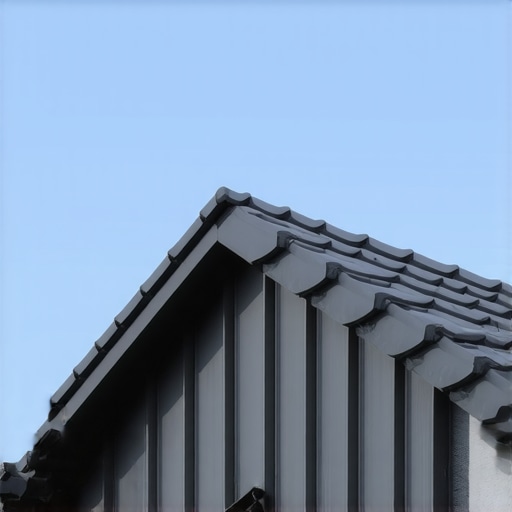
The Forensic Scene: Walking on a Sponge
Walking on that roof felt like walking on a damp sponge. I didn’t need a drone or a fancy infrared camera to tell me the story; my boots told me everything I needed to know as the surface yielded with a sickening, muffled crunch. The homeowner in the Northeast corridor was convinced they just had a few loose shingles after a rough winter. I knew better. Underneath those ‘lifetime’ asphalt shingles, the plywood had lost its structural integrity, turning into something resembling wet cardboard. This is what happens when you prioritize a cheap sticker price over the physics of a building envelope. It is exactly why I am seeing a massive shift back to traditional materials. When people get tired of replacing their roof every twelve years, they start looking at stone. Real stone.
The Material Truth: Stone vs. Petroleum
The roofing industry is currently flooded with choices, but most of them are just different ways to package oil-based products. Asphalt shingles are essentially fiberglass mats soaked in bitumen and covered in ceramic granules. The moment the sun hits them, the oils begin to outgas. In cold climates, they become brittle; in the heat, they expand and lose their grip on the granules. Slate, on the other hand, is metamorphic rock. It was forged under intense heat and pressure millions of years ago. It doesn’t ‘dry out.’ It doesn’t curl. It doesn’t lose its color because the color is the rock itself.
“Slate roofs should be designed and detailed to last the life of the building, which in many cases is over 100 years.” – National Roofing Contractors Association (NRCA)
When we talk about slate making a comeback, we aren’t talking about a fashion trend. We are talking about a rebellion against the ‘disposable’ culture of modern construction. Local roofers who have spent decades tearing off failed 20-year shingles are finally convincing homeowners that a material that lasts a century is actually the cheaper option in the long run. If you are seeing hidden decking plywood decay, it’s usually because a short-term material failed to protect the long-term structure.
The Physics of Failure: Why Shingles Quit
To understand why slate wins, you have to understand the mechanism of failure in cold-climate roofing. In the North, the enemy is the ice dam. When heat leaks from your attic into the roof deck, it melts the bottom layer of snow. That water runs down to the cold eaves and freezes, creating a dam. Standing water then backs up under the shingles. This is where capillary action takes over. Because asphalt shingles are thin, water can easily be sucked upward between the layers via surface tension. Once that water hits the nail holes—the ‘shiners’ where a roofer missed the rafter—the rot begins. Slate is installed with a much heavier ‘headlap.’ The overlap is so significant that water has to defy gravity for nearly six inches to reach a point of entry. Furthermore, the sheer thermal mass of slate helps regulate the temperature of the roof deck, reducing the thermal bridging that causes ice dams in the first place. Many modern slate installations now utilize synthetic underlayment as a secondary moisture barrier, providing a level of redundancy that 19th-century slaters could only dream of.
The Trap: The ‘Lifetime’ Warranty Myth
Don’t get me started on ‘Lifetime Warranties.’ Most roofing companies sell you a piece of paper, not a roof. Those warranties are pro-rated, riddled with exclusions for ‘acts of God’ (which apparently includes wind and rain), and are often non-transferable. Slate doesn’t need a marketing department to tell you it’s durable. Go to any historic district and look at the 150-year-old cathedrals. That stone has been pelted by hail, buried in snow, and baked in the sun for over a century without a single warranty claim. The only way a slate roof fails prematurely is through human error: using galvanized nails that rust out, or failing to install a proper cricket behind a chimney to divert water flow. A real slate roof is a system, not just a covering. It requires a heavy-duty square of material (100 square feet) that can weigh anywhere from 800 to 1,500 pounds. If your contractor doesn’t talk about structural load-bearing capacity, they aren’t a slater; they are a shingle flipper.
“A roof is only as good as its flashing and the skill of the man who laid the valley.” – Old Roofer’s Adage
The Mechanics of Ventilation in Cold Climates
In cold regions, a slate roof must breathe. If you trap warm, moist air in the attic, you are asking for mold and structural failure. Slate is naturally better at this because the small gaps between the stones allow for micro-ventilation, but you still need a dedicated system. I’ve seen too many high-end homes where the roofer botched the ridge. If you notice poor ridge vent sealing, the stone above won’t save the wood below. You need a continuous flow of air from the soffit to the peak to keep the deck cold and the insulation dry. This prevents the condensation that leads to ‘oatmeal’ plywood.
How to Pick a Contractor Who Won’t Disappear
Slate is a specialty craft. If a company tells you they can ‘knock it out in a weekend,’ run. A proper slate job is a slow, methodical process involving copper flashing, stainless or copper fasteners, and a lot of hand-cutting with a slater’s hammer. When interviewing roofing companies, you need to ask the hard questions. Before signing anything, check their questions to ask about subcontractors. You want to know that the guys on your roof actually know how to walk on slate without breaking it (hint: you use roof hooks and ladders, you don’t just stomp on the courses). Slate is making a comeback because homeowners are finally realizing that their roof is the most important component of their home’s defense. It’s time to stop thinking in ten-year cycles and start thinking in centuries.