
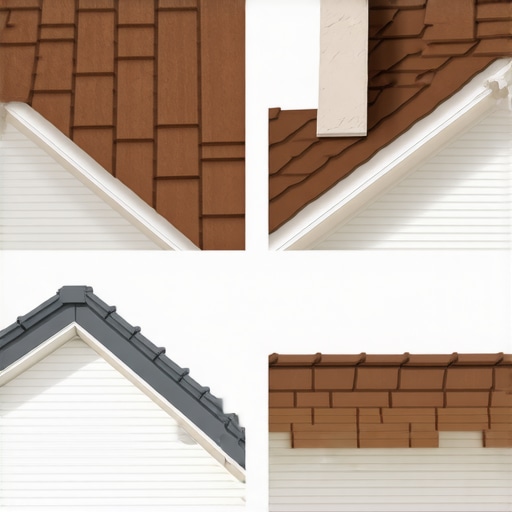
You hear that? That’s the sound of a thousand gallons of air fighting for a way out of your attic, and if you’ve got both a ridge vent and a gable vent, they aren’t working together—they’re at war. I’ve spent twenty-five years crawling through fiberglass insulation that smells like wet dog and regret, and I can tell you exactly why that water is dripping onto your drywall. It’s not a mystery. It’s physics. When you have a ridge vent running along the spine of your house and a louvered gable vent on the side, they ‘short-circuit’ the ventilation flow. Instead of pulling cool air from the soffits, the ridge vent starts sucking air—and rain, and snow—straight through the gable. It’s a vacuum effect that turns your attic into a pressurized damp box.
The Anatomy of an Attic Short-Circuit
My old foreman, a man who had more scars on his knuckles than shingles on a roof, used to tell me, ‘Water is a debt collector. It doesn’t care about your excuses; it only cares about finding the one mistake you left behind.’ He was right. When wind hits the side of a house in a blizzard, it creates high pressure against those gable louvers. If your ridge vent is doing its job, it’s creating a low-pressure zone at the peak. That pressure differential acts like a straw, pulling moisture right through the slats. I’ve walked into attics where the insulation was so saturated it felt like treading on a swamp, all because the homeowner thought ‘more vents are better.’ They aren’t. They’re just more holes for the ghost to get in.
“Ventilation shall be provided at a rate of 1 square foot of net free area for every 150 square feet of attic floor space, but the balance of intake and exhaust is paramount to prevent moisture infiltration.” – International Residential Code (IRC) Section R806
If you don’t address this early, you’re looking at hidden attic dampness that will rot your rafters from the inside out. You won’t see it until your roof deck starts sagging like an old clothesline. By then, the cost isn’t a couple of hundred bucks for a seal; it’s five figures for a full deck replacement.
Method 1: Interior Plywood Blocking (The Surgical Approach)
This is the gold standard for local roofers who actually know their salt. You don’t just slap some duct tape on the vent and call it a day. You need to head into the attic with a 1/2-inch sheet of CDX plywood. You cut a piece that fits exactly over the interior framing of the gable vent. But here is the trick: you don’t just nail it. You ‘butter’ the edges with a high-quality sealant. If you leave a gap, air will still find a way, and with it, the fine powder of wind-driven snow. I’ve seen ‘shiners’—nails that missed the joist—act as condensation points where water drips off the cold metal like a leaky faucet. Seal the edges, screw the plywood into the studs, and you’ve effectively decommissioned the vent without ruining the exterior look of your home.
Method 2: High-Permeability Weather Barriers
If you’re worried about trapping *some* moisture but want to stop the bulk of the wind-driven rain, you use a weather-resistive barrier (WRB). This is for the homeowner who wants a ‘breathable’ seal. You staple a layer of professional-grade house wrap over the interior of the gable opening. This allows some vapor to escape while stopping the high-velocity air that carries water. It’s a faster fix, but in a heavy storm, it can still vibrate and hum. I’ve seen cheap contractors use garbage bags for this—don’t be that guy. A garbage bag is a vapor barrier, not a breather. You’ll end up with a pond on the wrong side of the plastic.
Method 3: Professional Grade Foam Air Sealing
For those dealing with attic joint seals, expanding spray foam is your best friend and your worst enemy. It’s the ‘nuclear’ option. If you use the high-expansion stuff, you can actually warp the louver slats on your gable vent. You want the low-expansion door and window foam. You spray the perimeter where the vent housing meets the wood framing. This stops the capillary action that pulls water around the casing. It’s messy, it’s permanent, and it’s effective. Just remember: once that stuff is on your hands, it’s there until you grow new skin.
“The primary function of a roof is to shed water, but the primary failure of a roof is almost always the mismanagement of air.” – NRCA Manual for Steep-Slope Roof Systems
Method 4: Exterior Decorative Flashing and Metal Caps
Sometimes the vent is so far gone that you can’t fix it from the inside. This is common on older homes where the wood louvers are rotting. In this case, you need to go outside. You take a custom-bent piece of aluminum coil stock—match the color of your trim—and you cap the entire vent. This is where you have to be careful with poor ridge vent sealing. If the ridge vent isn’t pulling enough air from the soffits, capping the gable might starve the attic of air. You must ensure your soffit vents are clear. I’ve seen ‘trunk slammers’ cap a gable vent and leave the soffits painted shut. That’s how you bake shingles from the bottom up until they curl like potato chips in the sun.
The Physics of the ‘Vacuum’
Let’s talk about Bernoulli’s principle for a second. When wind moves fast over the peak of your roof (the ridge), it creates a low-pressure zone. If your gable vent is open, the attic becomes a giant straw. The air rushes in through the gable and out through the ridge. If it’s raining sideways at 40 miles per hour, you aren’t just getting air; you’re getting a misting system. By sealing that gable, you force the ridge vent to pull air from the soffits—the lowest point of the roof. This creates a ‘cool floor’ effect across the attic deck, which prevents ice dams in the winter and lowers your AC bill in the summer. It’s not just about stopping a leak; it’s about making the house breathe correctly. If you ignore this, you’re just waiting for the day you see plywood rot that makes the roof feel like a sponge under your boots.
Why Most DIY Repairs Fail
I’ve seen guys try to seal these vents with silicone caulk from a big-box store. Silicone is great for bathtubs, but it hates the 140°F temperatures an attic can reach in July. It’ll peel off like a bad sunburn in two seasons. You need an asphalt-based sealant or a high-movement polyurethane. You also need to look for ‘shiners’—those missed nails I mentioned earlier. If you seal the vent but leave ten nails poking through the deck that missed the rafters, those nails will frost up in the winter and drip in the spring. It’ll look like a leak, but it’s just condensation. A pro knows the difference. If you’re unsure, don’t guess. The cost of a forensic inspection is a fraction of the cost of a mold remediation crew. Treat your roof like a system, not a collection of separate parts. Every vent, shingle, and nail has to play its role, or the whole thing falls apart when the first storm hits.