
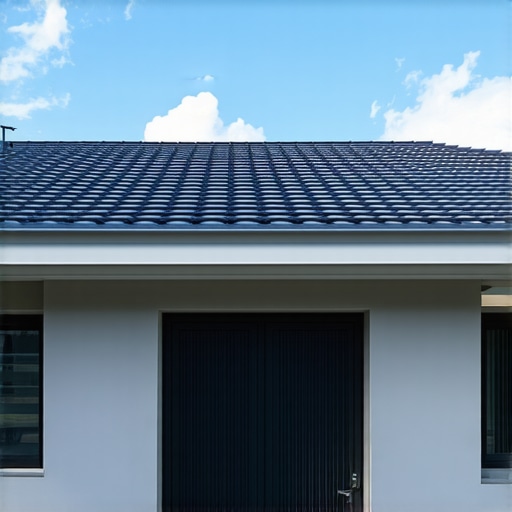
The Spongy Reality of Failed Roofs
Walking on that roof felt like walking on a sponge. I knew exactly what I’d find underneath. Last August, I was called out to a warehouse near the coast. The owner was frantic because his ‘new’ roof—only three years old—was weeping water into his inventory. As I stepped onto the membrane, the surface didn’t just give; it gurgled. The previous crew had used a cheap acrylic coating, and in this tropical humidity, it had reached its saturation point. The water hadn’t just sat on top; it had physically bonded with the coating and started the slow, agonizing process of rotting the deck. This is why I don’t talk about ‘cheap’ fixes anymore. I talk about chemistry. Specifically, the chemistry behind 2026 high-solids silicone coatings.
When we talk about roofing companies and the products they push, there is a massive gap between marketing fluff and forensic reality. Most local roofers are still stuck in 2010, rolling out water-based products that evaporate into thin air, leaving behind a thin, brittle film. By the time 2026 rolls around, the industry standard is shifting toward inorganic silicone for one reason: it doesn’t give a damn about the sun or the rain.
“A roof is only as good as its flashing, and its ability to shed or withstand standing water.” – Old Roofer’s Adage
The Physics of Failure: Why Traditional Roofing Quits
If you live in a climate where the humidity hits 90% before your first cup of coffee, you are fighting a constant battle against hydrostatic pressure. Most roofing materials are organic. They are made of carbon chains that UV radiation—those nasty little photons from the sun—hits like a sledgehammer. Over time, those chains break. Your shingles curl, your EPDM shrinks, and your acrylic coatings start ‘chalking.’ You’ve seen it—that white powder that washes off into your gutters? That’s your roof literally disintegrating.
Silicon coatings—or more accurately, silicone—are inorganic. They aren’t carbon-based; they are built on a backbone of silicon and oxygen. The sun can beat on a silicone-coated roof for a decade, and the molecular structure won’t budge. In the trade, we look at the mil-thickness. While a standard roofing job might involve a few layers of felt and asphalt, a 2026-spec silicone application creates a monolithic, rubberized shield that doesn’t have seams. No seams means no capillary action drawing water into the valleys or under the crickets.
The Ponding Water Trap
Here is a secret most roofing companies won’t tell you: standard warranties are void if water ponds on the roof for more than 48 hours. Think about that. If your roof has a low spot (and they all do eventually), the manufacturer won’t cover the leak. Silicone is the only material that is chemically hydrophobic. It can be submerged under a foot of water for months and it won’t soften, swell, or peel. This is ‘Mechanism Zooming’ at its best—the moisture-cure technology in these coatings uses the humidity in the air to trigger the drying process. While an acrylic roof needs a sunny day to dry, silicone can practically be applied between rain clouds.
“Roofing systems shall be designed and installed in accordance with this code and the manufacturer’s installation instructions.” – International Building Code (IBC) Section 1501.1
The 2026 Innovation: Dirt Pick-Up Resistance (DPR)
The old knock on silicone was that it got dirty. It was ‘tacky,’ and after six months, your bright white, energy-efficient roof looked like a charcoal grill. The 2026 formulations have solved this with DPR (Dirt Pick-Up Resistance) technology. They’ve altered the surface tension so that dust and debris don’t stick. This keeps the albedo effect high, reflecting up to 88% of UV rays. If you’re not looking at the thermal expansion of your deck, you’re missing the point. A cooler roof doesn’t expand and contract as violently, which means your flashing stays tight and your fasteners don’t start ‘backing out’ or creating shiners (missed nails that catch the light and the water).
The “Lifetime Warranty” Scam
I’ve seen a thousand ‘lifetime’ warranties, and most of them aren’t worth the paper they’re printed on. They cover ‘manufacturing defects’ but not ‘installation errors.’ If a local roofer doesn’t prep the surface with a power wash and an adhesion test, that coating will peel off like a bad sunburn. You need to look for a Full System Warranty. This covers both the labor and the material. In 2026, the best roofing companies are offering these because they know the silicone won’t fail; they’re just betting on their own ability to clean a roof before they spray it.
The Surgery: How to Actually Apply a Coating
You don’t just dump a bucket of silicone and hope for the best. It’s a surgical process. First, we identify every square (100 square feet) that has trapped moisture. If you coat over wet insulation, you’re just sealing in the rot. We use infrared thermography to find the ‘oatmeal’ plywood. We replace it, seal the seams with a heavy-grade mastic or butter-grade silicone, and then—and only then—do we bring in the spray rig. We’re looking for a finished dry film thickness of at least 22 to 30 mils. Anything less is just a paint job, not a roof replacement.
Is Silicone Right for Your Project?
If your roof is a disaster zone of rotted wood and structural failure, a coating won’t save you. You can’t put a tuxedo on a pig. But if your substrate is sound and you’re just tired of the 15-year replacement cycle, 2026 silicone technology is the smartest move on the board. It avoids the landfill, saves the cost of a full tear-off, and creates a secondary water resistance layer that can survive a hurricane. Don’t wait until the water is dripping onto your dining table. By then, the forensic evidence is already stacked against you.