
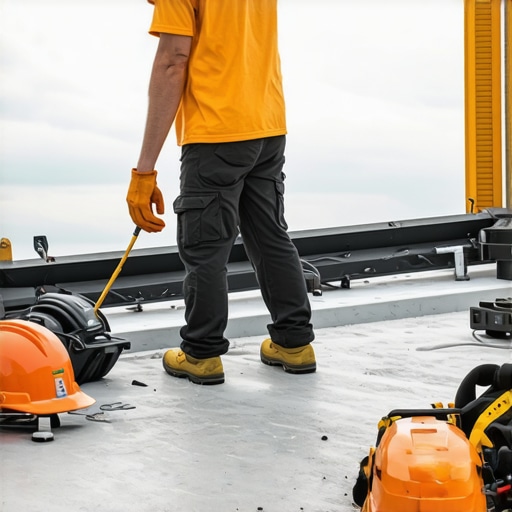
The High-Stakes Physics of the Modern Roof Deck
The air at twenty-five feet up smells like a mix of sun-baked asphalt, stale sweat, and the faint, metallic tang of galvanized nails. To a homeowner, a roof is a static shield. To those of us who’ve spent three decades on the pitch, it’s a dynamic battlefield where gravity never sleeps. As we move toward 2026, the industry is undergoing a seismic shift in how roofing companies operate. It is no longer enough to hire a guy with a ladder and a truck. If you aren’t vetting your local roofers based on the latest safety physics and forensic standards, you aren’t just risking a leak—you are inviting a massive liability onto your property.
My old foreman, a grizzly guy we called Iron-Lung Pete, used to say, ‘Water is patient. It will wait years for you to make one single mistake. Gravity is even less forgiving; it won’t even wait a second.’ I remember a job in the humid belt of the mid-Atlantic where we were called in to investigate a ‘simple’ leak. Walking on that roof felt like traversing a sponge. The previous crew had skipped the cricket behind the chimney, allowing water to pool. Over five years, that standing water didn’t just rot the plywood; it dissolved the structural integrity of the rafters. When I stepped near the ridge, the deck groaned. That wasn’t just a failure of waterproofing; it was a failure of safety. Any roofer stepping on that deck without a harness and a verified anchor point was one footstep away from a catastrophic fall through the ceiling.
The 2026 Safety Paradigm: Beyond the Basic Harness
By 2026, the standards for roofing safety have moved far beyond the ‘bucket of stripes’ harness you see at big-box hardware stores. We are now seeing the integration of bio-metric heat monitoring and AI-driven fall-arrest systems. When you vet roofing companies, you need to ask about their ‘Competent Person’ training. Under modern codes, every crew must have a designated individual who can identify existing and predictable hazards. This isn’t just paperwork; it’s the difference between a crew that recognizes a shiner—that’s a nail that missed the rafter and is now a thermal bridge for condensation—and a crew that just hammers away blindly.
“Fall protection is not a suggestion; it is the physical barrier between a professional career and a life-altering accident.” — National Roofing Contractors Association (NRCA) Guidelines
When you look at a quote, don’t just look at the price per square. A ‘square’ is 100 square feet of roof area, and the ‘cheap’ guys save money by ignoring ‘tie-off’ points. If you don’t see a contractor installing temporary roof anchors or using a valley-specific safety sequence, they are cutting corners. In the forensics world, we see a direct correlation: a contractor who cheats on safety almost always cheats on the flashing. If they don’t value their own lives, they certainly don’t value your attic’s R-value.
Mechanism Zooming: The Physics of the Fall and the Fail
Let’s talk about the ‘Mechanism of Failure.’ Most people think a roof fails because a shingle blows off. Real failure is more insidious. It starts with capillary action. Water has a literal ‘climbing’ ability. When a roofer fails to use a starter strip correctly, or when they butt shingles too tightly in a valley, water is wicked sideways under the shingle. By the time you see a brown spot on your ceiling, the ‘oatmeal effect’ has already begun in your decking. In 2026, safety standards require contractors to use ‘Secondary Water Resistance’ (SWR) layers. This is a self-adhering membrane that seals around every nail penetration. If your local roofers aren’t talking about SWR, they are living in 1995.
“A roof is only as good as its flashing.” — Old Roofer’s Adage
The 2026 safety protocols also demand better management of ‘Thermal Shock.’ In regions with high diurnal temperature swings, shingles expand and contract violently. This movement can ‘back out’ nails that weren’t driven deep enough. Those ‘shiners’ then become points of entry. A truly safe company uses pneumatic tools calibrated to the specific ambient temperature to ensure the nail head sits flush without fracturing the fiberglass mat of the shingle.
How to Grill Your Contractor: The 2026 Checklist
When interviewing roofing companies, forget the standard ‘Are you insured?’ question. Everyone says yes. Instead, ask for their EMR (Experience Modifier Rate). An EMR below 1.0 means they are safer than the industry average. Ask them about their ‘Anchor Point Integrity’ protocol. A roof anchor is only as strong as the wood it’s bolted into. If they are bolting a 5,000-lb capacity anchor into 1/2-inch OSB that’s seen twenty years of humidity, they are performing ‘Safety Theater,’ not safety science.
Check their gear. Are their lanyards frayed? Do they use ‘leading edge’ self-retracting lifelines? In the world of 2026 roofing, we also look for drone-assisted inspections. A contractor who uses a drone to map the roof before anyone ever sets foot on a ladder is a contractor who respects the physics of the site. They are looking for ‘soft spots’ and structural anomalies before risking a human life. This level of care translates directly to the quality of your install. If they are meticulous about where they walk, they will be meticulous about how they overlap your underlayment.
The Warranty Trap vs. The Safety Reality
Don’t be fooled by the ‘Lifetime Warranty’ buzzword. Most of those are marketing fluff that only cover material defects—which account for less than 1% of roof failures. 99% of failures are ‘Installation Deficiencies.’ When a roofing company ignores 2026 safety standards, they are likely ignoring the manufacturer’s ‘Spec’ manual too. High-wind zones require six nails per shingle in a specific pattern. A roofer who isn’t harnessed up is usually a roofer in a hurry. A roofer in a hurry misses the ‘strike zone’ on the shingle, leading to ‘high-nailing.’ High-nailed shingles will eventually slide out, leaving your home vulnerable and your warranty void. True safety is slow. True safety is methodical. If the crew looks like they are racing a clock, your roof will eventually pay the price.