
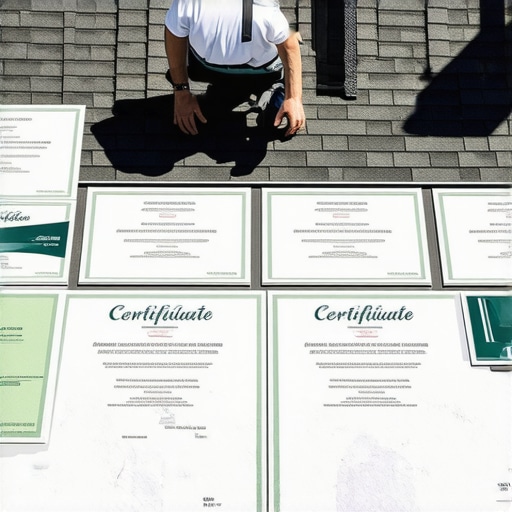
The Certification Shell Game: Why Your Quote Might Be a Lie
The roofing industry is currently being flooded by a new wave of ‘paper contractors.’ These are companies that look incredible on a smartphone screen but haven’t touched a bundle of shingles in a decade. As a forensic investigator who has spent 25 years crawling through damp attics and peeling back failed flashing, I can tell you that a ‘Certified Master Elite’ badge in 2026 is often just a high-resolution JPEG purchased from a offshore template site. My old foreman used to say, ‘Water is patient. It will wait for you to make a mistake, and then it will move in and start eating your house from the inside out.’ In the cold climates of the North, where ice dams turn small errors into five-figure disasters, a fake certification isn’t just a white lie—it is a financial landmine.
The Physics of the ‘Cheap’ Roof
When you hire local roofers who lack legitimate training, you aren’t just getting a lower price; you are purchasing a failure in physics. Take the ‘shiner’ for example. In trade talk, a shiner is a nail that missed the rafter or was driven into the open attic space. In a climate like Minneapolis or Buffalo, that exposed steel nail becomes a thermal bridge. On a zero-degree night, warm air escaping from your living space hits that cold nail, causing frost to bloom on the metal. When the sun hits the roof, that frost melts, dripping onto your insulation. This ‘phantom leak’ can rot your plywood for years before you see a spot on the ceiling. If you suspect your current roof is already failing, you need to check for 5 signs of 2026 decking rot before the next snow load hits.
“A roof system’s performance depends on the interaction of the various components, including the deck, vapor retarder, insulation, and membrane.” – NRCA Roofing Manual
The Anatomy of a Fake 2026 Certification
How do roofing companies fake their credentials today? It’s more sophisticated than you think. They often use ‘association stacking.’ They create a dozen shell organizations with names like the ‘International League of Sustainable Roofers’ and certify themselves. When you see a badge you don’t recognize, ask for the license number and cross-reference it with the state’s labor and industry portal. If the roofer gets defensive, you’ve likely found one of the 5 red flags in a 2026 quote. Real certifications require proof of workers’ comp, a minimum of five years in business, and specific manufacturer training on how to handle crickets—those small peaked structures used to divert water away from chimneys.
The Material Truth: Asphalt vs. The World
Many roofing outfits will push a specific brand because they get a kickback, not because it’s right for your home. In northern zones, the ‘Lifetime Warranty’ is often a marketing trap. Most manufacturers will void a warranty the second they see poor ventilation. If your attic is hitting 130°F in July because of blocked soffits, those shingles are baking from both sides. This leads to granular loss and shingle curling. Before signing a contract, read the truth about 30-year warranties in 2026 to see why most of them aren’t worth the paper they are printed on.
Mechanism Zooming: Capillary Action and Flashing
Water doesn’t just fall; it travels. Through a process called capillary action, water can be drawn upwards into tight spaces against the force of gravity. If your roofer doesn’t understand the ‘lap’ of the underlayment or the specific step flashing required for a sidewall, that water will find its way behind your siding. I’ve seen squares (100 square feet) of shingles torn off where the wood underneath looked like wet oatmeal because the contractor relied on caulk instead of metal. Caulk is a temporary sealant; metal is a permanent water-shedding surface. If you see a roofer pulling out a tube of ‘goop’ to fix a valley, run. They are ignoring the physics of water flow. You should also be aware of 3 roofing scams trending in 2026 that specifically target homeowners during the high-demand summer months.
“Roofing materials shall be delivered in original packages and stored in a manner that prevents damage from moisture.” – International Residential Code (IRC) R905.1
The Forensic Audit: How to Verify Your Contractor
To truly vet roofing companies, you must look past the glossy folder. Ask to see their ‘Safety Portfolio.’ A real pro knows that a single fall can result in a lien against your property if they aren’t properly insured. Check their knowledge of Ice & Water Shield. In cold climates, this self-adhering membrane must be applied at least 24 inches inside the warm wall line. If they only go to the edge of the gutter, they are begging for an ice dam to flood your kitchen. If you’re dealing with an older home, ensure they have checked the signs of 2026 fascia wear, as rotting wood here will never hold a gutter nail securely.