
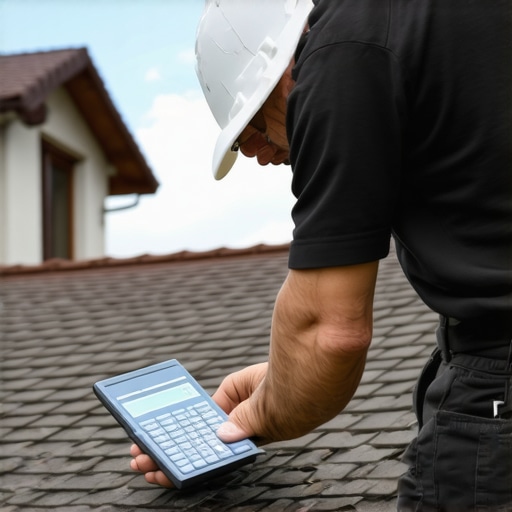
The Price of Procrastination: Why 2026 is the Year Your Roof Gets Expensive
The sound isn’t just a drip; it’s the rhythmic cadence of a bank account draining. You’re sitting in your living room, staring at a brown ring on the ceiling, wondering if you can squeeze another season out of those 20-year architectural shingles. My old foreman, Sully, a man who had more tar under his fingernails than blood in his veins, used to say, ‘Water is patient. It will wait for you to make a mistake.’ He wasn’t talking about the rain. He was talking about the physics of neglect. By the time you see that spot, the forensic reality is that your plywood deck has likely been acting like a sponge for eighteen months. In the Northeast, where the freeze-thaw cycle turns a tiny crack into a cavern, waiting until 2026 to call local roofers is a gamble with a high house edge. But if you play the cards right, you can actually claw back $2,000 or more from the inevitable price hikes.
“The primary purpose of a roof is to shed water, but its secondary and more difficult purpose is to manage the movement of heat and air.” – Building Science Principles
The Physics of the ‘Shiner’ and Attic Condensation
Before we talk about the money, we have to talk about the physics. Most roofing companies will throw a crew on your deck that bangs out 30 squares in a day. In that haste, they leave ‘shiners.’ A shiner is a nail that missed the rafter and sits exposed in the attic space. In a cold climate like ours, that nail becomes a thermal bridge. It gets cold—ice cold—and when your warm, humid house air hits it, it condenses. I’ve been called to ‘leaks’ that were nothing more than three hundred shiners dripping condensation simultaneously. It looks like a sieve, but it’s a ventilation failure. When you’re looking for roofing solutions, you aren’t just buying shingles; you’re buying an integrated system of intake and exhaust. If your contractor doesn’t talk about ‘Net Free Venting Area,’ walk away. They are just shingle-slappers, not roofers.
The 2026 Material Forecast: How to Hedge Your Bets
Why $2,000? Petroleum. Asphalt shingles are essentially oil-on-a-mat. As we look toward 2026, supply chain volatility and manufacturing overhead are projected to spike the cost per square by 12-15%. To save that two-grand, you need to understand the ‘shoulder season’ strategy. Most people call local roofers in the spring when the first leak appears or in the fall before the snow flies. That is when demand is highest and labor is priciest. To save real money, you sign your contract in the ‘dead zone’—late November to early January—for a late-winter or early-spring start. You lock in the previous year’s material pricing before the manufacturers announce their April 1st price increases. This alone often accounts for a $1,200 to $1,800 difference on a standard 25-square roof.
The Anatomy of a Rip-Off: Warranties and Waste Factors
Don’t fall for the ‘Lifetime Warranty’ trap. It’s a marketing gimmick designed to make you feel warm and fuzzy. Read the fine print: it rarely covers labor after the first decade, and it’s prorated into oblivion. Instead, focus on the ‘Waste Factor.’ A dishonest contractor will measure your roof at 22 squares and charge you for 28, claiming ‘complex cuts’ or ‘valleys.’ A cricket—that small peaked structure behind your chimney—is vital for diverting water, but it doesn’t require five extra bundles of shingles. Ask for the ‘take-off’ sheet. If the waste factor is over 15% on a standard gable roof, they are padding their pockets with your 2026 savings. You want to see the starter strip and ice and water shield calculated separately, not lumped into a vague ‘materials’ line item.
Material Truths: Asphalt vs. Synthetic Slates
In our climate, the enemy is the ice dam. When heat leaks from your attic, it melts the snow on the roof, which then runs down and refreezes at the cold eaves. This creates a dam that forces water *upward* through capillary action. Water doesn’t just fall; it climbs. If your roofer isn’t installing a minimum of six feet of ice and water shield (two rows) up from the eave, they are setting you up for a catastrophic failure. For those looking at 2026 as a replacement year, consider synthetic slate. While the upfront cost is higher, the ‘labor-to-longevity’ ratio is superior. You’ll save that $2,000 in ‘avoided repairs’ within the first seven years because synthetics don’t suffer from the granule loss that plagues asphalt shingles after a decade of UV bombardment.
“A roof is only as good as its flashing.” – Old Roofer’s Adage
The Contractor Vetting Process
When you interview roofing companies, look at their trucks. If they are clean and organized, their flashing work will be too. If the truck is a mess of loose nails and discarded drip edge, your lawn will be too. Ask them about the valley construction. Do they use a ‘closed-cut’ valley or an ‘open metal’ valley? In heavy snow areas, an open metal valley is king—it sheds ice faster and won’t trap debris that leads to rot. Finally, check their ‘shingle-stagger.’ If they don’t follow the manufacturer’s specific offset pattern, your warranty is void the second the last nail is driven. Saving $2,000 isn’t just about the check you write; it’s about not writing a second check in five years to fix a ‘trunk slammer’s’ mistakes. Demand a forensic approach to your ventilation and a surgical approach to your flashing. That is how you survive 2026 without breaking the bank.