
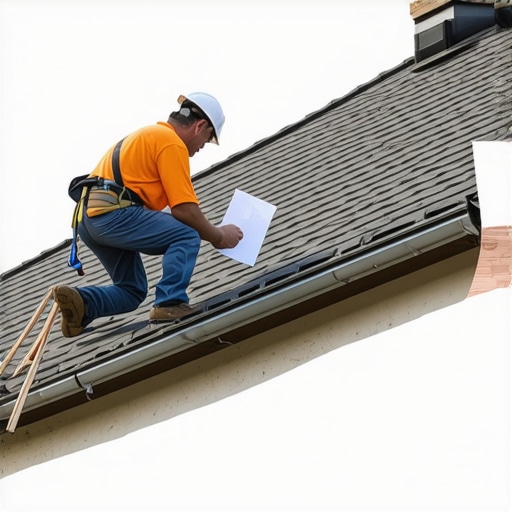
The Anatomy of a High-Stakes Roof Replacement
My old foreman used to say, ‘Water is patient. It will wait for years for you to make a single mistake with a hammer, then it will rot your house from the inside out while you’re sleeping.’ I’ve spent twenty-five years peeling back shingles to find the skeletons left behind by local roofers who cared more about their tail-light warranty than your structural integrity. When you’re looking at roofing companies in 2026, you aren’t just buying a pallet of asphalt; you’re buying a system designed to battle the laws of physics. In the Northeast, those laws are brutal. We deal with thermal bridging where your attic heat escapes, hits the underside of the cold roof deck, and turns into frost. When that frost melts, it doesn’t just drip; it migrates. It travels via capillary action, pulling itself along the grain of your plywood until it finds a seam, then it saturates your insulation, rendering its R-value useless. By the time you see a brown spot on the ceiling, the forensic damage is already done.
“A roof is only as good as its flashing.” – Old Roofer’s Adage
1. Demand a Forensic Line-Item Quote
Most roofing companies will hand you a one-page estimate that says ‘Replace roof’ and a price that looks like a phone number. If you want to negotiate, you start by demanding a breakdown of every square—that’s a 100-square-foot area in trade talk. You need to see the specific cost for the drip edge, the starter strips, and the ‘Ice & Water Shield’ membrane. In our climate, skipping the membrane at the eaves is a death sentence for your fascia. Negotiation isn’t about asking for a lower price; it’s about removing the ‘fluff’ and ensuring the ‘bones’ are solid. If they won’t break down the cost of the cricket they need to build behind your chimney to divert water, they don’t know the physics of your roof. They’re just throwing shingles at a problem. You negotiate by showing them you know the difference between a ‘shiner’—a nail that missed the rafter—and a professional fastening pattern.
2. The Ventilation Physics Clause
Don’t talk about ‘pretty vents.’ Talk about Net Free Ventilating Area (NFVA). A fair quote in 2026 must account for the balanced intake and exhaust. Most local roofers will try to upsell you on fancy ridge vents while your soffits are completely clogged with old insulation. This creates a vacuum that pulls conditioned air out of your living space. When you negotiate, tell the contractor you won’t pay the final 10% until you see a smoke test or a calculated balance of air movement. Explain that you know how a hot attic in August cooks the shingles from the bottom up, causing the oils to leach out and the granules to end up in your gutters. When the contractor realizes you understand thermal expansion and the degradation of the asphalt mat, the ‘sales’ talk stops and the technical talk begins. That is where the ‘fair’ price is found.
3. The Underlayment ‘Surgery’ vs. ‘Band-Aid’
In 2026, material costs have stabilized, but labor for high-end synthetic underlayments hasn’t. Many roofing companies will try to use cheap #15 felt paper. Felt is a relic; it puckers and holds moisture. Negotiate for a high-performance synthetic that won’t tear under a boot. This is where you use the ‘Surgery’ vs. ‘Band-Aid’ argument. Tell them you’re not interested in a ‘recovery’—which is just a fancy word for putting new shingles over old, rotten ones. You want a full tear-off to the deck. I’ve seen decks that looked fine from the attic but felt like walking on a sponge once the shingles were off. The plywood had turned into delaminated, black-flecked mush because a previous roofer ignored the valley flashing. A fair quote includes the cost to replace up to three sheets of decking; negotiate that into the base price so you aren’t hit with ‘surprise’ fees when your house is already half-naked.
“The International Residential Code (IRC) R905.1 requires roof coverings to be applied in accordance with the manufacturer’s installation instructions.” – International Code Council
4. The Warranty Deception and ‘Trunk Slammer’ Red Flags
If a salesman tells you they offer a ‘Lifetime Warranty,’ ask them whose life they’re talking about. Most of those warranties are prorated and don’t cover labor after the first few years. To negotiate a fair deal, focus on the ‘Workmanship Warranty.’ A company that won’t stand behind its labor for at least ten years is a company that employs ‘trunk slammers’—subcontractors who disappear the moment the last nail is driven. You want to see their certificate of insurance and specifically check for workers’ comp. If a guy falls off your 8/12 pitch roof and isn’t covered, you’re the one paying his medical bills. Use this as leverage. A higher quote from a company with real insurance and a permanent office is actually a cheaper quote than the low-baller who leaves you with a lawsuit.
5. The 2026 Material Surcharge Reality
Supply chains have changed. Negotiate a ‘Price Lock’ for materials. In the current market, roofing companies often add a 10% ‘cushion’ to their quotes to cover potential price hikes between the contract signing and the start date. Tell them you will pay for the materials upfront to have them delivered to your driveway. This removes the contractor’s risk and allows you to strip that 10% cushion off the total price. When those bundles arrive, check the date codes. You don’t want ‘old stock’ that’s been sitting in a humid warehouse for two years. Fresh shingles are supple; old ones are brittle and will crack during installation, especially around the valleys and hips. By taking control of the material procurement, you’re not just negotiating—you’re managing the project like a pro.