
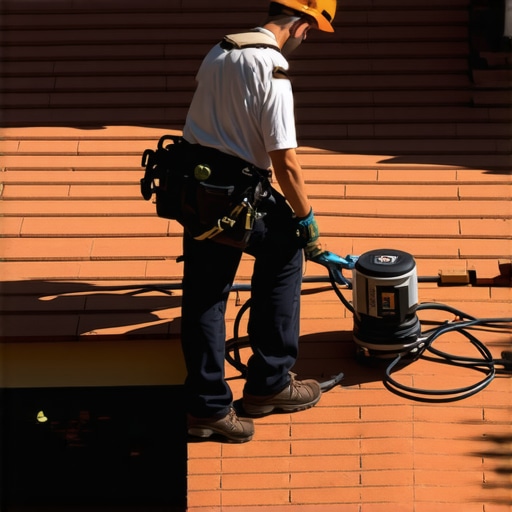
The Forensic Scene: Walking on a Sponge
Walking on that slate-grey architectural shingle felt like treading on a wet sponge. In my 27 years on the deck, I’ve learned that if your boots sink more than a quarter-inch on a cool morning, the structural integrity of the roof system is already a memory. I was on a job site in the humid corridor of the Northeast, where the air smells like wet cedar and old mistakes. The homeowner was baffled. They’d had three different roofing companies out in two years, and yet, every time a Nor’easter rolled through, water would manifest in the center of their dining room table like a bad magic trick. No one could find the entry point because they were looking for a hole. In the world of forensic roofing, we don’t look for holes; we look for the path of least resistance. Underneath those shingles, the OSB had the consistency of wet cardboard, and the ‘shiners’—those missed nails that glow like beacons in a dark attic—were rusted through, acting as tiny conduits for moisture. This wasn’t a failure of material; it was a failure of physics and the lack of proper diagnostic tools.
The Physics of Failure: Why Traditional Methods Are Obsolete
For decades, local roofers relied on a garden hose and a prayer. If you couldn’t see the leak with a flashlight, you just threw more mastic at the flashing and hoped for the best. But water is patient, and as we move toward 2026, the complexity of modern building envelopes—with their tight air seals and intricate venting—requires more than a ‘best guess.’ Water moves through capillary action, a phenomenon where liquid climbs upward through narrow spaces against the force of gravity. A shingle that isn’t nailed perfectly on the strike zone creates a tiny gap where surface tension pulls rainwater up and over the top of the course. From there, it hits the underlayment, finds a staple hole, and begins its slow, destructive journey.
“A roof is only as good as its flashing.” – Old Roofer’s Adage
This is where roofing companies of the future must differentiate themselves. If you are still relying on a visual inspection alone, you are selling your clients a gamble, not a solution. The transition from reactive repair to forensic detection is the only way to survive the increasing volatility of our climate.
Tool 1: AI-Driven Multi-Spectral Drone Analytics
By 2026, the standard 4K drone will be a relic. The top-tier roofing companies are now utilizing multi-spectral sensors that can ‘see’ into the thermal mass of the roof. This isn’t just about heat loss; it’s about emissivity. Wet insulation retains heat longer than dry insulation. By flying a drone at dusk, we can capture the thermal signature of the roof as it cools. The areas that remain ‘hot’ on the screen aren’t just warm—they are saturated. This allows us to map the exact migration of water beneath the surface without pulling up a single square of shingles. We can pinpoint whether the leak is originating from a poorly executed cricket behind a chimney or if the step-flashing was improperly integrated into the siding. This data-driven approach eliminates the ‘tear-off-and-see’ method that inflates costs and frustrates homeowners.
Tool 2: Electronic Leak Detection (ELD) for Conductive Membranes
On flat or low-slope roofs, finding a pinhole in a TPO or EPDM membrane is like finding a needle in a haystack. Electronic Leak Detection (ELD) is the 2026 gold standard. By using a conductive medium—often a thin wire loop or specialized primer—under the membrane, local roofers can use a localized electrical charge to find breaches. Water is conductive; when the ELD probe passes over a hole, the circuit completes, and the machine screams. It’s the difference between guessing where a leak is and having the roof tell you exactly where it’s hurting. This technology is vital for the ‘surgery’ vs. ‘band-aid’ conversation. Why replace 50 squares of membrane when the ELD proves the failure is limited to a three-inch radius around a vent pipe?
Tool 3: Handheld Acoustic Moisture Discriminators
Sound travels differently through saturated wood than it does through dry timber. Acoustic discriminators are the new ‘stethoscope’ for the forensic roofer. By sending a high-frequency pulse through the roof assembly, we can measure the bounce-back. A sharp, crisp return indicates dry, structurally sound materials. A muffled, low-frequency thud indicates moisture-laden fibers. This tool is invaluable when assessing whether a valley needs a full deck replacement or just a new liner. We use this to detect the ‘ghost leaks’ that only appear during wind-driven rain—the kind of rain that pushes water horizontally under the drip edge and into the fascia.
“The roof covering shall be installed in accordance with the manufacturer’s instructions.” – International Building Code (IBC) Section 1503.1
But as we know, ‘manufacturer’s instructions’ don’t account for 70mph side-winds; acoustic tools do.
Tool 4: Sub-Membrane IoT RF Sensors
We are entering the era of the ‘Smart Roof.’ High-end roofing companies are now embedding tiny, battery-less Radio Frequency (RF) sensors into the underlayment during new installs. These sensors remain dormant until they detect a change in the dielectric constant (moisture). Once triggered, they can send an alert to a homeowner’s smartphone or the contractor’s dashboard. Imagine knowing your roof is leaking three months before a brown spot appears on your ceiling. This allows for ‘micro-repairs’ that cost hundreds rather than the thousands of dollars required for a full remediation of moldy attic bypasses and rotted rafters.
Tool 5: Hyperspectral Imaging for Material Fatigue
Ultraviolet radiation is the silent killer of asphalt shingles. In the Southwest, it’s the heat; in the Northeast, it’s the freeze-thaw cycle that cracks the granules. Hyperspectral imaging allows us to look at the chemical degradation of the bitumen. We can see where the shingles are losing their flexibility long before they start shedding granules into the gutters. This tool transforms roofing companies into consultants. We can show a homeowner, through a color-coded map, that while their roof looks fine from the curb, the chemical bonds holding the asphalt together have failed on the southern slope, making it vulnerable to the next hail event. It’s about proactive defense rather than waiting for a catastrophe.
The Fix: The Band-Aid vs. The Surgery
When we find a leak with these tools, we are faced with a choice. The ‘trunk slammers’ will offer a band-aid—a bucket of silver-dollar mastic and a quick prayer. But forensic evidence usually points toward the need for surgery. If the kick-out flashing wasn’t installed, the water has likely been channeled into the wall cavity for years. A band-aid on the roof won’t fix the rot in the studs. Using these 2026 tools, we can define the scope of the surgery with millimeter precision. We pull back the siding, replace the compromised OSB, install a high-temp ice and water shield, and re-flash the area with a proper diverter. This is the difference between a roof that lasts its intended lifespan and one that becomes a liability the moment the warranty expires. If your local roofers aren’t talking about capillary action or thermal emissivity, they aren’t fixing your roof; they’re just covering up the symptoms. The cost of waiting is never just the price of a few shingles—it’s the price of your home’s structural health.