
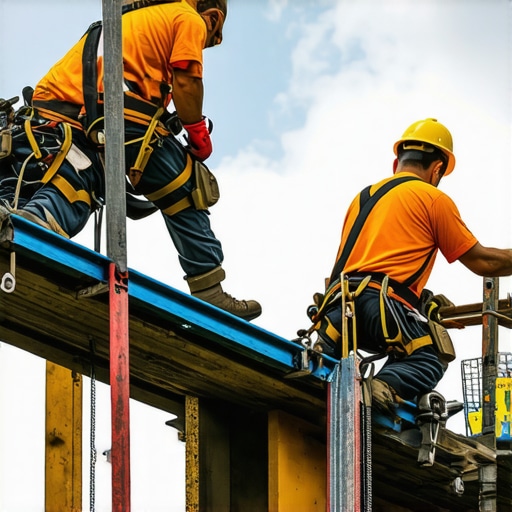
The Forensic Reality of the Southwest Roof
Walking on that roof felt like walking on a slab of molten lava; the surface temperature was easily pushing 165°F, and the asphalt was so soft I could feel the granules shifting under my boots like ball bearings on grease. I knew exactly what I’d find underneath: sun-bleached, brittle decking that couldn’t hold a nail, let alone a safety anchor. I’ve spent twenty-five years investigating why roofs fail and, more tragically, why men fall off them. In the Southwest, the enemy isn’t just gravity; it’s the relentless UV radiation that turns building materials into crackers and the thermal shock that expands and contracts metal flashings until they pop like a soda can. When you hire local roofers, you aren’t just paying for shingles; you’re paying for a crew to navigate a high-stakes physics experiment performed on a 10:12 pitch. Most homeowners think roofing companies are all the same until an ambulance is idling in their driveway because a ‘trunk slammer’ didn’t understand the coefficient of friction on a sun-baked composite shingle.
“Employers must provide a fall protection system for any employee working at a height of 6 feet or more above a lower level.” – OSHA 1926.501(b)(1)
1. The Anchor Point Autopsy: Verify Structural Integrity First
Before a single square of material is loaded onto the ridge, a forensic-minded foreman checks the decking. In our desert climate, the heat in a poorly ventilated attic can reach 140°F, causing the adhesives in plywood to delaminate. If a crew nails a fall-protection anchor into rotten wood, that anchor is nothing more than a cosmetic ornament. You need to look for signs of hidden decking plywood decay before trusting it with a human life. I’ve seen anchors pull out like a loose tooth because the wood underneath had turned to dry-rot powder. A real pro will hunt for ‘shiners’—those nails that missed the rafter—to gauge how accurately the original deck was laid. If the deck is soft, the safety system is a lie.
2. The Physiology of the 10:12 Pitch: Heat Stress is a Fall Hazard
Physics dictates that as the temperature rises, the human vestibular system degrades. On a roof, vertigo isn’t a condition; it’s a death sentence. Reliable roofing companies manage ‘work-rest’ cycles with military precision. It isn’t just about water; it’s about the capillary action of sweat interfering with the grip of specialized roofing boots. When a roofer loses their footing, they have a split second before the centrifugal force of their own body weight carries them over the eave. This is why roof pitch safety is the first thing I look for when I pull up to a job site. If the crew is scrambling like mountain goats without ropes on a steep slope, they aren’t ‘experienced’—they’re lucky. And in roofing, luck eventually runs out.
3. The PPE Audit: Beyond the Hard Hat
I once walked a job where the crew was wearing sneakers. Sneakers. On a 6/12 pitch with loose granules. It was a forensic nightmare waiting to happen. You have to check the gear. Are the harnesses frayed? Are the ropes kinking? Are they using shock-absorbing lanyards or just old nylon truck-straps? When you are evaluating crew safety gear, you are looking for the stamp of the American National Standards Institute (ANSI). If the gear looks like it was bought at a garage sale, the workmanship will match. A cynical old dog like me knows that a contractor who skimps on a $200 harness is definitely skimping on the $2,000 flashing job around your cricket or chimney.
4. The Kinetic Energy of Falling Material
Safety isn’t just about the guys on the roof; it’s about the people on the ground. A single bundle of shingles weighs about 70-80 pounds. If that slides off a two-story eave, it hits the ground with enough kinetic energy to crush a skull or a car hood. Professional local roofers establish a ‘red zone’ around the perimeter. They don’t just toss debris; they use a debris chute or a controlled drop zone. I’ve seen ‘pros’ knock out a homeowner’s AC unit because they were too lazy to set up a plywood shield. If the crew doesn’t respect the physics of falling objects, they won’t respect your property.
“A roof is only as good as its flashing, and a crew is only as safe as its weakest link.” – Old Roofer’s Adage
5. The Insurance and Licensing Paper Trail
This is where the ‘material truth’ hits the wallet. In 2026, the landscape of liability has shifted. If a roofer falls and the company doesn’t have Workers’ Comp, the homeowner is often the next line of defense in a lawsuit. You must verify a license status and demand a COI (Certificate of Insurance) sent directly from the agent, not a photocopied version from the contractor’s glove box. The ‘Lifetime Warranty’ they promised you doesn’t mean a thing if the company dissolves after a major safety violation. High-quality roofing companies carry heavy premiums because they protect their men and your assets. If the bid is 40% lower than everyone else, you aren’t getting a deal; you’re subsidizing their lack of insurance. Don’t let a ‘shiner’ in their paperwork lead to a lien on your house.
The Forensic Conclusion: The Cost of the ‘Fast’ Repair
In the end, safety is the ultimate indicator of quality. A crew that takes the time to set up a vertical lifeline is a crew that takes the time to properly weave a valley. They are the ones who won’t leave you with a leak in three years because they were too rushed to nail the shingles in the ‘high-nailing’ zone. When you see a crew moving fast without safety protocols, remember: water is patient, and gravity is absolute. They might finish your roof in a day, but you’ll be paying for their shortcuts for a decade. Hire for safety, and the quality will follow. Ignore it, and you’re just waiting for the forensic investigator to show up and tell you why it all went wrong.