
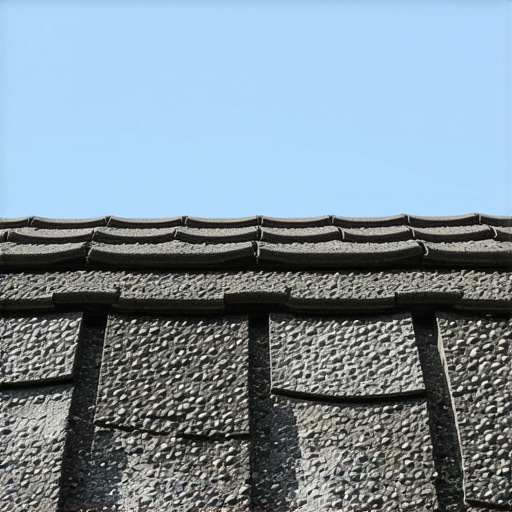
The Anatomy of a Failing Roof: Lessons from the Attic
My old foreman, Big Al, used to lean over a stack of bundles and rasp, ‘Water is patient, kid. It will wait for you to make a mistake, then it will rot your house from the inside out while you’re sleeping.’ He wasn’t being dramatic; he was being honest. After 25 years in the trade, I’ve realized that the difference between a roof that lasts thirty years and one that fails in seven isn’t just the brand of shingle—it’s the microscopic defense layer that most homeowners treat as an afterthought: the granules. By 2026, the tech in these tiny rocks has changed, and if you aren’t paying attention, those local roofers might be selling you 2010 tech at 2026 prices. Walking onto a roof today feels like a forensic investigation. I see the ‘shiners’—those nails that missed the rafter and now act as conduits for frost—and I see the bald spots where granules have washed away like a receding hairline on a middle-aged salesman. When the granules go, the roof is dead. It’s just a matter of time before the UV radiation turns that asphalt into a brittle mess that cracks at the first sign of a freeze-thaw cycle.
“A roof is only as good as its flashing.” – Old Roofer’s Adage
1. The Mechanism of Adhesion: Why Granules Shed
In our northern climate, where ice dams are the primary predator of a well-built home, granule retention is the first line of defense. Shingle granules aren’t just there for color; they are a UV shield. In 2026, we are seeing a shift toward polymer-modified bitumen that holds these granules in a tighter grip. When you look at a roof, you need to understand the physics of capillary action. When granules shed, the asphalt substrate is exposed. UV rays hit that bitumen and start a process called photo-oxidation. The asphalt loses its oils, becomes brittle, and begins to shrink. This creates micro-fissures. Water, being the ultimate opportunist, finds these fissures. Through capillary action, it pulls itself under the shingle, reaching the nail line. If your roofing companies didn’t use a proper ice and water shield at the eaves, that water will sit on the plywood, turning it into something resembling wet oatmeal. I’ve seen roofing jobs where the ‘pros’ used a standard felt paper in a climate that demands high-performance synthetics, and the results are always the same: a structural failure masked by a pretty shingle.
2. The Thermal Expansion Trap and 2026 Reflectivity
The heat in a 140°F attic isn’t just uncomfortable; it’s a chemical catalyst. In 2026, granules are being engineered with higher Solar Reflectance Index (SRI) values. Why? Because a roof that absorbs less heat expands and contracts less. This is vital for the ‘valley’—the area where two roof planes meet. A valley is a high-traffic highway for water. If the granules in the valley have eroded due to poor installation or low-quality materials, the thermal expansion will tear the shingle at the transition point. You’ll hear it before you see it: the creak of the roof deck as it struggles with thermal bridging. Local roofers often skip the ‘cricket’—that small peak behind a chimney designed to divert water. Without a cricket, water pools, granules erode under the constant hydrostatic pressure, and the chimney flashing eventually gives way. It’s not a ‘leak’ at that point; it’s a systemic collapse of the drainage design.
“The building envelope must be viewed as a continuous thermal and moisture barrier; any breach, however small, eventually leads to structural compromise.” – International Residential Code (IRC) Commentary
3. Algae Resistance and the Zinc-Copper Secret
Those black streaks you see on roofs aren’t dirt; they are Gloeocapsa magma, a hardy cyanobacteria that eats the limestone filler in modern shingles. By 2026, the best roofing companies are using shingles with a higher concentration of copper-coated granules. These granules leach copper ions every time it rains, creating a toxic environment for algae. However, if your contractor buys ‘contractor grade’ bundles to save a few bucks on the square, you’re getting a lower dosage. Within five years, your roof looks like a Rorschach test, and the limestone consumption leads to premature granule loss. It’s a vicious cycle. You need to ask for the spec sheet. If they can’t tell you the copper-to-mineral ratio, they are just ‘trunk slammers’ looking for a quick paycheck. I’ve spent too many afternoons explaining to homeowners why their ’30-year’ roof is balding at year ten because they went with the lowest bidder who didn’t understand the chemistry of the material.
4. Impact Resistance and Kinetic Energy Distribution
We’re seeing more erratic weather patterns, and the 2026 shingle standards are pushing for UL 2218 Class 4 impact resistance. This isn’t just about hail; it’s about the structural integrity of the granule bed. When a hailstone hits a shingle, the granules act like a thousand tiny shock absorbers. They distribute the kinetic energy across the surface. If the granule bed is thin, the energy is transferred directly to the fiberglass mat, fracturing it. This is a ‘bruise.’ You can’t see it from the ground, but if you’re up there with a trained eye, you’ll feel the soft spot. Local roofers who don’t understand this will tell you the roof is fine. A forensic roofer knows that a bruised mat is a leak waiting for the next rain. You need to ensure the granules are deeply embedded in the asphalt, not just dusted on top like powdered sugar on a donut.
5. The Warranty Illusion and the ‘Shiner’ Problem
Don’t let a ‘Lifetime Warranty’ lull you into a false sense of security. Most warranties are pro-rated and only cover manufacturer defects, not ‘acts of God’ or, more importantly, poor installation. If a roofer leaves a ‘shiner’—a nail that isn’t flush or missed the mark—that nail will eventually back out through the shingle due to the expansion of the wood deck. This ‘nail pop’ creates a hole in your defense that no amount of fancy granules can fix. By 2026, the best roofing practices involve using ring-shank stainless steel nails in coastal areas or high-grade galvanized nails in the north to prevent corrosion. If I see a roofer using a nail gun like a submachine gun without checking their depth, I know that roof is a ticking time bomb. The granules might stay on, but the shingles will blow off in the first 60-mph gust because the ‘uplift rating’ was compromised by a guy who wanted to finish the job before lunch.
Final Verdict: The Cost of the Cheap Contractor
The roofing industry is full of shortcuts. From skipping the starter strip to ‘high-nailing’ where the nail misses the double-layer sealing zone, the mistakes are endless. In 2026, as materials get more complex, the gap between a professional and a hack grows wider. Don’t just look for ‘roofing companies’ on a search engine; look for the one who talks about attic bypasses, R-values, and granule density. If they don’t mention how they handle the ice & water shield or how they prevent thermal shock, keep looking. Your home is a system, and the roof is the most stressed part of that system. Treat it with the respect it deserves, or be prepared to pay the ‘cheap tax’—which is the cost of doing the job twice because you tried to save money the first time. Real local roofers who care about their legacy won’t be the cheapest, but they’ll be the ones you don’t have to call back after the first big storm of the season.