
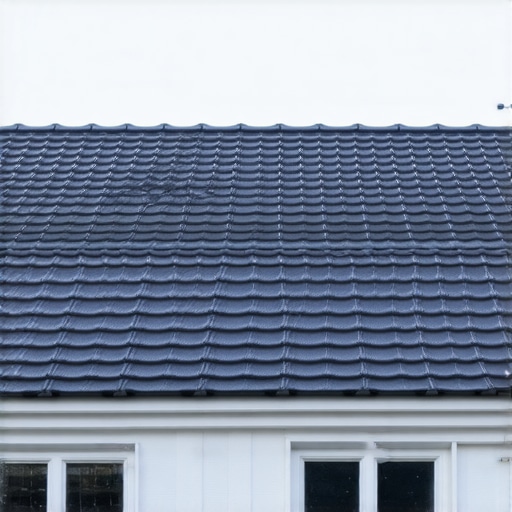
The Wet Ceiling Mystery: A Forensic Autopsy
I walked into a sprawling colonial last January where the homeowner was frantic, pointing at a steady drip coming through the master bedroom ceiling. It was -15°F outside, and there hadn’t been a drop of rain in weeks. Most local roofers would have told him he had a shingle leak and tried to sell him a $20,000 replacement. But I didn’t even look at the shingles first. I looked at the thermometer. What we were seeing wasn’t a roofing failure in the traditional sense; it was a physics failure. The attic was literally raining on itself. My old foreman, Gus, used to have knuckles like walnuts and a temperament like a hornet, but he knew the score. He used to tell me, ‘Water is patient, kid. It doesn’t need a hole in the roof to ruin a house; it just needs a temperature difference.’ He was right. That homeowner didn’t need a new roof; he needed to understand how his house was breathing.
“The primary purpose of ventilation is to maintain a cold roof temperature to avoid ice dams created by melting snow, and to vent moisture that moves from the conditioned space to the attic.” – NRCA Technical Manual
1. The Invisible Straws: Closing Attic Bypasses
By 2026, the best roofing companies won’t just be hammering nails; they’ll be air-sealing specialists. An ‘attic bypass’ is a hidden passage that allows warm, humid air from your living space to get sucked into the attic. Think of wire penetrations, plumbing stacks, and recessed ‘can’ lights as invisible straws. Through the stack effect, your house acts like a chimney, pulling cold air in at the bottom and pushing warm, moist air out the top. When that 70°F air hitting the underside of a 10°F roof deck, you get condensation. You get ‘shiners’—those missed nails that missed the rafter—covered in frost. When the sun hits the shingles, that frost melts, and you get ‘attic rain.’ You must seal these penetrations with fire-rated foam or caulk before you even think about adding insulation. If you skip this, you’re just putting a wool sweater over a fan.
2. The Thermal Bridge Kill: Managing the Top Plate
Most attics have a massive weakness right at the edges: the top plate of the wall. This is where the roof meets the house, and it’s usually where insulation is the thinnest because of the pitch of the roof. This creates a thermal bridge where heat escapes rapidly, melting the snow directly above the eaves and causing the dreaded ice dam. In 2026, we are moving toward ‘raised heel trusses’ or ‘energy heels.’ If you aren’t rebuilding the whole structure, you need to use high-density spray foam or rigid foam blocks at the eaves to break that thermal bridge. You need to ensure your roofing contractor installs baffles that actually stay in place. A floppy piece of cardboard stapled to the deck isn’t enough; you need wind-wash protection to keep the intake air from blowing your insulation around like a snowdrift.
3. The Physics of Intake: Beyond the Ridge Vent
We’ve been obsessed with ridge vents for decades, but a ridge vent without intake is like a vacuum cleaner with a clogged hose. It doesn’t work. The air has to come from somewhere. The 2026 standard for moisture control involves a balanced system where the Net Free Vent Area (NFVA) of the intake matches or slightly exceeds the exhaust. If you have blocked soffits or—God forbid—no soffit vents at all, your ridge vent will actually start pulling air from the living space through those attic bypasses we talked about. This accelerates moisture accumulation. When interviewing roofing companies, ask them to calculate the NFVA. If they look at you like you have two heads, show them the door. You need a 1:150 ratio (one square foot of vent for every 150 square of attic floor) unless you have a vapor retarder, then you might get away with 1:300.
“A roof is only as good as its flashing.” – Old Roofer’s Adage
4. Smart Vapor Retarders vs. The Polyethylene Trap
For years, people thought slapping 6-mil poly plastic under the drywall was the solution. It wasn’t. It was a trap. In the summer, moisture can actually drive inward from the hot roof toward the air-conditioned interior. If it hits that plastic, it gets trapped and rots the studs. The forensic reality is that you need ‘smart’ vapor retarders—materials that change their permeability based on humidity. They stay closed when it’s dry and open up to let the assembly breathe when it’s humid. This is sophisticated moisture management that separates the pros from the ‘trunk slammers’ who just want to lay shingles and collect a check. Your attic needs to be able to dry in both directions. If your contractor doesn’t understand ‘vapor drive,’ they aren’t ready for 2026 weather patterns.
5. Hygrothermal Monitoring: The 2026 Tech Edge
The biggest shift in the next few years will be the use of permanent moisture sensors in the attic. We already use them for forensic investigations, but they are becoming cheap enough for everyday use. These sensors track humidity and temperature in real-time, alerting you to a ‘dew point’ event before it turns into mold. I once investigated a roof where the plywood had turned to the consistency of wet graham crackers. It looked fine from the outside, but underneath, the lack of a cricket behind a wide chimney and poor ventilation had created a localized rot zone. A sensor would have caught that three years earlier. When local roofers come out to bid, ask if they offer integrated monitoring systems. It’s the difference between reactive repair and proactive preservation. Don’t wait for the rot to show its face; catch the moisture while it’s still a gas.
The Forensic Conclusion: The Surgery vs. The Band-Aid
You can keep painting over the water stains, or you can perform the surgery. Most homeowners want a Band-Aid because it’s cheaper. They want to throw more caulk at the flashing or add a power fan. But those fans often make the problem worse by creating negative pressure that sucks more moisture out of your bathrooms and into the attic. Real moisture control in 2026 is about the envelope. It’s about the chemistry of the air and the physics of heat. If you ignore the science, the water will find its way in. It’s patient. It will wait for the first sub-zero night, the first ‘shiner’ to freeze, and the first ray of sun to melt it. Hire a contractor who thinks like an engineer and works like a craftsman. Your roof—and your lungs—will thank you.
I found this article incredibly insightful, especially the emphasis on air sealing and smart vapor retarders. In my experience living in the Midwest, many homeowners overlook these details and end up facing costly repairs due to moisture buildup. The idea of hygrothermal monitoring as a standard in 2026 is a game-changer—being able to catch moisture issues early means fewer mold problems and better indoor air quality. I do wonder about the practicality for older homes to implement these modern solutions. Has anyone here tackled upgrading an existing, vintage attic with these systems? What challenges did you face, and how did you overcome them? It’s clear that the science behind moisture control is evolving, and I’m curious about real-world barriers or successes in retrofits.