
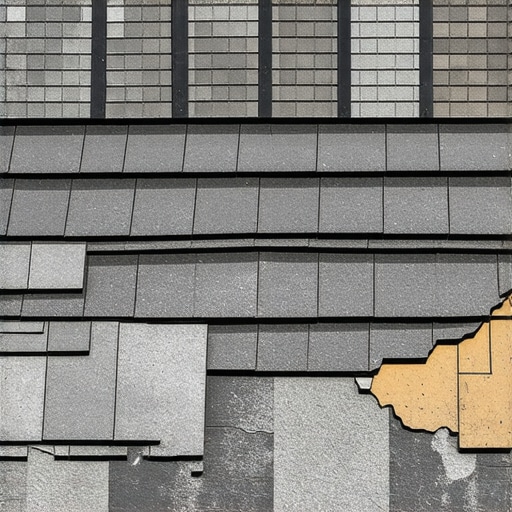
The Autopsy of a Coastal Roof Failure
The drip didn’t start in the middle of the hurricane. It started three days later, under a clear sky, right onto the homeowner’s mahogany dining table. When I climbed up there with my pry bar and a moisture meter, the air was thick with the scent of damp salt and the metallic tang of oxidizing fasteners. It wasn’t a hole in the roof that caused the damage. It was physics. Specifically, it was the failure of the shingle overlap—a mistake made by local roofers who were more interested in their ‘shingles per hour’ metric than the laws of fluid dynamics. My old foreman used to say, ‘Water is patient. It will wait for you to make a mistake, then it will move into your house and start charging rent.’ He was right. Most roofing companies today treat shingles like wallpaper, but they aren’t decorative; they are a tiered hydraulic shedding system. When that system is misaligned by even half an inch, you aren’t looking at a roof; you’re looking at a massive sponge soaking up the humidity of the Gulf Coast.
“The application of shingles shall be such that the water is shed over the surface and not allowed to penetrate under the shingles.” – International Residential Code (IRC), Section R905.2.1
1. The ‘Short Headlap’ and Capillary Siphoning
In the trade, we talk about the ‘headlap’—the portion of the shingle that is covered by two layers of shingles above it. In 2026, as manufacturers push for lighter, more flexible composites, the margin for error has shrunk. If roofing crews don’t maintain a strict 2-inch headlap, you fall victim to capillary action. Imagine two glass slides pressed together with a drop of water between them; the water doesn’t fall, it spreads upward and outward. On a roof, wind-driven rain hits the butt edge of a shingle and is pulled upward by surface tension. If the overlap is insufficient, that water travels right over the top of the shingle and hits the deck. By the time you see the stain on the ceiling, your plywood is already soft enough to put a screwdriver through it.
2. The Common Bond ‘Shiner’ Epidemic
Every architectural shingle has a ‘sweet spot’—the common bond area where the two layers of the shingle are laminated together. This is where the nail must go. I’ve spent the last decade performing forensic tear-offs where local roofers missed this zone by an inch. We call these ‘shiners’—nails that are visible in the gap between shingles or high-nailed above the strip. When the overlap is off, the nail isn’t just a fastener; it’s a straw. In high-humidity environments, temperature differentials between the attic and the exterior cause condensation to form on these misplaced nails. That moisture drips onto the rafters, creating a localized rot point that eventually causes the ‘square’ to sag. If you look at your roof during a morning dew and see small, dark circles in a grid, you’re looking at the ghost of high-nailing.
3. Hydrostatic Pressure in the ‘Valley’ Migration
Valleys are the most high-stress areas of the roof, especially in tropical zones where a summer downpour can dump three inches of rain in an hour. The 2026 shingle overlap issues often manifest here. When the ‘bleeder’ shingles aren’t overlapped with the correct offset, the volume of water rushing down the valley creates hydrostatic pressure. This pressure forces water sideways under the valley’s edge. Most roofing companies rely on a bead of caulk here, which is a ‘Band-Aid’ for a surgical problem. A true professional uses a ‘cricket’ or a properly woven overlap to ensure that the kinetic energy of the water carries it away from the seam, not into it.
“A roof is only as good as its flashing and its relationship to the shingles it meets.” – Old Roofer’s Adage
4. Thermal Expansion and Sealant Strip Misalignment
Modern shingles use a thermosetting adhesive strip that activates with the sun’s heat. However, if the overlap is staggered incorrectly—what we call ‘racking’ instead of ‘stair-stepping’—those sealant strips don’t align perfectly. In the 140°F heat of a Southern attic, those shingles expand. At night, they contract. If the sealant strips aren’t locked in a perfect geometric overlap, the shingles will ‘fishmouth’ or curl. This isn’t just a cosmetic issue; once a shingle curls, it catches the wind like a sail. A 50-mph gust that should have bounced off the roof will now rip an entire ‘square’ off the deck because the aerodynamic seal was never established during the install.
5. Granule Migration and Vertical Stacking
If you see a pile of granules in your gutters that looks like coffee grounds, your shingles are fighting each other. Improper overlap creates ‘pressure ridges’ where the weight of the shingles above is concentrated on a single point rather than distributed evenly. This grinds the protective granules off the asphalt mat. Without granules, the UV rays from the sun bake the asphalt, turning it brittle in a matter of months. This is why a ’30-year roof’ fails in seven. It’s not the material; it’s the geometry. When I see vertical lines of granule loss, I know exactly what I’ll find: a crew that didn’t use a chalk line and stacked their overlaps too tight, creating a staircase for water to climb.
The Surgical Fix vs. The Sales Pitch
When you call local roofers to look at these issues, the ‘sales guys’ in clean polo shirts will try to sell you a total replacement or a ‘refresh’ coating. But a forensic investigator knows that you can’t coat over a fundamental physics failure. If your overlap is wrong, the only real fix is to pull the shingles, inspect the ‘cricket’ and the ‘valley’ for secondary water damage, and relay the field with a focus on the common bond. It’s the difference between putting a tarp over a leak and understanding why the leak exists in the first place. Your roof is a shield, not a sponge—don’t let a ‘trunk slammer’ tell you otherwise.