
The Reality of the 2026 Shingle Crisis
If you think a roof is just a bunch of overlapping shingles, you’ve already lost the battle. After 25 years of inspecting failed systems from Houston to Miami, I’ve seen it all. I’ve seen roofs that look like they’ve been hit with birdshot when it hasn’t rained ice in a decade. We’re heading into a period where material chemistry is clashing with record-breaking heat, and the result is a phenomenon most local roofers won’t explain properly: Shingle Blistering. My old foreman used to say, ‘Water is patient. It will wait for you to make a mistake.’ But in this new climate, heat is the bully that doesn’t wait. It forces the issue. We’re going to look at why your roof is literally boiling from the inside out and why your ‘lifetime warranty’ might be as thin as the paper it’s printed on.
[IMAGE_PLACEHOLDER]
The Physics of the Bubble: Why It Happens
Before we look at the signs, you need to understand the ‘Mechanism of Failure.’ Shingle blistering isn’t a surface issue; it’s a manufacturing and ventilation disaster. When roofing companies install shingles in high-humidity zones, they are dealing with a multi-layered product. You have a fiberglass mat, an asphalt coating, and a layer of granules. If moisture gets trapped between those layers during manufacturing—or if the attic temperature spikes because of poor airflow—that moisture vaporizes. It expands by 1,600 times its liquid volume. This creates a literal bubble under the granules. Once that bubble pops, your roof’s UV protection is gone. It’s like having a sunburn that never heals because you keep picking the scab.
“A roof is only as good as its flashing and its ability to breathe. Without proper ventilation, you are simply cooking your investment from the underside.” – Old Roofer’s Adage
Sign 1: The ‘Pockmark’ Deception
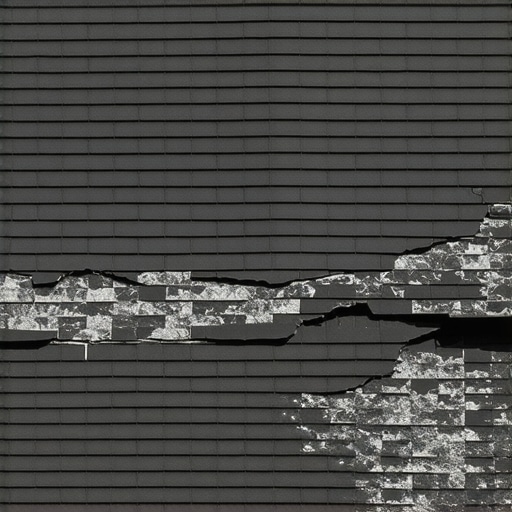
The first sign of 2026-spec blistering is the appearance of small, circular pits. At a distance, they look like hail damage. This is where ‘storm chasers’ make their money, trying to convince you to file an insurance claim. But look closer. Hail dents the shingle, pushing the granules into the mat. A blister, however, pushes from the bottom up. When the ‘pop’ happens, the granules are missing, but the mat itself is often exposed and intact. If you see hundreds of these tiny pits across a single square (that’s 100 square feet in trade talk), and they don’t have the characteristic ‘bruising’ of a hail hit, you’re looking at a ventilation failure, not an act of God.
Sign 2: Granule Migration in the Gutter
Go look at your downspout exits. If you see a pile of colored sand that looks like it belongs on a beach, your shingles are shedding. While some granule loss is normal in the first year, 2026 material failures show accelerated shedding. As blisters form and burst, they release the protective granules. These granules are the only thing standing between the sun’s UV radiation and the asphalt. Once they migrate into your gutters, the asphalt becomes brittle. It’s like leaving a rubber band on a sunny dashboard; it loses its stretch and snaps. This is why a cricket at a chimney or a complex valley starts leaking—the material can no longer handle the thermal expansion and contraction.
Sign 3: The ‘Shiner’ and Attic Heat Stagnation
Sometimes the sign isn’t on the shingle, but under it. I’ve walked into attics where the heat was so intense it felt like a literal oven—we’re talking 150°F plus. If you see a ‘shiner’—a nail that missed the rafter and is sticking through the plywood—look for rust or water droplets. This is condensation. In the Southeast, the temperature differential between your AC-cooled house and the stagnant attic air creates a pressure cooker. This heat migrates upward into the roof deck, liquefying the volatile organic compounds (VOCs) in the shingles. This chemical off-gassing is a primary driver of the blistering we’re seeing in newer 2026 builds. Roofing systems aren’t just hats; they are lungs. If they can’t exhale, they blister.
Sign 4: Interlaminar Moisture Traps
This is the ‘Forensic Scene’ moment. If you lift a shingle that is blistering, you might find that the underside of the tab is damp, even if it hasn’t rained in days. This is ‘interlaminar moisture.’ It’s a failure of the secondary water resistance or a result of ‘trunk slammers’ installing new shingles over old, damp felt. When the sun hits that roof, that trapped moisture has nowhere to go but up through the new shingle. It’s a slow-motion explosion that ruins the adhesive bond. If your local roofers didn’t use a high-quality synthetic underlayment, they’ve essentially built a greenhouse under your shingles.
Sign 5: Brittle Capillary Action
The final sign is when the blisters lead to ‘edge curling.’ As the shingle loses its oils and granules, the edges begin to lift. This creates a gap where water can move sideways through capillary action. Water doesn’t just fall; it climbs. It will find a way under the shingle, hit a nail, and follow that nail down into your ceiling. I’ve seen plywood that turned to oatmeal because of a few popped blisters that allowed water to ‘wick’ upward under the starter strip. If you can snap a corner of your shingle off with your thumb like a potato chip, the blistering has already won.
“Standard asphalt shingles shall be applied only to roof decks having a slope of two units vertical in 12 units horizontal or greater.” – International Residential Code (IRC) R905.2.2
The Warranty Trap: What They Won’t Tell You
Most roofing companies will sell you on a ‘Lifetime Warranty.’ Here is the cynical truth: those warranties almost always have a ‘Ventilation Clause.’ If your attic isn’t vented to the exact square inch of the manufacturer’s specification, the warranty is void. They will blame the blistering on ‘excessive heat’ or ‘improper installation,’ leaving you with a five-year-old roof that needs a full tear-off. You don’t need a salesperson; you need a technician who understands the physics of airflow. Don’t pick the guy who gives you the lowest bid; pick the guy who spends thirty minutes in your attic checking the soffit vents. That’s the difference between a roof that lasts and a roof that boils.