
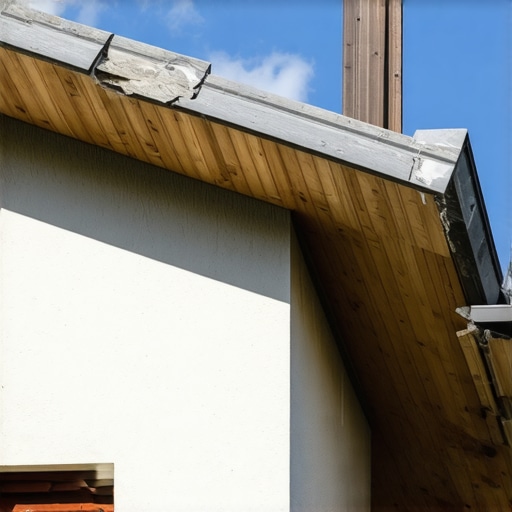
The Forensic Autopsy of a Failing Eave
I was walking a steep-slope job in Buffalo last November, and the moment my boots hit the gutter line, I felt that tell-tale give. It wasn’t the sound of cracking wood; it was the silent, sickening squish of a structure that had given up the ghost. I knew exactly what I’d find underneath. Most roofing companies would have just quoted a ‘simple’ shingle replacement, but they aren’t looking at the physics. They don’t see the slow-motion train wreck happening where the roof deck meets the fascia. Water isn’t just something that falls; it’s a predatory element that uses surface tension to crawl into places your builder swore were sealed. By 2026, we are going to see a massive wave of failures from the ‘Class of 2016’—roofs installed with sub-par drip edges and zero regard for the capillary draw. If you don’t know what’s happening behind your gutters right now, you aren’t just looking at a leak; you’re looking at a structural compromise that’s eating your home from the outside in.
The Physics of the ‘Hidden Soak’
To understand why your roof is rotting, you have to stop thinking like a homeowner and start thinking like a hydrologist. Water has a property called cohesion. It likes to stick to itself, and it likes to stick to surfaces. When rain hits the edge of your shingles, it doesn’t always just drop into the gutter. If the shingles don’t have the proper 1-inch overhang, or if the starter strip was installed flush with the drip edge, the water performs a U-turn. It hugs the underside of the shingle, crawls back toward the house, and finds the gap between the fascia board and the roof deck. This is capillary action. It bypasses the gutter entirely and begins the slow process of turning your 7/16-inch OSB plywood into something resembling wet cardboard. This isn’t a storm-day problem; it’s a ‘every time it drizzles’ problem.
“A roof is only as good as its flashing.” – Old Roofer’s Adage
Sign 1: The ‘Shadow Line’ Staining on Fascia
Look at your fascia boards—the vertical boards behind your gutters. If you see dark, vertical streaks or a consistent ‘shadow line’ right at the top edge where the metal meets the wood, you’re in trouble. Local roofers often overlook this as ‘just dirt,’ but it’s actually tannins leaching out of the wood. When the roof deck stays saturated, the water migrates into the fascia. This moisture traps heat in the summer, creating a localized greenhouse effect that accelerates fungal growth. By the time the paint starts peeling, the wood behind it is likely already ‘punky’—trade talk for soft, decaying timber that can no longer hold a nail. If you see this, your roofing companies need to do more than a patch job; they need to investigate the deck integrity.
Sign 2: The ‘Nail Pop Sneeze’
When the wood behind the gutters rots, it expands and contracts at a different rate than the metal components. This constant movement causes shiners—nails that missed the rafter—to start backing out. If you look at your gutter line and see the heads of nails or screws pushing the gutter spikes forward, the wood has lost its ‘grip strength.’ I call it the ‘nail pop sneeze’ because the roof is literally trying to eject its own fasteners. Once that wood loses its density, the gutters will start to sag. A sagging gutter changes the pitch, causing water to pool, which further accelerates the rot. It’s a feedback loop of failure that ends with the gutter falling off the house, often taking a chunk of rotten wood with it.
Sign 3: Granule Waterfall and the Clog-Back Mechanism
If you see a mountain of asphalt granules in your gutters, you have more than just aging shingles. Those granules act like a dam. When the gutter fills with grit, the water level rises during a heavy downpour. Because of the way many local roofers incorrectly install the Ice & Water shield (or skip it entirely at the very edge), that backed-up water finds the path of least resistance: the gap behind the gutter. In cold climates, this is exacerbated by ice dams. The ice forces the water upward under the shingles. If the drip edge isn’t tucked correctly into the gutter, the water goes behind the metal. This is where the 140°F attic heat meets the freezing exterior, creating a condensation trap that rots the plywood from the underside.
“Drip edges shall be provided in accordance with Section R905.2.8.5. The drip edge shall be so installed as to prevent water from entering the area between the drip edge and the fascia.” – International Residential Code (IRC)
Sign 4: The ‘Spongy Eave’ (The Forensic Feel)
This is the test I performed in Buffalo. You don’t need to be a pro to feel this. Take a ladder (carefully) and push up on the underside of the roof deck just behind the gutter. There should be zero movement. If there’s a ‘bounce’ or a ‘crunch,’ the structural integrity is gone. This happens because the thermal bridging between the cold gutter and the warm house creates a constant dew point at the eave. Most roofing companies don’t want to tell you that the first four feet of your roof deck need to be ripped off and replaced because it turns a ‘one-day’ job into a ‘three-day’ job. But if they just nail new shingles over that sponge, the new nails won’t hold. High winds will catch that eave, and because the wood is soft, the shingles will peel off like a banana skin.
Sign 5: The Biological Colony (Algae and Moss)
If you have moss or green algae growing specifically on the bottom three inches of your shingles, your roof is ‘wicking’ moisture. This isn’t just a cosmetic issue. Moss acts like a literal sponge, holding water against the shingle surface for weeks after a rain. This moisture is eventually drawn upward by capillary action. If you see green at the edges, the wood underneath is likely a biology experiment. You need local roofers who understand that this isn’t about cleaning the roof; it’s about fixing the valley drainage and the cricket diverters that are dumping too much water into a single spot, overwhelming the eave’s ability to shed moisture.
The Fix: The ‘Surgery’ vs. The Band-Aid
If you find these signs, don’t let a contractor talk you into ‘caulking the gap.’ Caulk is a temporary fix for a permanent problem. The ‘surgery’ involves removing the bottom two rows of shingles, pulling the old, likely rusted-out drip edge, and cutting back any rotten plywood. You must install a high-temperature Ice & Water shield that laps over the edge of the deck and down the fascia, followed by a heavy-gauge drip edge. This creates a secondary water resistance layer that ensures even if water gets past the shingles, it has no choice but to drop into the gutter. It’s the difference between a roof that lasts 30 years and one that fails in 2026. Don’t hire a ‘trunk slammer’ for this. You need someone who understands that a roof isn’t just a cover; it’s a managed water-diversion system. If they don’t talk about ‘physics’ and ‘capillary draw,’ they aren’t the right company for the job.
This post really sheds light on issues I’ve noticed with some older homes in my area. I was particularly interested in the discussion about capillary action and how water can crawl back under shingles, bypassing gutters entirely. It made me realize that many homeowners probably overlook these subtle signs until serious damage has already occurred. I’ve seen fascia staining and moss growth, but I didn’t connect it directly to potential rot behind the scenes. Has anyone here had success using moisture meters to detect hidden issues early, or is visual inspection still the go-to? I wonder if regular professional inspections could catch these signs before they become structural problems. It’s clear that understanding the physics behind water movement makes a big difference in proactive maintenance. Also, the emphasis on proper drip edge installation resonated with me—improper flashing can really compromise a roof’s lifespan. What are some cost-effective ways homeowners can educate themselves to spot these signs before it’s too late? I’d love to hear your insights.