
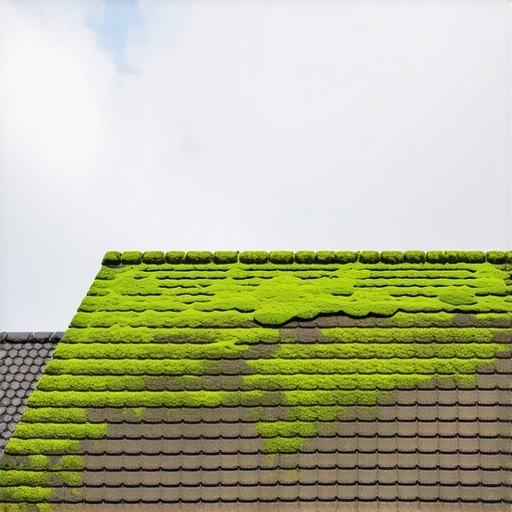
The Biology of a Failing Deck
I remember a call out in the fog-drenched corridors of the Pacific Northwest last autumn. Stepping onto that three-tab asphalt roof was like walking on a wet memory foam mattress. The homeowner, bless his heart, thought he just needed a ‘quick brush off’ from some local roofers. I knew better. I didn’t even need to pull my pry bar to know the plywood underneath was structural soup. When moss takes hold, it isn’t just an aesthetic ‘cottage core’ look; it is a slow-motion biological demolition team. By 2026, we are going to see a massive uptick in premature failures due to the cumulative dampness of the last few seasons. If you aren’t looking for the signs now, you aren’t just looking at a repair; you’re looking at a total tear-off. Roofing isn’t about the shingles you see; it’s about the physics of moisture you don’t.
1. The Green Gasket: Keyway Expansion
Take a look at your shingles. See those vertical gaps between the tabs? We call those keyways. In a healthy roof, they allow for expansion and water runoff. But when moss starts to nestle in there, it acts like a green gasket. It starts small—a little puff of velvet. But moss is a hydraulic jack. As it grows, it expands, pushing the shingles apart. This is the first sign that roofing companies look for. This isn’t just surface growth; the moss is colonizing the space between the courses. When that moss freezes and thaws, it exerts literal tons of pressure on the shingle edges, snapped the seal of the asphalt. Once that seal is gone, the next windstorm is going to turn your roof into a deck of cards.
“A roof is only as good as its flashing and its ability to remain bone dry between cycles.” – Old Roofer’s Adage
2. The Hydraulic Lift: Shingle Arching
Moss doesn’t have roots like a tree; it has rhizoids. These are tiny, hair-like anchors that don’t just sit on top of the shingle—they burrow into the granules. Once the moss gets thick enough, it begins to hold onto water like a sponge. This weight, combined with the biological growth, creates a ‘lift’ effect. If you look across the plane of your roof at sunset, you shouldn’t see shadows under the butts of the shingles. If you do, that’s moss acting as a lever, prying the shingle up and away from the starter strip. Once the shingle arches, the local roofers call it a ‘sail.’ It catches the wind, breaks the thermal seal, and invites wind-driven rain to travel upward—defying gravity through capillary action—until it hits the unprotected nail heads. That’s how you get a leak in the middle of a room with no apparent hole above it.
3. The 48-Hour Damp Test
Here is a forensic trick I use. After a good rain, wait for two days of sunshine. Go outside and look at your roof. Most of it should be bone dry. But if you see dark, damp patches lingering on the north-facing slopes or under the shade of an overhanging oak, you have a moisture retention problem. Moss is 90% water by weight. It creates a micro-climate on your roof deck that never dries out. This constant dampness leads to the ‘rotting plywood’ scenario. While the top of the shingle looks okay, the underside is sweating. This moisture migrates into the attic, where it hits the cold air and condenses on your rafters. If your roofing system isn’t breathing because it’s suffocated by a layer of green carpet, your R-value in the attic is plummeting as your insulation turns into a soggy mess.
4. The Granule Avalanche in the Gutter
Get a ladder and look in your gutters. If you see piles of colorful sand—the granules that protect the asphalt from UV rays—your moss is ‘eating’ your roof. Moss secretes acidic bypass products. These acids break down the limestone filler in modern shingles. As the moss anchors itself, it dislodges the granules. Without granules, your asphalt is exposed to the sun like skin without sunblock. It will ‘cook’ in the summer, becoming brittle and cracking. When roofing companies see ‘bald’ shingles surrounded by moss, they know the shingle has lost its structural integrity. You’re no longer protected by a roofing system; you’re protected by a thin sheet of drying oil that’s one hailstone away from a puncture.
“The accumulation of organic debris and biological growth on shingles leads to moisture damming and accelerated degradation of the bitumen layer.” – NRCA Technical Manual
5. The Attic ‘Ghosting’ and Rusty Shiners
The final sign isn’t on the roof at all; it’s in the dark corners of your attic. Take a flashlight and look for ‘shiners.’ A shiner is a nail that missed the rafter and is sticking through the plywood. If those nails are rusty or have a ‘frost’ on them in winter, your roof is holding too much moisture due to moss growth. The moss on top prevents the heat from escaping, creating a ‘dew point’ inside your roof deck. This is forensic evidence that the roofing system has failed. The plywood will start to show black spotting—mold—long before you see a drip on your ceiling. If you ignore this until 2026, the wood will be too far gone to hold a nail, meaning a local roofer can’t just do a ‘lay-over’; they’ll have to replace every single sheet of sheathing on your house, doubling your cost.
The Fix: Why You Shouldn’t Use a Pressure Washer
When people see moss, they hire a guy with a pressure washer. That is the quickest way to kill a roof. High-pressure water forces its way under the laps and blasts off the remaining granules. It’s like using a chainsaw to give someone a haircut. What you need is a chemical kill-wash followed by the installation of zinc or copper strips at the ridge. When it rains, the water hits the metal, picks up metallic ions, and washes them down the roof. These ions are toxic to moss spores. It’s a passive defense system that keeps the roof clean for a square or more. Don’t fall for the ‘lifetime’ spray-on gimmicks. If you want a roof that lasts until 2040, you have to respect the physics of drainage and the biology of the North.