
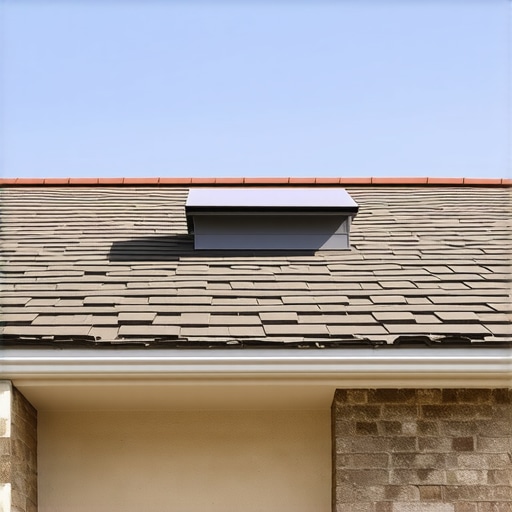
The Forensic Scene: When the Deck Becomes a Sponge
The smell hits you first—not just the musty scent of a damp basement, but the sharp, acidic tang of rotting Oriented Strand Board (OSB) delaminating under a layers of high-end architectural shingles. I recently stepped onto a roof in a development that looked like a million dollars from the curb, but walking on that roof felt like walking on a sponge. I knew exactly what I’d find underneath before I even pulled my shingle ripper out of the truck. This wasn’t a leak from a storm; this was a slow-motion suicide of a structure caused by a ridge vent that was doing absolutely nothing. As we move into 2026, roofing companies are seeing an epidemic of ‘modern’ ventilation failures. Local roofers who focus on speed over physics are leaving homeowners with ticking time bombs. Ventilation isn’t just about ‘letting the house breathe’; it is about pressure differentials and fluid dynamics that most ‘trunk slammers’ couldn’t explain if their license depended on it.
The Physics of the Failure: Mechanism Zooming
To understand why your ridge vent is failing, you have to look at the capillary action of water and the thermal buoyancy of air. A ridge vent works on the Venturi effect: as wind blows over the peak of your roof, it creates a low-pressure zone that sucks hot, moist air out of the attic. However, if the opening in the wood—the actual cut in the ridge—is too narrow, or if the local roofers didn’t cut back the underlayment, the vent is purely decorative. In cold climates, this failure leads to ‘attic rain.’ Warm air from your shower and kitchen rises into the attic, hits the freezing underside of the roof deck, and turns into frost. When the sun hits the shingles the next morning, that frost melts, dripping onto your insulation and eventually through your ceiling. This isn’t a roof leak; it’s a physics failure.
“The attic space shall be ventilated with an unobstructed opening of not less than 1 square foot for each 150 square feet of ventilated area.” – International Residential Code (IRC) R806.1
1. The ‘Ghosting’ Effect on Interior Ceilings
One of the first signs of a 2026 ridge vent failure isn’t found on the roof, but on your ceiling. Have you noticed dark, dusty streaks following the lines of your ceiling joists? This is ‘ghosting.’ When a ridge vent fails to exhaust moisture, the humidity in the attic increases, making the ceiling joists colder than the surrounding drywall. This temperature differential causes microscopic dust and soot particles to condense and stick to those cold spots. If you see stripes on your ceiling, your roofing system is failing to regulate attic temperature, and your ridge vent is likely the culprit.
2. Thermal Buckling and Shingle ‘Humping’
When the ridge vent is blocked or improperly installed, the heat buildup in the attic can reach staggering temperatures—often exceeding 160°F. This extreme heat doesn’t just sit there; it bakes the shingles from the underside. This leads to ‘thermal expansion’ where the roof deck expands and pushes against the shingles, causing them to hump up or buckle. If you look across the plane of your roof and see a wavy pattern instead of a flat surface, the roofing companies you’re calling should be looking at your ventilation, not just your shingles. Heat-distorted shingles lose their granule surfacing rapidly, leading to premature aging and a square of roofing that looks twenty years old after only five.
3. The ‘Shiner’ Corrosion Syndrome
In trade terms, a ‘shiner’ is a nail that missed the rafter and is sticking out into the attic space. In a properly ventilated home, a shiner is a minor mistake. In a house with a failing ridge vent, a shiner becomes a diagnostic tool. During my forensic inspections, I look for rusted nail tips in the attic. When moist air can’t escape through the ridge, it condenses on these cold metal points. The water then travels down the nail, rotting the surrounding wood and eventually causing the nail to back out. If you see rust streaks on your attic floor, your ridge vent is failing to move air, period.
4. Compressed Baffles and the Intake Short-Circuit
A ridge vent is only the ‘exhaust’ half of a system. The ‘intake’ half is your soffit vents. Many local roofers install a beautiful ridge vent but fail to check the soffits. Often, insulation contractors blow fiberglass into the eaves, completely clogging the intake. Without air coming in at the bottom, the ridge vent can’t pull air out of the top. In some cases, the vacuum created by the ridge vent will actually start pulling air from the living space through recessed lights or attic bypasses, elevating your energy bills and pulling moisture into the attic structure. I once investigated a home where the ridge vent was so starved for air it was pulling cold air in through the valley flashing, causing a localized ice dam in the middle of the roof.
“A roof is only as good as its flashing.” – Old Roofer’s Adage
5. Brittle Polypropylene Fatigue
By 2026, we are seeing the breakdown of cheaper, plastic ridge vents installed during the building booms of the last decade. Not all ridge vents are created equal. Low-quality polypropylene vents become brittle after years of UV exposure and ‘thermal shock’ (the rapid change from a hot day to a cold night). These vents crack, allowing wind-driven rain to enter the peak. If you see small pieces of black plastic in your gutters, your ridge vent is literally disintegrating. You need a roofing professional who uses high-impact, UV-stabilized vents with internal weather filters to prevent this ‘material fatigue’.
The Surgery: How to Fix a Dying System
The ‘band-aid’ fix is to just slap some caulk on the cracks, but that’s a waste of money. The ‘surgery’ involves removing the ridge shingles, widening the wood cut to meet the 1:150 code requirement, and installing a baffed ridge vent that creates a true pressure drop. Don’t let a contractor talk you into adding a power fan on top of a ridge vent; this ‘short-circuits’ the system, pulling air only from the ridge and leaving the rest of the attic stagnant. If you want to protect your home, hire local roofers who use thermal imaging to prove the airflow is moving from eave to peak. Anything less is just a guess.