
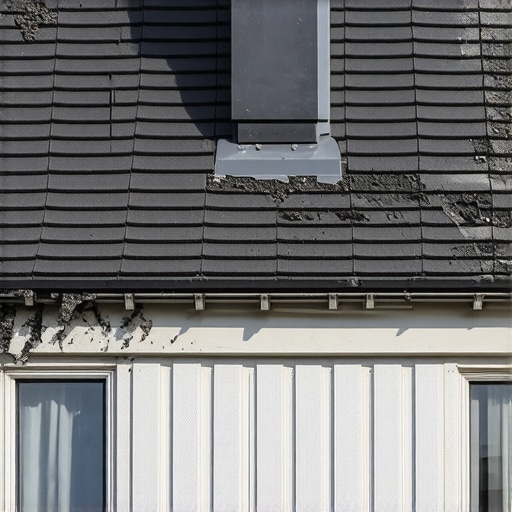
The Forensic Scene: Walking the Spongy Ridge
Last Tuesday, I was up on a roof in the suburbs, the kind of place where every house looks the same until you get close enough to see the rot. Walking on that roof felt like walking on a sponge. I knew exactly what I’d find underneath before I even pulled my flat bar out of my belt. The ridge—the very peak where the two slopes meet—should be the sturdiest part of the system. Instead, it was giving way under my boots. When roofing companies slap on a ridge vent without understanding the physics of airflow, they aren’t installing a ventilation system; they are installing a slow-motion wrecking ball. This homeowner was seeing the results of five years of ‘passive’ damage that was finally ready to break the bank. Most local roofers will tell you a ridge vent is ‘set it and forget it.’ They are wrong. By 2026, the industry is seeing a massive uptick in failures from the cheap, plastic roll-out vents installed during the 2010s housing boom. Here is the forensic breakdown of why your ridge is failing and how the physics of your attic is working against you.
1. The Wavy Decking: The Physics of Trapped Vapor
When you look up at your roofline from the driveway, it should be as straight as a laser. If you see a subtle wave—a scalloped effect between the rafters—you are looking at structural failure caused by poor ventilation. In our northern climate, warm air from your shower, your stove, and your breathing migrates into the attic. If the ridge vent is clogged or poorly cut, that moisture has nowhere to go. It hits the underside of the cold plywood and condenses. This isn’t just a little ‘dampness.’ It is a literal indoor rainstorm. The wood fibers soak up this water, swell, and then dry out when the sun hits the shingles. This constant cycle of expansion and contraction destroys the lignin in the wood. Eventually, the plywood turns to something resembling wet cardboard—what we in the trade call ‘oatmeal.’ You aren’t just replacing shingles at that point; you’re replacing the entire deck, square by square.
2. The ‘Shiner’ Effect and Fastener Withdrawal
I see this in 80% of forensic inspections. A ‘shiner’ is a nail that missed the rafter and is sticking through the roof deck into the attic space. In a failing ridge vent scenario, these nails act as lightning rods for frost. During a cold snap, moisture in the attic clings to these cold nails, forming thick white ice. When the sun hits the roof, that ice melts, dripping onto your insulation. Over time, the constant moisture around the nail hole causes the wood to rot and the nail to lose its grip. This is called ‘fastener withdrawal.’ If your ridge vent isn’t moving enough air, the pressure of the wood’s movement will actually push the nails back out. If you see shingles at the peak starting to lift or ‘chatter’ in the wind, it’s because the nails have lost their bite in the rotted wood below.
“The roof is the most vulnerable part of the building envelope, and its failure is almost always related to the movement of moisture and air.” – NRCA Manual excerpt
3. Brittle Shingles and Thermal Shock
Asphalt shingles are designed to handle heat, but they have a limit. When a ridge vent fails, the attic temperature can easily soar to 160°F. This creates a ‘double-bake’ scenario. The sun cooks the shingles from the top, and the trapped attic heat cooks them from the bottom. This accelerates the loss of the volatile oils that keep asphalt flexible. By 2026, many roofs installed with non-baffled ridge vents are showing extreme brittleness. If you touch a shingle and it snaps like a cracker, your ventilation has failed. We call this thermal shock. The shingles expand rapidly during the day and contract at night, but without those oils, they simply crack. A quality roofing company knows that ventilation isn’t just about keeping the house cool; it’s about preventing the shingles from literally frying themselves to death.
4. The ‘Ghosting’ of Attic Mold
Forensic roofing isn’t just about what’s on the outside. When I go into an attic and see dark staining on the rafters—a phenomenon often called ‘ghosting’—I know the ridge vent is a total failure. This usually happens because of a ‘short circuit’ in the ventilation system. If you have a ridge vent but no soffit vents (the intakes at the eaves), the ridge vent will actually start pulling air from the conditioned space of your house or from the least resistant path, often bringing in moisture.
“Natural ventilation shall be provided at a rate of not less than 1 square foot of net free ventilating area for each 150 square feet of attic floor area.” – International Residential Code (IRC) R806.1
If those ratios are off, the ridge vent becomes a vacuum for the wrong kind of air, leading to mold colonies that eat your house from the inside out.
5. The Pest Highway: End Cap Failure
Cheap ridge vents are often just long strips of corrugated plastic. Over time, the end caps—the pieces that seal the vent at the edge of the roof—warp or crack due to UV exposure. This creates a five-star hotel entrance for squirrels, mice, and bats. Once they get into the ridge vent, they have access to the entire length of your attic. I’ve seen crickets—those small peaked roofs built to divert water—completely undermined by rodents that got in through a failed ridge vent. If you hear scratching above your ceiling, don’t just call an exterminator. Call a roofer who knows how to install a baffled, metal-reinforced ridge system that pests can’t chew through.
The Band-Aid vs. The Surgery
A lot of roofing companies will try to sell you a quick fix. They’ll say they can just run a bead of caulk along the ridge or swap out a few shingles. That’s a Band-Aid on a gunshot wound. If the ridge vent has failed to the point where the decking is soft, you need surgery. This means a full tear-off of the ridge area, replacing the rotted ‘oatmeal’ plywood, and installing a high-flow, baffled ridge vent system. Don’t let a ‘trunk slammer’ tell you otherwise. The cost of waiting is more than just money; it’s the structural integrity of your home. If you ignore the signs of 2026 ridge vent damage today, you’ll be paying for a whole new roof deck tomorrow. Check your ridge. Look for the waves. Feel for the sponge. Your roof is talking to you; you just need to know how to listen.