
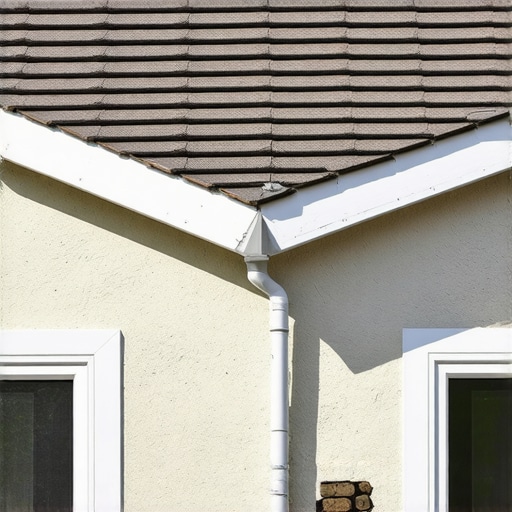
The Anatomy of a Failing Roof
Water doesn’t need a door; it just needs a microscopic invite. My old foreman, a grizzly guy we called ‘Salty,’ used to lean over a rake-edge and tell me, ‘Water is the most patient trespasser on earth. It will wait years for you to make a one-inch mistake, then it’ll rot your house from the inside out while you’re sleeping.’ Salty was right. After twenty-five years of performing forensic teardowns on roofs that weren’t even five years old, I’ve seen enough ‘2026-grade’ shortcuts to fill a dumpster. When you hire local roofers, you aren’t just buying shingles; you’re buying a system of physics designed to fight gravity and surface tension. If the roofing companies you’re vetting don’t understand the molecular behavior of water, you’re just paying for an expensive delay of the inevitable.
1. The ‘Shiner’ and the Physics of Thermal Bridging
The most common sign of a hack job isn’t a missing shingle; it’s a ‘shiner.’ In trade talk, a shiner is a nail that missed the rafter or was driven into the attic space where it’s visible. To an amateur, it’s just a misplaced bit of steel. To a forensic roofer, it’s a localized disaster. During a cold snap, that nail acts as a thermal bridge. It gets as cold as the outside air, while your attic is filled with humid, warm air leaking through the bypasses. The nail reaches dew point, and moisture begins to collect on the shank. It drips onto the insulation, rendering it useless, and eventually rots the plywood deck from the bottom up. If your local roofers are firing nail guns like they’re in an action movie without checking their patterns, they’re installing a slow-motion leak. High-nailing is another sin; if the nail is above the sealant strip, the shingle has zero wind resistance. It’ll stay for a year, but the first 40-mph gust will have your roof flapping like a deck of cards.
“Fasteners shall be driven flush with the shingle surface and not into the sealant. Over-driven nails can damage the shingle, while under-driven nails can interfere with the sealing of the shingle above it.” – NRCA Manual
2. The ‘Lazy Valley’ and Capillary Action
Valleys are the highways of your roof. They carry the highest volume of water. Poorly trained roofing companies love the ‘California Cut’ because it’s fast. But if they don’t taper the cut or if they leave a ‘water bridge’—a spot where water can travel sideways under the shingles through capillary action—you’re in trouble. Water has a natural tendency to ‘climb’ into tight spaces. If the valley metal isn’t hemmed or if the shingles aren’t clipped at the corners, that rushing water hits a snag and gets pushed underneath. I’ve torn off valleys where the underlayment was pristine but the wood beneath was like oatmeal because the water was being sucked sideways through the lap joints every time it rained hard.
3. The Ice & Water Shield Illusion
In cold climates, everyone brags about using Ice & Water shield. But here’s the forensic truth: it’s only as good as its termination point. I often see local roofers stop the membrane right at the wall line. That’s a failure. In 2026, workmanship standards require that membrane to lap over the drip edge and extend at least 24 inches inside the warm wall line. If they don’t, ice dams will form at the gutter, back up under the shingles, and hit the unprotected wood before the membrane even starts. You’ll see the damage first in your soffits—dark, peeling paint or ‘icicles’ made of frozen tannin-stained water. That’s the smell of rotting cedar and wasted money.
4. Suffocation: The Ventilation Imbalance
A roof is a breathing organism. If roofing companies install a shiny new ridge vent but don’t clear the intake vents at the eaves, they’ve just created a vacuum. In the heat of summer, your attic hits 140°F, baking the shingles from beneath. This ‘cooks’ the asphalt, causing premature granule loss and curling. It’s not a material defect; it’s a workmanship failure. You need a balanced system. Without it, you’re effectively putting your new roof in a microwave. If a contractor doesn’t pull out a calculator to check your NFA (Net Free Area), they aren’t roofing; they’re guessing.
“The total net free ventilating area shall be not less than 1/150 of the area of the space ventilated.” – International Residential Code (IRC) R806.2
5. The Missing Cricket and Kickout Flashing
The most dangerous spot on a roof is where a vertical wall meets a sloped roof, specifically behind a chimney. This is where you need a ‘cricket’—a small peaked structure that diverts water. Without it, the chimney acts as a dam. Debris builds up, holds moisture against the brick, and eventually eats through the flashing. Similarly, ‘kickout flashing’ is the piece of metal that directs water away from the siding and into the gutter. Most local roofers skip this because it’s ‘ugly.’ But without it, water runs down the siding, gets behind the ‘J-channel,’ and rots your wall studs. I’ve seen entire corners of houses disappear because of a missing $10 piece of bent aluminum.
How to Protect Your Investment
Don’t be swayed by a ‘Lifetime Warranty’—that’s often just a marketing gimmick for the material. The labor is where the risk lives. Demand a ‘Pre-Flight’ inspection of your attic. If the roofing companies don’t go into your crawlspace to look for existing mold or light leaks, they don’t care about the final result. Look for a crew that uses hand-held gauges to check for proper nail depth and ask them specifically about their ‘start-to-finish’ flashing strategy. If they say ‘we just use caulk,’ walk away. Caulk is a maintenance item; metal is a permanent solution. Your roof is the only thing between your family and the elements. Make sure the people building it respect the physics of the fight.
Reading through this detailed breakdown of common roofing flaws really highlights how crucial proper installation is. I remember a project I worked on where a missing kickout flashing caused significant water damage to the siding—it’s amazing how a small piece of metal can prevent so many problems. It’s clear that many roofers cut corners for speed, but in the long run, those shortcuts can lead to extensive damage and costly repairs. I particularly appreciate the emphasis on proper ventilation; so many forget that a balanced system is essential to prevent the attic from baking under the sun. Has anyone found effective ways to ensure roofers follow through with detailed flashing and venting strategies, especially in areas where workmanship standards aren’t strictly enforced? I believe educating homeowners about these tiny, yet vital, details can go a long way in avoiding costly mistakes.