
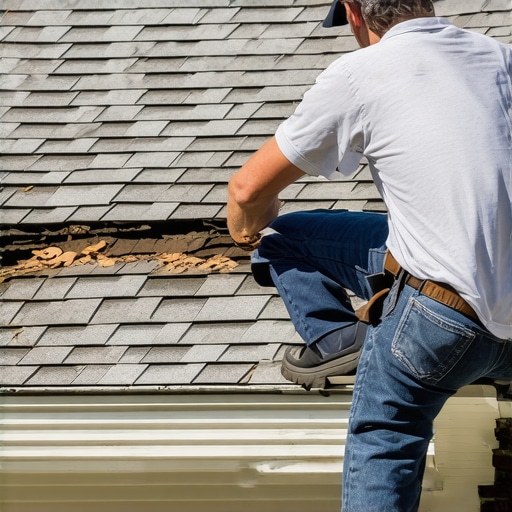
The Anatomy of a Failing Roof: What Lies Beneath
Walking onto a roof deck in the dead of winter isn’t just about avoiding a slip; it’s about listening to the structure. Last February, I stood on a slope in a quiet suburb, and every step felt like I was walking on a stack of damp newspapers. The homeowner thought they just needed a few shingles replaced. I knew better. As soon as I pulled my pry bar across the starter course, the stench hit me—the unmistakable, heavy scent of fermented wood and stagnant moisture. The plywood hadn’t just failed; it had surrendered. This wasn’t a storm damage issue; it was a slow-motion execution caused by poor physics and even poorer installation. Local roofers often miss these quiet killers because they’re looking for missing shingles, not systemic failure. When you hire roofing companies, you aren’t just paying for the labor of nailing down squares; you’re paying for an insurance policy against the hidden decay that 2026 weather patterns are now accelerating.
1. The Sideways Siphon: Capillary Action Under the Shingle
Most people think water only moves down. In the roofing world, that’s a dangerous lie. Water is a predator that uses physics to climb. In 2026, we are seeing more frequent ‘micro-burst’ rain events that force water sideways. When shingles aren’t sealed with surgical precision, or when the offset is slightly off, capillary action takes over. This is the process where liquid is drawn into narrow spaces regardless of, and often in opposition to, external forces like gravity. It’s a siphon effect. The water gets pulled under the shingle, stays trapped against the underlayment, and begins to rot the fastener heads. By the time you see a brown circle on your ceiling, that ‘shiner’—a nail that missed the rafter—has been weeping rust and water into your attic for three seasons. Most roofing companies won’t find this because it requires pulling back the layers to see the oxidation on the shank of the nail. If your local roofers aren’t checking the nail patterns for rust weeping, they’re missing the first sign of a total deck failure.
“A roof system is only as effective as its weakest transition point; water does not require an open door, only a microscopic invitation.” – Forensic Building Science Digest
2. The Attic Bypass: The Indoor Rain Phenomenon
In colder climates, the greatest enemy of your roof isn’t the snow; it’s the heat you paid for. An ‘attic bypass’ is a technical term for a hidden hole—think plumbing stacks, recessed lights, or pull-down stairs—that lets warm, moist air from your kitchen or bathroom scream into the cold attic space. When that warm air hits the underside of the cold roof deck, it reaches its dew point and flash-freezes into frost. This isn’t a leak in the traditional sense; it’s internal condensation. I’ve seen attics that looked like a winter wonderland in January, only to have the homeowner complain about a ‘roof leak’ during the first 40-degree day in March. That’s not a shingle problem; that’s a ventilation and insulation failure. Local roofers who don’t understand the R-Value requirements or the necessity of a sealed vapor barrier will keep selling you new shingles while your roof deck continues to rot from the inside out. You need a contractor who looks at the insulation, not just the asphalt.
3. Thermal Bridging and the ‘Ghost’ Rafters
Have you ever looked at your roof after a light frost and seen the outline of every single rafter? That’s not a design feature; it’s thermal bridging. It means heat is escaping through the wood framing faster than through the insulated bays. In 2026, as energy codes tighten, this becomes a major red flag for hidden roof damage. This constant temperature fluctuation subjects the decking to ‘thermal shock.’ The wood expands and contracts at a different rate than the shingles, eventually backing the nails out of the wood. We call these ‘nail pops.’ Once a nail is pushed up, it creates a tent in the shingle above it. Wind catches that tent, breaks the sealant strip, and now you have a 100-mph wind-driven rain entry point. If your roofing companies aren’t talking about baffles and airflow, they aren’t solving the root cause of your shingle displacement.
4. The Granule Graveyard in the Gutters
Go to your downspout and look at the pile of sand at the bottom. Those granules are the only thing protecting the volatile asphalt oils from the sun’s UV radiation. Once the granules are gone, the sun bakes the shingle, turning it brittle and ‘cupped.’ In the Southwest, we see this accelerated by thermal expansion, but it’s becoming a universal problem. If you see significant granule loss, your roof is effectively ‘bald.’ It might not be leaking today, but the waterproofing integrity is gone. A reputable local roofer should be able to tell you if that loss is from a one-time hail event or systemic ‘scabbing’ caused by age and poor ventilation. When the asphalt is exposed, it cracks, creating microscopic fissures that allow water to reach the felt through sheer hydrostatic pressure.
“Proper attic ventilation is not a luxury; it is a thermal necessity to prevent the premature degradation of organic and inorganic roofing substrates.” – International Residential Code (IRC) Section R806
5. The Kick-Out Diverter Failure
The most common place for a roof to fail is where it meets a wall. I can’t tell you how many ‘pro’ jobs I’ve inspected where they forgot the kick-out flashing. Without a cricket or a proper diverter, all the water from a large roof plane is funneled directly into the side of your house, usually right behind the siding or the EIFS. This leads to what we call ‘stucco rot.’ You won’t see it until the wall literally crumbles or you find black mold behind your drywall. This is why roofing is a trade of inches. A missing two-dollar piece of metal can cause twenty thousand dollars in structural damage. When interviewing roofing companies, ask them to show you their flashing detail for chimney saddles and wall intersections. If they just say ‘we use plenty of caulk,’ run. Caulk is a temporary sealant; metal is a permanent water management solution.
Why 2026 is Different for Roofing
We are seeing weather patterns that the old-school ‘hand-nailers’ didn’t prepare for. The intensity of the wind and the rapid swings in temperature mean that ‘standard’ installation isn’t enough anymore. You need a forensic approach. You need to know that your starter course is high-wind rated, that your valleys are lined with ice and water shield even if the code doesn’t strictly demand it in your zone, and that your ventilation is balanced. Don’t just look for ‘roofing’; look for an assembly that breathes. If your roof can’t shed heat and moisture, it doesn’t matter how expensive the shingles were—they will fail. Stay vigilant, check your attic after a storm, and never trust a roofer who doesn’t own a moisture meter.