
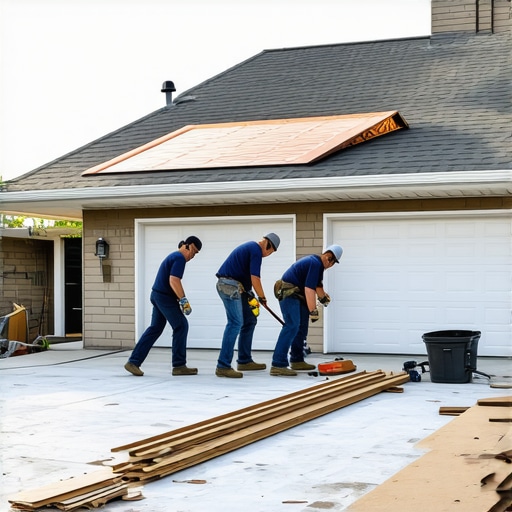
The Invisible Layer That Determines Your Roof’s Fate
Most homeowners spend weeks obsessing over the color of their shingles. They look at charcoal grey versus weathered wood as if the aesthetics will keep their attic dry. But after twenty-five years of pulling up rotted deck boards and smelling the pungent, earthy scent of moldy insulation, I can tell you: the shingles are just the suit of armor. The underlayment is the skin. If the skin is weak, the body rots. I’ve seen 50-year shingles fail in six years because some cut-rate local roofers used cheap #15 organic felt that turned into soggy cardboard the moment a heavy humidity cycle hit. In the roofing trade, we see the consequences of ‘cheap’ every single day. Walking on a roof that feels like a sponge because the underlayment failed is a sensation you never forget. It’s the sound of thousands of dollars evaporating.
“A roof is only as good as its flashing and its secondary water barrier.” – Old Roofer’s Adage
My old foreman, a man who had more tar under his fingernails than blood in his veins, used to say, ‘Water is patient. It will wait for you to make a mistake. It will wait for a single shiner to rust out.’ He was right. A ‘shiner’ is a nail that missed the rafter, sticking through the plywood into the attic. If your underlayment doesn’t seal around that nail, it becomes a highway for drips. As we head into 2026, the technology in underlayment has shifted from simple asphalt-soaked paper to high-tech synthetics and SBS-modified membranes. Here is the forensic breakdown of the only five brands I’d trust on my own house.
1. GCP Applied Technologies (Grace Ice & Water Shield)
If you live in a climate where the thermometer swings like a pendulum, you need a membrane that doesn’t just lay there—it needs to bond. Grace Ice & Water Shield is the industry benchmark for a reason. It is a self-adhered rubberized asphalt. When a roofer drives a nail through this stuff, the rubberized asphalt ‘heals’ around the shank of the nail. This is vital in valleys and around penetrations like chimneys or plumbing boots. I’ve seen ice dams back water up three feet from the gutter line; Grace is the only thing that stops that hydrostatic pressure from pushing water into the soffits. It’s expensive, and it’s a pain to install because it’s so sticky, but it’s the difference between a dry ceiling and a structural nightmare.
2. GAF Tiger Paw
For the main field of the roof, most roofing companies are moving away from felt entirely. GAF Tiger Paw is a synthetic underlayment that uses a moisture-wicking layer. Why does that matter? Because attics are heat traps. If you trap moisture between the plywood and the underlayment, you get ‘deck rot.’ Tiger Paw allows the roof to breathe while remaining 600% stronger than standard felt. I’ve seen this stuff left exposed for weeks during storm delays, and it doesn’t wrinkle or tear. Standard felt will ‘bubble’ the moment it gets damp, which creates an uneven surface for your shingles. Tiger Paw stays flat, ensuring your shingles lay right and don’t catch the wind.
3. CertainTeed DiamondDeck
CertainTeed is the choice for the precision-oriented crew. DiamondDeck is a synthetic scrim-reinforced underlayment. The ‘scrim’ is a heavy-duty mesh that prevents the material from tearing at the fastener points. In high-wind areas, I’ve seen wind-driven rain get forced up under the shingles through capillary action. Water literally crawls uphill. DiamondDeck’s surface texture is designed to break that surface tension. Furthermore, it offers incredible traction. When you’re on a 10/12 pitch roof 30 feet in the air, you want an underlayment that doesn’t feel like a slip-and-slide. If the crew feels safe, the nail patterns are tighter, and you get fewer errors.
4. Owens Corning Titanium PSU30
This is a professional-grade, self-adhered underlayment specifically engineered for high-temperature environments. If you are in a region where attic temps hit 140°F, standard rubberized asphalt can actually ‘bleed’ or soften to the point of failure. Titanium PSU30 uses a patented cooling technology on its surface. It’s a beast to tear, and it handles the thermal expansion and contraction of the roof deck better than almost anything on the market. When the plywood expands in the afternoon sun and shrinks at night, you need an underlayment that won’t crack or pull away from the cricket—that small peaked structure we build behind chimneys to divert water.
“The building code is a minimum standard, not a target for quality.” – International Residential Code (IRC) Commentary
5. Sharkskin Ultra
Sharkskin is the heavyweight champion for those planning on a metal or tile roof. It is incredibly thick and rated for 50 years of exposure. Most synthetic underlayments degrade if they are exposed to UV rays for more than a few months. Sharkskin can sit in the sun for half a year and still retain its integrity. It acts as a secondary roof. For roofing companies doing high-end residential work, this is the ‘insurance policy’ against long lead times for custom materials. It creates a gasket-like seal that is nearly impossible for wind-driven rain to penetrate, even in hurricane-force conditions.
The Anatomy of Failure: Why Brands Matter
Why do I get so worked up about brands? Let’s zoom into the physics. Imagine a single shingle. It’s held down by four to six nails. In a storm, the wind lifts the bottom edge of that shingle just a fraction of an inch. Rain hits the shingle and is forced upward. This is capillary action. If your underlayment is cheap #15 felt, that water soaks into the paper. The paper expands. The nails start to wiggle in their holes. Over five years, that hole gets larger. Eventually, the water finds the plywood. Plywood is just glue and wood chips. Once it gets wet, it delaminates. Suddenly, you’re not just replacing shingles; you’re replacing the whole deck. A ‘square’ of roofing is 100 square feet. Saving $20 per square on underlayment might save you $600 on a 30-square roof, but it could cost you $15,000 in structural repairs later.
The Warranty Trap
Don’t get sucked into the ‘Lifetime Warranty’ marketing. Most of those warranties are prorated and only cover the material, not the labor to tear off the old stuff and fix the water damage. When local roofers tell you they use ‘standard’ materials, ask for the spec sheet. If they aren’t using a high-performance synthetic or a self-adhered membrane in the valleys, they are building a roof that has an expiration date. You want a contractor who treats the underlayment like the primary defense, not an afterthought. Inspect the drip edge and ensure the underlayment overlaps it properly. If the underlayment is tucked behind the drip edge, water will run straight onto your fascia boards, rotting your gutters off in a matter of seasons.