
The Solar Hype vs. The Roof Deck Reality
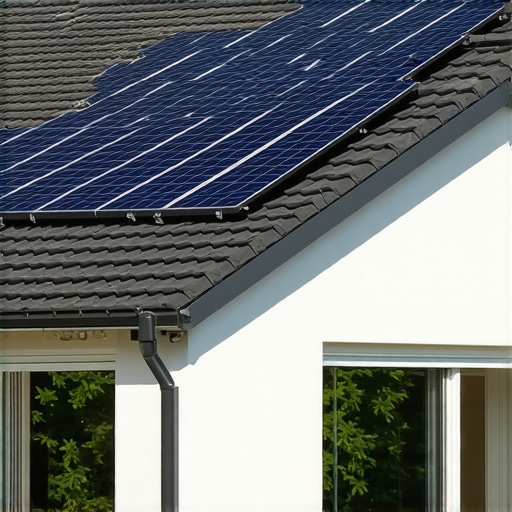
You’ve seen the glossy brochures. A smiling family standing in front of a house with a roof that looks like a polished obsidian mirror. They tell you it’s the future. As a guy who has spent three decades crawling through attics measuring moisture levels in rotted rafters, I don’t care about the future—I care about whether your roof is going to fail when the next storm hits. My old foreman used to say, ‘Water is patient. It will wait for you to make a mistake.’ For years, residential solar was exactly that: a mistake. We’d take a perfectly good 30-year architectural shingle, drill a hundred holes in it to mount heavy racks, and then wonder why the ceiling started dripping five years later. But 2026 is looking different. The 2026 generation of solar shingles isn’t just an ‘add-on’; it’s a fundamental shift in how roofing companies approach the building envelope.
“A roof is only as good as its flashing, and solar shingles finally treat the wire as part of the flashing system, not an intruder.” – Old Roofer’s Adage
1. Structural Synergy: Shedding the Dead Weight
When local roofers install traditional panels, they are adding roughly 3 to 4 pounds per square foot of dead load onto your trusses. In older homes, I’ve seen ridges start to sag like an old mule’s back under that weight. The 2026 solar shingles are integrated. They replace the asphalt or tile entirely. By removing the weight of the traditional material and replacing it with a low-profile photovoltaic cell, we are actually reducing the stress on the home’s skeleton. We aren’t just ‘mounting’ tech; we are building a waterproof barrier that happens to generate electricity. This eliminates the ‘shiner’ problem—those missed nails that bypass the rafter and create a path for frost to travel down into your insulation during a hard freeze.
2. Advanced Thermal Management and Attic Physics
In high-UV environments like the Southwest, a standard roof is a heat sponge. It soaks up radiation and dumps it into the attic, where your AC ductwork is sweating like a marathon runner. The 2026 solar shingles utilize a passive cooling air gap beneath the shingle itself. We call this ‘back-venting.’ Instead of the heat transferring directly through the plywood deck via conduction, it’s dissipated by the airflow. This reduces the ‘Thermal Shock’—that expansion and contraction cycle that eventually turns shingles into brittle crackers. When you talk to roofing professionals today, they aren’t just looking at the ‘Square’ (that’s 100 square feet in trade talk), they are looking at the Delta-T—the temperature difference between the shingle surface and the attic floor.
3. Impact Resilience: The Hail Defense
I’ve seen hail the size of golf balls turn a standard roof into a field of bruised asphalt in minutes. The common misconception is that glass is fragile. The 2026 solar tech uses tempered, high-impact glass that carries a Class 4 impact rating—the highest in the industry. While a standard shingle loses its protective granules when hit, exposing the bitumen to the sun, these solar units are designed to deflect the kinetic energy. It’s the difference between a pebble hitting a cardboard box and a pebble hitting a riot shield. For local roofers, this means fewer emergency tarp calls after a spring storm.
4. Elimination of the ‘Secondary Leak Path’
Traditional solar racks require ‘L-feet’ and heavy lag bolts. Every bolt is a potential failure point. If the installer didn’t hit the center of the rafter, or if the sealant dries out after ten years of 140°F heat, you’ve got a slow leak that will turn your plywood into oatmeal before you ever see a spot on the ceiling. 2026 solar shingles use a nested overlapping system. They utilize the same head-lap logic as a standard slate or tile roof. Water moves over the top and is shed down the valley, diverted by a cricket if necessary, without ever encountering a mechanical penetration. The wire runs are managed at the ridge, tucked away from the primary water path.
“The building code is a floor, not a ceiling. Excellence starts where the minimum requirement ends.” – IRC Standards Commentary
5. Financial Velocity and the ‘Vampire Load’ Offset
Let’s talk turkey. The ‘Lifetime Warranty’ on a standard roof is often marketing fluff—it covers the material, but usually not the labor to tear it off when it fails. Solar shingles in 2026 are being packaged with performance guarantees that actually mean something because the utility companies are finally playing ball. By offsetting the ‘vampire load’—that constant trickle of power your house uses even when you’re sleeping—the ROI on a full replacement is shrinking. Roofing companies are now essentially becoming energy consultants. We aren’t just looking for leaks; we are looking for ways to make your home an island of power during a grid failure.
The Forensic Conclusion: Is it Worth It?
If your roof has three years of life left, don’t wait until the water is on your dining table. The physics of water movement hasn’t changed since the Romans used clay tiles, but the materials have. The 2026 solar shingle is the first time we’ve seen technology respect the fundamental rules of roofing: shed water, manage heat, and don’t poke holes where they don’t belong. When you interview local roofers, ask them about their experience with integrated systems versus rack-mounted systems. If they start talking about ‘easy installs’ and ‘quick turnarounds,’ run. You want the guy who talks about the flashing, the underlayment, and the integrity of the deck. Because at the end of the day, a roof that makes power is useless if it doesn’t keep you dry.