
The Blowtorch in the Sky and the 2026 Shift
My old mentor, a guy we called ‘Salty’ Pete because he had more salt in his beard than a winter road in Vermont, used to stand on a 10-pitch roof in the middle of a July heatwave and say, ‘Kid, the sun isn’t your friend. It’s a slow-motion blowtorch trying to turn this asphalt back into dinosaur oil.’ He was right. For twenty-five years, I’ve watched roofs in the Southwest bake until the shingles were as brittle as a dry cracker, snapping under the weight of a pigeon. But as we crawl toward 2026, the technology behind solar shingles has finally caught up to the physics of the roof deck. We aren’t just talking about bolting heavy glass panels onto a failing structure anymore. We’re talking about a fundamental shift in how roofing companies approach the building envelope.
The Physics of Failure vs. Integrated Design
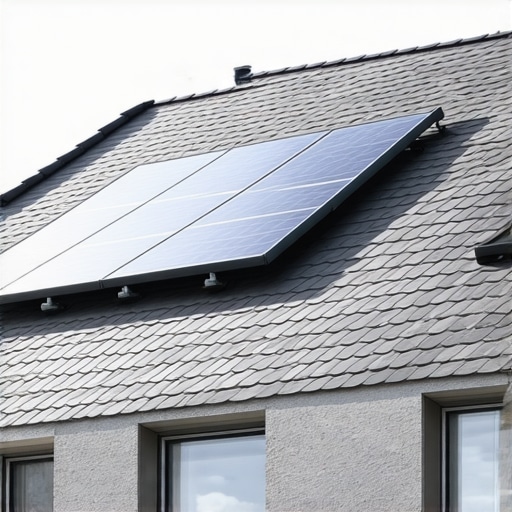
When most local roofers talk about solar, they’re thinking of ‘rack-and-rail’ systems. From a forensic perspective, those are a nightmare. You’re taking a perfectly good water-shedding surface and punching 50 to 100 holes in it to mount a racking system. Each one of those penetrations is a potential point of failure where a missed lag bolt—what we call a shiner in the trade—can allow moisture to track down the shank and rot out your rafters before you even see a spot on the ceiling. The 2026 generation of solar shingles eliminates this entirely. By integrating the photovoltaic cells directly into the shingle material, the roof maintains its integrity as a monolithic water barrier. There are no racks, no bird nests underneath the panels, and no extra penetrations for the ‘trunk slammers’ to mess up.
“The primary purpose of a roof is to shed water, but its secondary role as an energy harvester is becoming an architectural necessity in high-UV environments.” – Modern Building Science Quarterly
1. Thermal Shock Mitigation: Saving the Deck
In the desert or high-heat zones, thermal expansion and contraction are the silent killers of roofing materials. During the day, your roof surface can hit 160°F. When a sudden monsoon rain hits, that temperature drops 80 degrees in ten minutes. That’s thermal shock. Traditional asphalt shingles handle this poorly; the granules pop off, and the matting cracks. The 2026 solar shingles are engineered with tempered glass and high-grade polymers that have a much lower coefficient of expansion. They don’t just sit there and bake; they actually utilize that solar radiation, converting the energy that would normally be destroying your roof into usable electricity for your AC unit. It’s the first time in history we’ve seen a roofing material that becomes more ‘stable’ the more sun it gets.
2. The End of ‘Rack-and-Rot’ Maintenance
If you ask any reputable roofing company about the biggest headache with solar, they’ll tell you it’s the maintenance. If a traditional roof fails under a solar array, you have to pay a solar company $3,000 just to take the panels off so the roofer can fix a $500 leak. It’s a scam. The 2026 integrated shingles are modular. If one cell fails, you swap that specific shingle out just like you would a damaged piece of slate. You don’t need a crane or a massive crew. This modularity means the lifecycle cost of the roof is lower than even the cheapest asphalt 3-tab when you factor in the 30-year horizon. We’re moving away from ‘disposable’ roofs toward permanent energy assets.
3. Improved Wind Uplift and Hurricane Resistance
Standard shingles rely on a thin strip of sealant—the starter strip—to keep them from blowing off in a storm. In high-wind areas, once the wind gets a ‘thumb’ under the edge of a shingle, it’s game over. The entire square starts peeling back. Because 2026 solar shingles are typically heavier and utilize a mechanical interlocking system rather than just adhesive, their uplift ratings are off the charts. They act more like a structural skin than a decorative covering. When we do forensic inspections after a major wind event, we consistently see that integrated systems remain pinned to the deck while the traditional shingles next door are sitting in the neighbor’s pool.
4. Vapor Permeability and Attic Health
One thing local roofers often overlook is how a roof affects attic ventilation. A traditional roof gets so hot it radiates heat downward, turning your attic into an oven that cooks your shingles from the inside out. The new solar shingle systems often include a small integrated air gap or ‘thermal break’ on the underside. This allows for passive airflow behind the cells, which keeps the cells efficient (photovoltaics actually lose power when they get too hot) and keeps your attic cooler. It prevents the cricket and valley areas from becoming heat sinks that trap moisture and cause premature plywood delamination. It’s a holistic approach to the building envelope that we simply didn’t have five years ago.
“A roof is only as good as its flashing and its ability to breathe under pressure.” – NRCA Technical Manual
5. Aesthetic Integration and Property Value
Let’s be honest: old-school solar panels look like someone strapped a spaceship to a Victorian house. It’s ugly, and it hurts resale value in high-end neighborhoods. The 2026 shingles are virtually indistinguishable from high-end slate or architectural shingles from the street. This is why roofing companies are seeing a surge in demand; homeowners want the green energy without the ‘eyesore’ factor. From a forensic appraisal standpoint, a house with an integrated solar roof is valued as a ‘hard asset’ rather than a ‘mechanical addition.’ You aren’t just buying a roof; you’re buying a utility plant that happens to keep you dry.
Choosing the Right Roofing Company for the Job
Don’t hire a guy who just bought a ladder and a hammer. Solar shingles require a contractor who understands both the International Residential Code (IRC) and basic electrical safety. You want a crew that knows how to properly flash a valley and how to handle a shiner without compromising the circuit. Ask them about their experience with ‘Secondary Water Resistance’ (SWR) layers. If they look at you like you have three heads, move on. The future of roofing isn’t just about nailing down shingles; it’s about engineering a system that survives the next thirty years of climate volatility while paying for itself every time the sun comes up.