
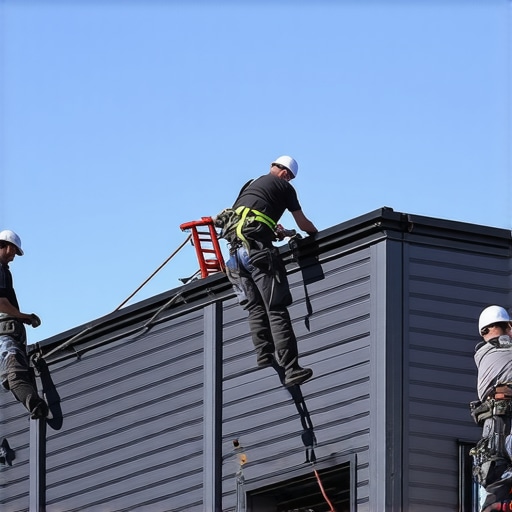
The High-Stakes Gamble of Modern Roofing
Walk into any local coffee shop where the old-timers gather, and you’ll hear the same grumbling about how they ‘don’t build them like they used to.’ They’re right. But in the world of roofing, that’s actually a good thing. My old foreman, a man who had more scars on his hands than shingles in a square, used to say, ‘Water is patient. It will wait for you to make a mistake, and then it will move in and start rotting your house from the inside out.’ He was talking about the limitations of organic-mat asphalt, the stuff that used to curl like a stale potato chip after five years in the sun. Today, when we look at the landscape of local roofers and the products they push, we are standing at a crossroads. The 2026 metal systems aren’t just an upgrade; they are a fundamental shift in how we think about protecting a structure. Most roofing companies are still stuck in 2010, selling you a 30-year shingle that will look like a shedding cat by year twelve. If you want to understand why the industry is pivoting toward high-tech metal, you have to look at the physics of the roof deck itself.
1. Advanced Thermal Management and Reflectivity
In the humid, salt-heavy air of our coastal corridors, heat is the primary engine of destruction. Traditional asphalt absorbs solar radiation like a black sponge, reaching internal temperatures of 160°F. This heat transfers directly through the decking, baking the attic and forcing your HVAC to work until its bearings scream. The 2026 metal systems utilize what we call ‘interference pigments’ in their coatings. These aren’t just fancy colors; they are microscopic structures that reflect infra-red light while allowing visible color to remain vibrant. Imagine a roof that stays within 10 degrees of the ambient air temperature even in July. This reduces the thermal shock—the constant expanding and contracting that rips apart the sealant on your roofing vents. When the metal doesn’t get hot, the air in the ‘over-roof’ space stays moving, preventing that stagnant, heavy heat that eventually turns your plywood into something resembling wet cardboard.
“Metal roofing systems provide a unique combination of high solar reflectance and high thermal emittance, which significantly reduces the cooling load on a building.” – National Roofing Contractors Association (NRCA)
2. The End of the ‘Shiner’ and Wind-Driven Rain
If you’ve ever seen a roof after a tropical depression, you’ve seen the ‘shingles in the yard’ phenomenon. This happens because asphalt relies on a thin strip of adhesive that degrades over time. Metal systems for 2026 have moved toward a hidden-fastener, interlocking clip system that treats the entire roof as a single, monolithic shield. When local roofers install a standing seam system correctly, there are no exposed screws. This eliminates the ‘shiner’—those missed nails that rust out and create a direct path for water to enter the attic. Instead of water fighting its way under a shingle through capillary action, it hits a vertical rib and is channeled straight to the gutter. This is particularly vital in regions where wind-driven rain can push water horizontally; with a 2026 metal system, there is no ‘under’ for the water to go. The hemmed edges and offset cleats ensure that even in 120 mph gusts, the water stays on the outside of the building envelope.
3. Secondary Water Resistance and Synthetic Integration
The secret of a high-end metal roof isn’t actually the metal; it’s what’s underneath. Most roofing companies will slap down a thin layer of felt paper and call it a day. The 2026 standards require a high-temperature, self-healing synthetic underlayment. If a rogue fastener does pierce it, the material squeezes around the shank like a gasket. This creates a secondary water barrier that would keep your house dry even if the metal panels were stripped away. We call this ‘redundant engineering.’ In the trade, we know that the valley is the most vulnerable part of any roof. While a standard roofer might just overlap shingles, a pro-grade metal system uses a ‘W-valley’ with internal diverters that prevent water from surging up the opposite side of the roof during a heavy downpour. It’s the difference between a raincoat and a wet suit.
4. Galvanic Corrosion Resistance in Salt Air
For decades, metal was a risky bet near the ocean. Salt air would eat through cheap tin like acid. The 2026 systems have solved this through a process called ‘zinc-aluminum-magnesium’ (ZAM) coating. This is a tri-metallic alloy that is self-sacrificing. If the edge of a panel is cut, the zinc and magnesium migrate to the edge to ‘heal’ the raw steel, preventing rust from ever gaining a foothold. Most roofing contractors who don’t specialize in metal won’t tell you about this because they’re still buying the same galvanized junk from the big-box stores. When you hire roofing companies that understand the chemistry of 2026 systems, you’re buying a roof that can withstand the salt-spray testing that would turn a standard steel door into a pile of flakes in six months. It’s about material science finally catching up to the harsh reality of our climate.
“The longevity of a roof is inversely proportional to the number of penetrations and the reactivity of its surface material to local atmospheric conditions.” – Vitruvius, The Ten Books on Architecture (Modern Interpretation)
5. The Lifespan vs. Lifecycle Cost Analysis
Let’s talk about the ‘Life-Time Warranty’ lie. Most asphalt warranties are prorated, meaning by year 15, they’re worth about as much as the paper they’re printed on. They cover ‘manufacturer defects,’ but they don’t cover the sun or the wind—the two things that actually kill roofs. 2026 metal systems are designed for a 70-year service life. When you calculate the ‘lifecycle cost,’ you realize that while you might pay more upfront, you are avoiding three separate asphalt tear-offs over the next fifty years. Think about the labor, the landfill fees for three sets of shingles, and the repeated stress of having a crew of ‘trunk slammers’ stomping all over your property. A metal roof is an investment in the ‘quiet’ of your home. No more listening to shingles flap in the wind, no more checking the ceiling after every storm, and no more wondering if your local roofers will still be in business when the leaks start. You’re buying a permanent solution to a temporary problem.
How to Spot a Professional Installation
When you’re vetting roofing companies, look at their crickets and their flashing. A ‘cricket’ is a small peaked structure behind a chimney designed to divert water. On a cheap roof, they just slop some mastic (roof cement) there and hope for the best. On a 2026 metal system, that cricket is custom-fabricated from the same metal as the roof, integrated into the counter-flashing, and hemmed so tight a mosquito couldn’t get through. If a contractor starts talking about ‘caulking’ your joints, show them the door. A real metal roof relies on mechanical bonds—folds, hems, and seams—not a tube of goop from the back of a truck. The sound of a metal roof is also a giveaway. Properly installed with a solid deck and heavy underlayment, a metal roof is actually quieter than asphalt in a rainstorm. If it rattles, it’s not a 2026 system; it’s a shortcut.