
The Sound of a Failing System and the Patient Predator
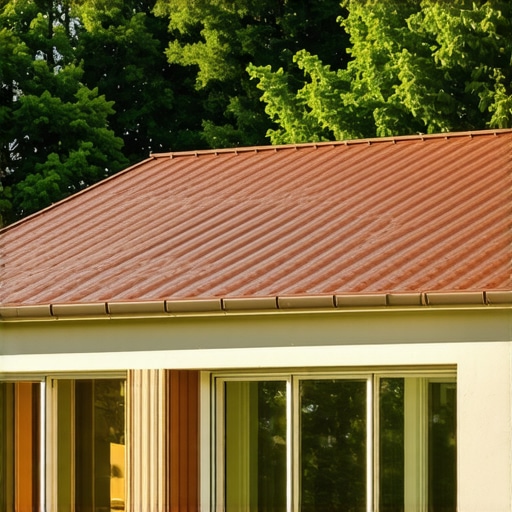
I’ve spent three decades on top of residential structures, and if there is one thing I have learned, it is that most homeowners are sold a bill of goods. They buy a 30-year shingle that curls in twelve because of poor attic ventilation or cheap petroleum-based adhesives. My old foreman, a grizzly guy we called ‘Sully,’ used to sit on his tailgate, wiping the grit of a tear-off from his face, and say: ‘Water is patient, kid. It doesn’t need a flood to ruin a house; it just needs a microscopic path and a little bit of time. It’ll wait years for you to make one mistake.’ That advice stayed with me through every 140-degree summer and every frozen January in the Northeast. When you look at the 2026 standards for high-end residential roofing, there is one material that makes every other product look like a temporary Band-Aid: copper. While roofing companies push architectural shingles for the quick turnover, the veterans know that a properly hung copper roof isn’t just a cover; it is a legacy. [image_placeholder_1]
1. The Chemistry of the Patina: Self-Healing Armor
Most local roofers deal with materials that degrade over time. Asphalt loses its granules, wood rots, and steel eventually rusts if the coating is scratched by a stray branch. Copper is different. It undergoes a chemical transformation known as oxidation. Initially, it has that bright, penny-like glow, but as it interacts with the elements, it develops a cuprous oxide layer, eventually turning into that classic verdigris green. This isn’t just about aesthetics. This patina is a literal suit of armor. If a storm flings a limb onto your roof and scratches the surface, the copper doesn’t rust. It simply re-oxidizes, sealing the ‘wound.’ This self-healing mechanism is why you see copper on cathedrals that have stood for three centuries. When we talk about roofing longevity, we aren’t talking about a 20-year warranty that’s pro-rated into oblivion; we are talking about a century-long lifespan.
“A roof is only as good as its flashing, and copper is the king of all flashing materials.” – Old Roofer’s Adage
2. Biocidal Properties: Killing the ‘Green Ghost’
In humid or coastal climates, homeowners spend thousands of dollars every few years to wash algae and moss off their shingles. We call it the ‘Green Ghost’—it starts as a faint streak and ends up lifting the tabs of your shingles, allowing wind-driven rain to reach the underlayment. Copper is a natural biocide. When rain hits a copper roof, it picks up trace amounts of copper ions. As that water runs down the valleys and into the gutters, it creates an environment where moss, lichen, and algae simply cannot survive. You won’t see local roofers out there with a pressure washer on a copper job. The material does the maintenance for you, protecting the structural integrity of the roof deck by keeping it dry and organic-free.
3. Thermal Efficiency and Snow Shedding
In the cold North, we fight a constant battle with ice dams. An ice dam occurs when heat escapes your attic, melts the snow on the roof, and the water refreezes at the cold eaves. This creates a dam that forces water back under the shingles via capillary action. This sideways movement of water is what turns your plywood into ‘oatmeal.’ Copper, being a superior thermal conductor, helps distribute heat more evenly across the surface. More importantly, its smooth surface allows snow to slide off before it has the chance to melt and refreeze into a dangerous block. This reduces the load on your rafters and eliminates the need for aggressive ice and water shield patches that only mask the symptoms of a larger thermal problem.
4. The ‘Zero-Shiner’ Installation: Craftsmanship vs. Speed
When you hire roofing companies to slap down asphalt, they are often racing. They use nail guns that fire at a rate of three nails per second. This leads to ‘shiners’—nails that miss the rafter or are driven in crooked, creating a direct path for moisture to follow the shank of the nail down into your ceiling. A copper installation, especially a standing seam or flat-seam system, is a work of forensic art. It requires hand-folding and, in many cases, soldering. You don’t just ‘nail’ copper; you craft it. We use crickets—small peaked structures behind chimneys—to divert water, and we ensure every square (100 square feet) is perfectly tensioned to allow for thermal expansion. Copper expands and contracts more than other materials, and a veteran roofer knows how to use cleats that allow the metal to ‘breathe’ without stressing the fasteners.
“The National Roofing Contractors Association (NRCA) emphasizes that metal roof systems must be designed to allow for the thermal movement of the metal panels.” – NRCA Technical Manual
5. Incredible Resale Value and Sustainability
Let’s talk about the ‘Trunk Slammer’ trap. A cheap contractor gives you a low bid, uses low-grade materials, and five years later, they’ve changed their phone number. A copper roof is an investment that shows up on a home appraisal. It is the only roofing material that is 100% recyclable. Most asphalt shingles end up in a landfill, where they take centuries to decompose. Copper is often made from 75% recycled content and can be melted down and reused indefinitely. In 2026, as building codes become stricter regarding sustainability, having a ‘forever roof’ is a massive selling point. You aren’t just buying a roof; you’re buying the last roof your house will ever need.
The Forensic Conclusion: Don’t Settle for Oatmeal
I’ve crawled through enough wet attics to know that the cheapest bid is usually the most expensive mistake you’ll ever make. If you see your plywood starting to sag or notice those dark streaks of algae, don’t just call any local roofers for a quick patch. Investigate the physics of your home. If you want a system that defies the patient predator of water, copper is the answer. It handles the thermal bridging of the North and the salt air of the coast with equal defiance. Stop thinking about your roof as a 15-year expense and start seeing it as a 100-year shield.